There isn't a particularly comfortable way to talk about motorcycle safety. Motorcycles are dangerous. All statistics show that, per mile traveled, motorcycles are far more hazardous. As someone who promotes motorcycles as a better alternative to large cars and trucks in many travel scenarios, this is also an uncomfortable reality that must be faced.
But this simple statement also obscures an important fact: not all motorcycles, riders, or riding behaviors carry the same risks. With the emergence of a new generation of smaller electric motorcycles, I think there is an interesting question worth asking: could electric motorcycles inadvertently make riding a motorcycle safer?
The reason is not that electricity itself is safer than gasoline. That's not the case. More precisely, electrification could fundamentally change the types of motorcycles on the road.
Motorcycle death statistics are quite grim.
According to data from the National Highway Traffic Safety Administration (NHTSA) of the United States, 6,228 motorcycle riders died in 2024, accounting for 16% of all traffic fatalities.
Obviously, motorcycles have a fundamental disadvantage in this regard. There is no steel cabin surrounding you, no crumple zone to separate your body from oncoming SUV, no seatbelt to hold you in place, and no side air curtain to catch your head.
But there is another factor related to motorcycle deaths that is even more difficult to ignore: the behavior of the riders.
According to data from the Highway Safety Insurance Association ( IIHS ), in 2024, approximately 35% of motorcycle rider deaths occurred in single-vehicle accidents. In other words, more than one-third of these deaths were not caused by being hit by another vehicle. In such cases, whether an accident occurs is essentially in the hands of the rider themselves.
Alcohol is also a major factor. According to the NHTSA report, 40% of cyclists who die in accidents are under the influence of alcohol.
And then there's the motorcycle itself.
Super sport motorcycles stand out in the wrong ways, particularly so. In 2024, 59% of riders who died on super sport motorcycles were under the age of 30. In contrast, among those who died on cruisers and standard motorcycles, only 19% were under 30; for touring motorcycles, that figure was just 7%.
Of course, this does not prove that high-performance motorcycles are responsible for these deaths. There are many mixed factors involved, including the types of motorcycles that attract different groups of people, and how these motorcycles are typically ridden.
But the overall picture is hard to ignore.
To put it more bluntly, a large portion of motorcycle deaths are due to riders simply driving too fast, making mistakes (such as drinking alcohol or turning too sharply), or simply not being able to handle a motorcycle with incredibly high performance. So, while statements like “motorcycles are 27 times more dangerous than cars” may be true in a general sense, that doesn’t mean your risk of dying is actually 27 times higher—especially if you’re not a 25-year-old troublemaker riding a second-hand high-displacement sports car.
We exposed inexperienced riders to outrageous levels of performance.
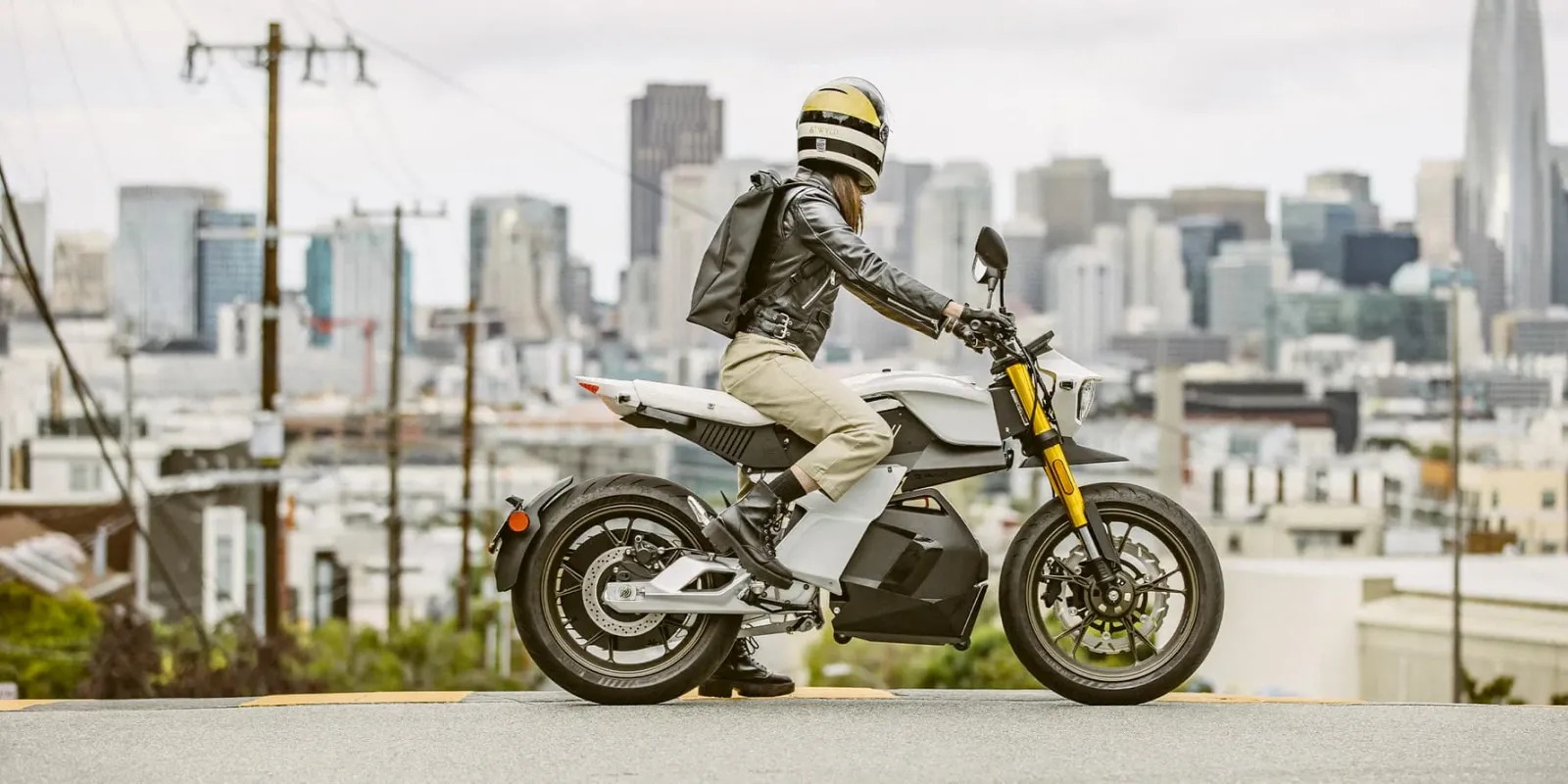
One strange aspect of the motorcycle world is that you can obtain incredibly impressive performance at surprisingly low prices.
A person with relatively little riding experience can purchase a second-hand super-sport motorcycle, whose acceleration was previously only achievable with a rare supercar. Such a motorcycle may weigh about 400 pounds, produce over 100 horsepower, and have a top speed nearly three times the usual speed limit on American highways.
And unlike with cars, once this kind of performance gets out of control, you have almost no protection at all.
This is also why I find the current evolution of electric motorcycles very interesting.
For many years, electric motorcycle companies have generally strived to improve their performance to match that of gasoline motorcycles. We have seen extremely fast and powerful machines from companies such as Energica and LiveWire.
These vehicles prove that electric motorcycles can be very fast.
But what I'm becoming increasingly interested in is another direction.
The next generation of electric motorcycles looks different.
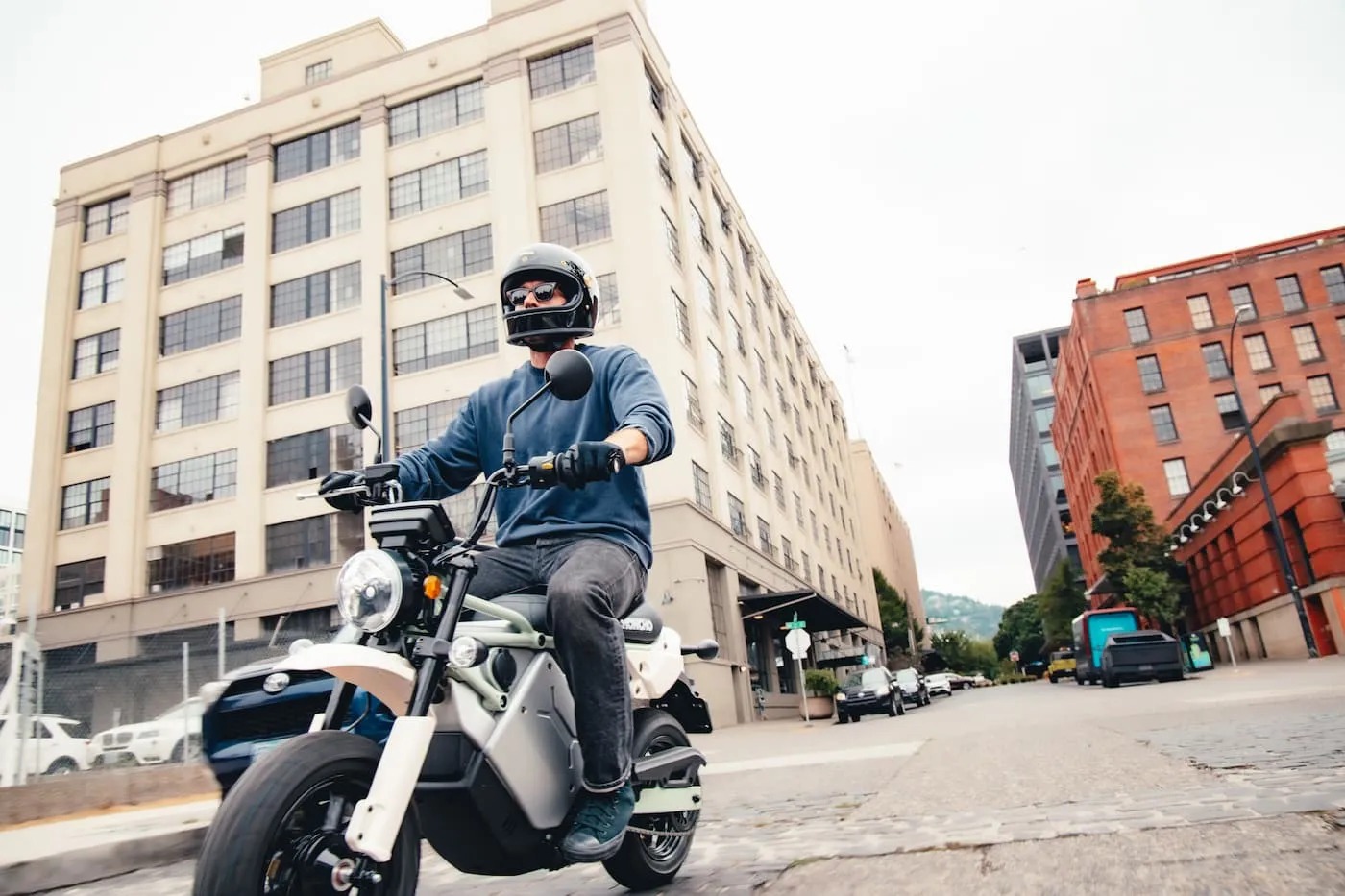
Take a look at the vehicle models like S4 Honcho that LiveWire is about to launch.
This is not an electric supercar designed around extreme acceleration or a top speed of 150 miles per hour (240 kilometers per hour). It is a smaller motorcycle aimed at providing more accessible performance at a more affordable price.
It has entered a market that is in expansion, and this market already features well-received small and medium-sized electric motorcycles launched by brands such as Ryvid, Land, and Maeving.
We also see that an increasing number of vehicle models are beginning to occupy territories that were previously overlooked, that is, the space between electric bicycles and full-size motorcycles.
When "riding on rockets" is replaced by more rational electric motorcycles, this could have a significant impact on overall safety.
Battery technology has actually created an interesting incentive mechanism here. It's not difficult to make an electric motorcycle extremely powerful; but making it capable of maintaining sufficient range over long distances at high speeds, without becoming overly bulky and expensive, is much more challenging.
Therefore, the economic and physical limitations of batteries now naturally make smaller urban and suburban motorcycles quite attractive.
Manufacturers no longer need to ask “how to create another electric motorcycle that can reach 150 miles per hour (240 kilometers per hour); instead, they can produce a lighter vehicle that can go 60 or 70 miles per hour (95-120 kilometers per hour), with sufficient range for daily rides, and at a much lower price.
Ironically, one of the limitations of electric motorcycles that are most often criticized may ultimately lead to safety benefits.
There's also the generation of people who use electric bicycles.
I think things will become more interesting from here on.
For decades, the typical path into the motorcycle world has been to learn how to ride off-road or small-displacement motorcycles first, and then quickly move on to larger models. However, in many cases, beginners simply take a driving lesson and then buy their first 600cc sports motorcycle to start learning how to ride.
But now, we are using electric two-wheeled vehicles to cultivate a whole new generation of people.
More and more children and teenagers are growing up using electric bicycles and small electric motorcycles. Eventually, many of them will want something faster than electric bicycles that top out at 20 or 28 miles per hour.
For today's electric motorcycle "children," an electric motorcycle with a speed of 50 miles per hour (80 kilometers per hour) represents a quite reasonable next step. Further ahead, perhaps this rider will upgrade to a model that can reach speeds of 70 or 80 miles per hour (120-130 kilometers per hour), suitable for highway commuting.
This is much more gradual than jumping straight from having almost no experience with two-wheeled vehicles to riding a roaring 600cc super sports motorcycle.
There is another advantage: electric motorcycles are easier to operate mechanically. They usually don't have a clutch or a gearbox, and there's no need to worry about stalling. Just turn the throttle and you're off.
This doesn't necessarily mean they are safer – the instantaneous torque of electric motors can certainly also get inexperienced riders into trouble – but it does reduce the psychological burden that needs to be dealt with when learning to ride.
Riders can focus more of their attention on braking, cornering, traffic, vehicle positioning, and countless other critical aspects that truly matter for safety while riding a motorcycle. When used properly, the reduced cognitive burden means they can concentrate more on maintaining control.
Electricity doesn't automatically mean greater safety.
It should be noted that I am not saying that electric motorcycles are inherently safe.
They are still motorcycles, and they still don't have a carriage. Well, most of them don't.
If a distracted car makes a left turn in front of you, the chemical system that drives the rear wheels won't make much of a difference.
Moreover, electric motorcycles can also be incredibly powerful. In fact, the instantaneous torque of the motor can be quite harsh on inexperienced riders whose throttle settings are not well-tuned.
In addition, there is currently not enough data to prove that the fatality rate of electric motorcycles is significantly lower than that of comparable gasoline motorcycles.
But that's not my argument.
My view is that electrification may change our definition of “ordinary entry-level motorcycles.” And this could be even more important, as it has the potential to significantly reduce accidents and deaths.
I will never pretend that motorcycles can be as safe as cars. The laws of physics do not allow it.
However, the broad statistic that "motorcycles are dangerous" encompasses a wide range of machines and riders.
A person who is sober, trained, wears appropriate protective gear, and commutes on a moderately powered motorcycle, and a 21-year-old young man lacking experience – at 2 a.m., wanting to see how fast their super-sport motorcycle can go on an empty highway ramp – are essentially doing completely different things.
However, they are all included in the same broad category of motorcycle death statistics.
What excites me about this new generation of electric motorcycles is not the idea that simply replacing gasoline with batteries will magically solve motorcycle safety issues. Obviously not.
Rather, electrification may help create a new category of motorcycles: ones that are desirable, affordable, and still cool even without 120 horsepower or a top speed of 160 miles per hour.
If young riders gradually progress from using electric bicycles and small electric motorcycles to those that are suitable for highway travel, perhaps one day we will see a generation who regard a lightweight motorcycle capable of reaching speeds of 60 or 70 miles per hour as a perfectly legitimate mode of transportation, rather than just a stepping stone to more powerful models.
Perhaps, the greatest contribution of electrification to motorcycle safety will not be traction control, ABS, or complex electronic systems.
Perhaps, it's just about making rational motorcycles interesting and cool again.
FTC: We use automated affiliate links that can generate income. For more information.