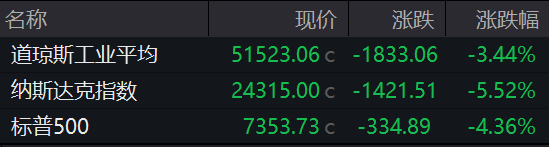
U.S. stocks tumbled across the board overnight, with the Nasdaq falling more than 5% and the chip index plummeting by 12%. A new round of sharp declines in tech stocks is causing a chain reaction within the hedge fund industry.
According to a report by Business Insider on November 6th, the multi-strategy hedge fund Walleye Capital, with a scale of $17 billion, announced the reduction of its core stock long-short team, the return of funds to some investors, and a reorganization of its overall business structure. This is another systemic shock in Wall Street's hedge fund industry caused by concentrated holdings of AI, following the heavy losses suffered by the focused fund Situational Awareness in July.
Walleye Capital disclosed in a letter to customers that the fund suffered a 5.9% loss in October, which is the worst single-month performance since March 2020. As of the end of October 2026, the fund has accumulated a loss of 6.8%. The fund announced the dismissal of Anil Gondi, the head of the stock short-selling and long-selling business, as well as a significant portion of the internal short-selling and long-selling investment team, and will return some capital to investors. The specific amount and timing have not yet been determined.
In addition, the systematic hedge fund Engineers Gate also announced the reduction of most of its “Synthesis” stock teams, with a loss of 5.5% as of October 23rd. At the same time, several leading hedge funds also recorded significant losses, including those under Millennium, Marshall Wace’s Eureka strategies, ExodusPoint, and North Rock Capital.
The backdrop for this round of selling is the sharp reversal in AI-related tech stocks. According to Goldman Sachs data, hedge fund managers sold approximately $20 billion worth of tech stocks in just two weeks, wiping out the net long positions in AI stocks that had been accumulated since early 2025 in just five trading days; the semiconductor index experienced its largest single-day decline of 11%, also setting a new record for the largest single-day drop since March 2020. Under high leverage and crowded positions, liquidity pressures rapidly intensified in a very short period of time.
AI suffers heavy losses from holding positions; Walleye experiences a significant decline in a single month
Walleye Capital This loss is closely related to the high concentration of its holdings in technology stocks from AI. As disclosed, as of the end of the second quarter of 2026, the fund held a number of heavyweight stocks in the AI sector, including KLA Corporation, Micron Technology, Ultra Micro Devices (AMD), and Applied Materials (Applied Materials).
During this round of selling in tech stocks, the semiconductor index experienced a single-day decline of up to 11%, which is the largest single-day drop since March 2020. Data from Goldman Sachs shows that hedge funds sold approximately $20 billion worth of tech stocks in just two weeks and cleared all their net long positions in AI stocks accumulated since early 2025 within five trading days, indicating a high degree of overcrowding in their positions prior to this and a rapid reduction in leverage.
Walleye CEO and Chief Investment Officer Will England admitted in a letter to customers that the internal stock long-short strategy has been the company's weakest business segment since 2023 and is significantly lagging behind its external long-short operations.
Over the past few years, we have invested considerable resources in improving our internal operations, including bringing in a new leadership team. However, these efforts have not yielded the expected results, and the opportunity cost, along with the resource consumption, are relatively high compared to the returns obtained.
Massive layoffs and capital return
In this reorganization, Walleye dismissed Anil Gondi, the head of the stock long-short business, and cut down a considerable portion of the internal long-short investment team. Gondi joined Walleye in July 2025; prior to that, he had served for a long time as the manager of the stock selection portfolio at Balyasny Asset Management and had also founded his own fund, 6elm Capital. This is already the second major personnel change in Walleye's stock selection department this year – in September of this year, the department's Chief Operating Officer, Matt Giannini, resigned and returned to Citadel.
Walleye also announced that it will return a portion of the capital to investors, but the specific amount, timing, and method of operation have not yet been determined. Investors will be informed of the details later on.
It is worth noting that England emphasized in the letter that this adjustment does not represent a abandonment of stock investment. After the reorganization, the internal team will report directly to England; the company plans to continue investing through external stock managers and internal portfolio managers with high conviction, while also shifting more resources towards volatility trading, quantitative strategies, and other business areas with competitive advantages. England stated that Walleye's volatility business achieved its best single-month performance in October and is expected to record its best annual performance in terms of dollar volume.
In addition, Walleye has recently hired Anna Dev, who was previously in charge of business development at Millennium, to assist in identifying external investment opportunities.
Engineers Gate Reorganizes the Synthesis Team
According to a client letter obtained by Bloomberg, the New York-based systematic hedge fund Engineers Gate announced on Wednesday that it would go its separate way from most members of its “Synthesis” equity team, including the team leader Mike Daylamani.
According to the client letter disclosed, at the end of October, the Synthesis team accounted for approximately 14% of the total market value of Engineers Gate. After this reduction, five fundamental portfolio managers will remain in their positions. The CEO of Engineers Gate, Greg Eisner, wrote in the letter that the team's performance "did not meet the standards for continuing operations in its current form."
According to Bloomberg, sources familiar with the matter revealed that Engineers Gate suffered a 5.5% loss as of October 23. In a letter, Eisner attributed the loss to a “sharp reversal in AI and tech stocks, as well as other market shocks, which led to losses across various hedge fund strategies, including one of the largest single-day drawdowns since the pandemic.”
In addition to disbanding the Synthesis team, Engineers Gate also took measures to separate or reduce capital for a small number of "low belief degree combinations" on the platform, and advanced the internalization of its Asian business.
Industry Chain Reaction: Multiple Funds Suffer Heavy Losses
Walleye is not an isolated case. According to Bloomberg, Millennium's flagship multi-strategy fund fell by 2.3% in October, Marshall Wace's Eureka strategy fell by 5.4%, ExodusPoint fell by 2.4%, and North Rock Capital fell by 2.3%. Point72 Asset Management and Schonfeld Strategic Partners also recorded losses in October.
This round of shocks reminds the industry of a scene from July this year: The AI focused fund Situational Awareness lost 67% of the value of its portfolio at that time and sold most of its publicly traded equity holdings to Citadel under Ken Griffin. In less than four months, a new round of centralized AI holding liquidations occurred again, once again revealing how crowded holdings can evolve into a liquidity crisis in a very short period of time when leverage is used.
The increase in short-selling activities also confirms the extent of market pressure. According to Goldman Sachs data, in October, short-selling bets by various companies approached their highest level in nearly five years. Volatility in tech stocks surged sharply, with the S&P 500 index falling by about 1% that month, while the Nasdaq and the semiconductor sector were hit even more severely.