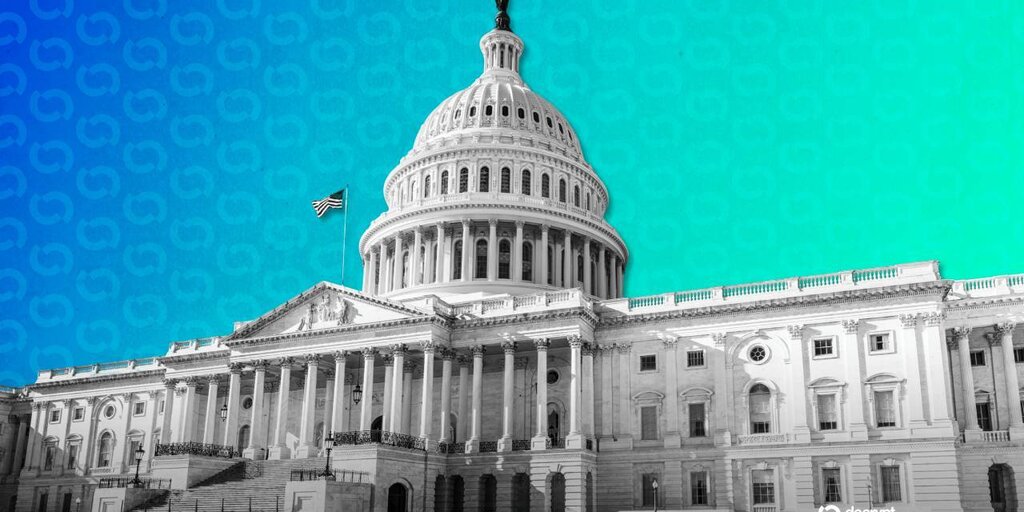


The U.S. stock market is facing new risks: the Democratic Party's victory in the midterms has once again brought AI regulation to the forefront. Markets are concerned that calls for increased scrutiny of advanced AI development and data center expansion are heating up on Wall Street. As large tech companies spend billions of dollars competing for a leading position in the AI race, investors are weighing whether regulatory pressures will disrupt growth plans, challenge valuations, and trigger a broader sell-off in tech stocks.
Why would a Democratic victory in the midterms trigger concerns about AI stocks?
The Democratic Party's victory in the midterms on November 3rd has strengthened opposition from outside parties to large-scale AI infrastructure projects. Campaign activities in states such as Texas and Georgia have raised concerns regarding data center expansion, electricity costs, and local resource consumption.
This political change may lead to increased scrutiny of new projects through licensing requirements, environmental reviews, and restrictions on energy use. For technology companies, potential delays could affect the speed of infrastructure expansion and increase development costs.
What is concerning is that data centers are at the core of the AI investment cycle. Goldman Sachs estimates that temporary shutdowns could affect about 45% of the planned data center capacity expansions in the United States, although these projects may also be relocated to other states.
AI Regulation adds another layer of risk to large tech stocks
In addition to infrastructure, advanced AI development is also facing greater political scrutiny. Senator Bernie Sanders and Congressman Greg Casar have proposed legislation to suspend certain advanced AI developments until stronger security regulations are established. Congressman Yasamin Ansari has also called for restrictions on the development of artificial superintelligence.
For investors, the concern is whether additional regulations will delay product launches, increase compliance costs, and affect the commercial deployment of AI.
However, these proposals have not yet become law. The prospects for their legislation remain uncertain, and therefore, regulatory uncertainty constitutes a more immediate concern at present than any confirmed national restrictions.
The concentration of the "Big Seven" has made the S&P 500 a focal point.
The potential market impact is not limited to individual tech companies. NVIDIA, Microsoft, Apple, Amazon, Alphabet, Meta, and Tesla, these "seven giants," account for about 34% of the S&P 500 index.
Supported by the market's expectations of strong growth in revenue related to AI, their performance has become an important driving force for the overall market. However, this concentration also brings vulnerability. If investors begin to question the valuation of AI or its future profitability, the selling pressure on these companies could have a significant negative impact on the S&P 500 and NASDAQ.
740 billion US dollars AI in spending: Can the returns keep up?
Large technology companies plan to invest over $740 billion in capital expenditures in 2026, compared to about $400 billion last year.
Most of this investment has flowed into data centers, advanced semiconductors, and computing infrastructure. These expenditures have supported companies in the AI supply chain, especially chip manufacturers and cloud service providers.
However, the increase in capital expenditure also raises the requirements for returns. If infrastructure projects are delayed, or if the adoption speed of AI is lower than expected, companies may face a longer payback period for their investments. This brings another layer of risk to valuation, especially for those small data center operators that rely heavily on borrowing to finance expansion.
Why is Wall Street still rising amidst concerns about the regulation of AI?
Despite concerns about the infrastructure of AI, the U.S. stock market still rose on November 4th. The Dow Jones Industrial Average soared by 3.03%, the S&P 500 by 1.58%, and NASDAQ by 1.44%. Amazon saw a surge of 7.4%, and Microsoft, Alphabet, and Meta also recorded gains.
This reaction reflects an important distinction. Investors are increasingly assessing whether a slowdown in data center construction will be beneficial to established cloud service providers by limiting excessive expansion and enhancing the value of existing capacity. Meanwhile, smaller infrastructure companies are under pressure, as their growth plans rely more on continuous construction and financing.
Will there be a larger-scale sell-off of tech stocks?
The latest political developments have added another risk to the technology sector, which is already facing doubts regarding AI expenditures and profitability.
Stricter regulations, data center latency, and rising infrastructure costs could all pose challenges to growth expectations. However, a widespread sell-off is not inevitable, especially in the case where AI continues to generate strong revenue and profit growth.
Investors will be watching regulatory developments, capital expenditure guidelines, as well as the upcoming financial reports from large tech companies. A bigger question for Wall Street is: as political and regulatory risks rise, whether the profits driven by AI are sufficient to justify this round of massive investment cycles.
CoinPedia Trust Explanation
CoinPedia has been providing accurate and timely updates on cryptocurrencies and blockchain since 2017. All content is created by its team of expert analysts and journalists, and follows strict editorial guidelines based on E-E-A-T (experience, professionalism, authority, credibility). Each article is cross-verified with reliable sources to ensure accuracy, transparency, and reliability. Its review policy guarantees a fair assessment when recommending exchanges, platforms, or tools. The website is committed to keeping all content related to cryptocurrencies and blockchain up-to-date in a timely manner, ranging from startups to industry giants.
Investment Disclaimer
All views and opinions expressed in this text represent the author's personal views on the current market situation. Please conduct your own research before making investment decisions. Neither the author nor the publisher assumes any responsibility for your financial choices.
Sponsorship and Advertising
Sponsored content and affiliate links may appear on the website. Advertisements will be clearly labeled, and the editorial content remains completely independent of advertising partners.