Why hasn't the Chihuahua coin SHIB kept up with the upward trend: Bitcoin reaches $80,000, while altcoins show mixed performance
U.Today
37m ago
Ai Focus
U.Today analysis suggests that Bitcoin has returned above $80,000 driven by short squeeze and improved cash flow in spot Bitcoin ETF, but Dogecoin SHIB has not rebounded in tandem and is still under significant selling pressure. The report states that although Ethereum, XRP, Solana, and BNB have strengthened during the same period, SHIB remains below key resistance levels, and its technical structure has weakened.
Helpful
No.Help

Short squeeze and ETF capital inflows drive up Bitcoin prices

Driven by new buying interest, Bitcoin ( BTC ) has rebounded from around $75,600 and once again surpassed the psychologically significant $80,000 mark. However, Shiba Inu Coin ( SHIB ) has not followed this upward trend and remains under significant selling pressure.

As of November 5th, BTC was quoted at $80,300, with a 24-hour increase of over 3%. Ethereum (Ether) performed even better, rising by about 5% to around $2,421. Therefore, this weakness is more likely to be a problem inherent to SHIB itself, rather than a general decline in the entire altcoin market.

Short squeeze and ETF capital inflows drive up Bitcoin prices

This round of gains seems to be a short squeeze. According to CoinGlass data, approximately $378 million in short positions were liquidated within 1 hour, with the total liquidation amount reaching around $747 million.

Spot Bitcoin ETF has also stopped the previous outflow of funds. According to Farside data, after a total net outflow of approximately $1.16 billion on October 30th, November 2nd, and November 3rd, there was a net inflow of $74.6 million on November 4th. However, on that same day, BlackRock's IBIT still experienced an outflow of $201.2 million.
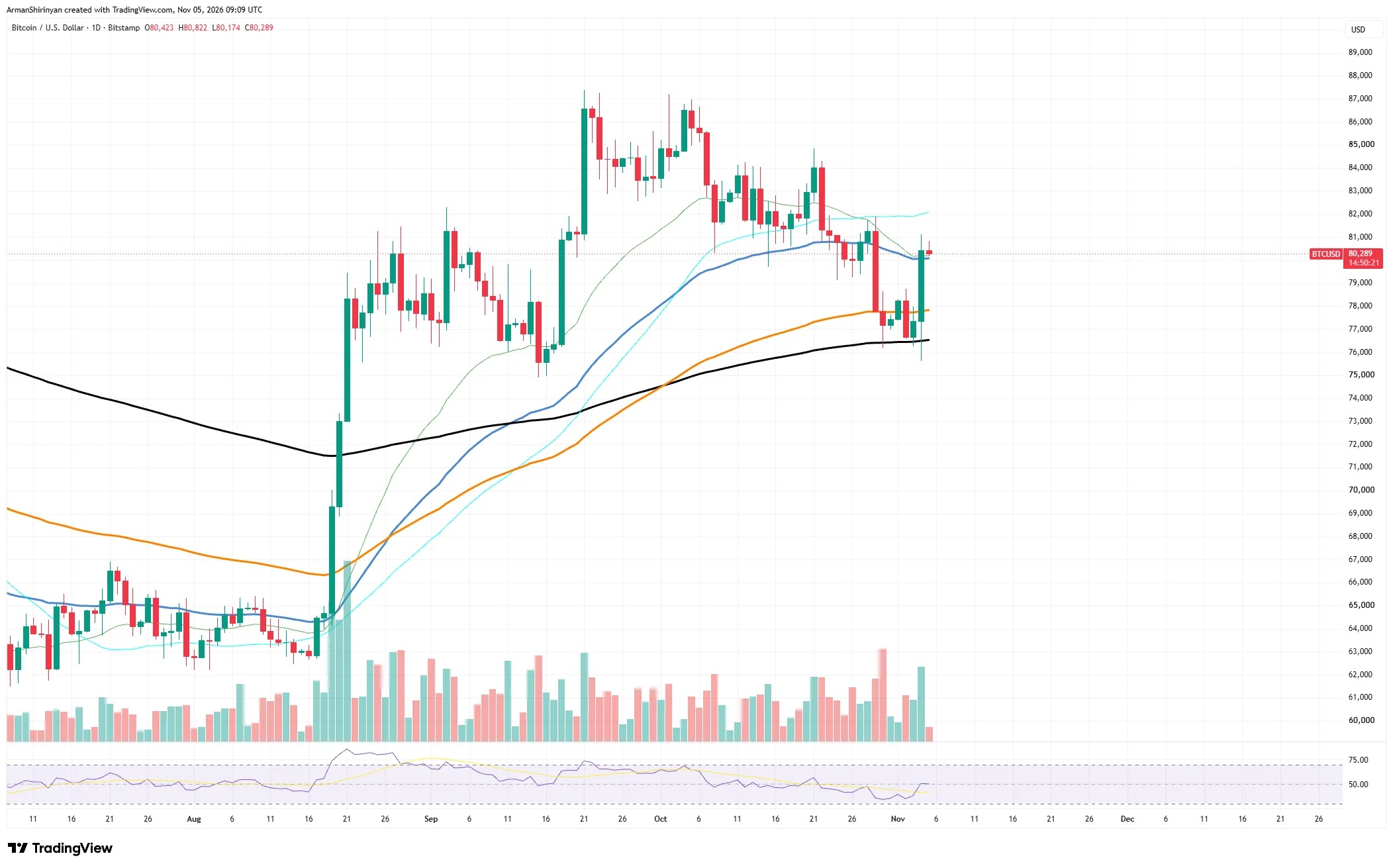
However, short covering alone does not prove the emergence of new real demand. Analyst CryptoQuant believes that this round of adjustment may not have yet ended, and pointed out that the 30-day average value of the Bitcoin Cycle Extreme Value Index (Bitcoin Cycle Extremes Index) is currently at 15.8%.

What does Bitcoin need next?

From the daily chart perspective, buyers absorbed selling pressure in the support area between $76,000 and $77,000, which is near the 200-day moving average. Subsequently, BTC once again rose above the short-term moving average. The Relative Strength Index ( RSI ) is currently around 51, which represents an improvement from previous weaker readings, indicating that momentum is being restored. However, a bullish reversal has not yet been confirmed.

Mainstream coins rise in value, while SHIB lags behind.

XRP, Solana, and BNB all saw increases of around 2% to 4% within the same 24-hour period, but Shiba Inu Coin did not experience a significant rebound. The current trading price of SHIB is close to $0.00000475, which is significantly lower than its peak of around $0.00000620 in September.
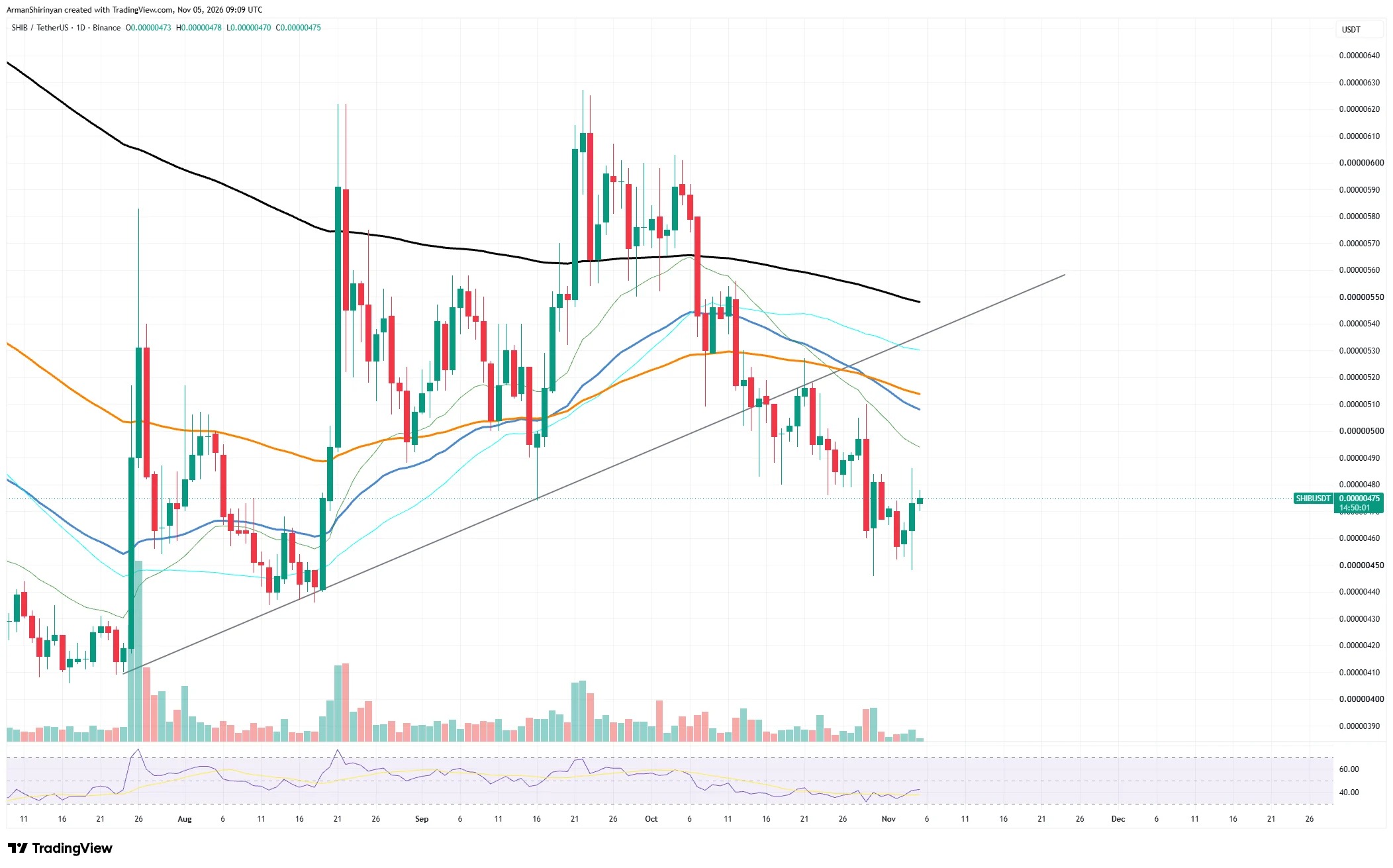
The token has also broken below the upward support trend line, rendering the previously positive technical structure invalid; at the same time, its price remains below the main moving averages, which are increasingly acting as resistance rather than support. The recent resistance zone is between $0.00000510 and $0.00000530, with stronger resistance around $0.00000550.

Although RSI is approaching the oversold area, there is still a lack of sufficient evidence to indicate that the market has clearly begun to accumulate buying power.

Tip
$0
Like
0
Save
0
Views 25
CoinMeta reminds readers to view blockchain rationally, stay aware of risks, and beware of virtual token issuance and speculation. All content on this site represents market information or related viewpoints only and does not constitute any form of investment advice. If you find sensitive content, please click“Report”,and we will handle it promptly。
Submit
Comment 0
Hot
Latest
No comments yet. Be the first!
Related
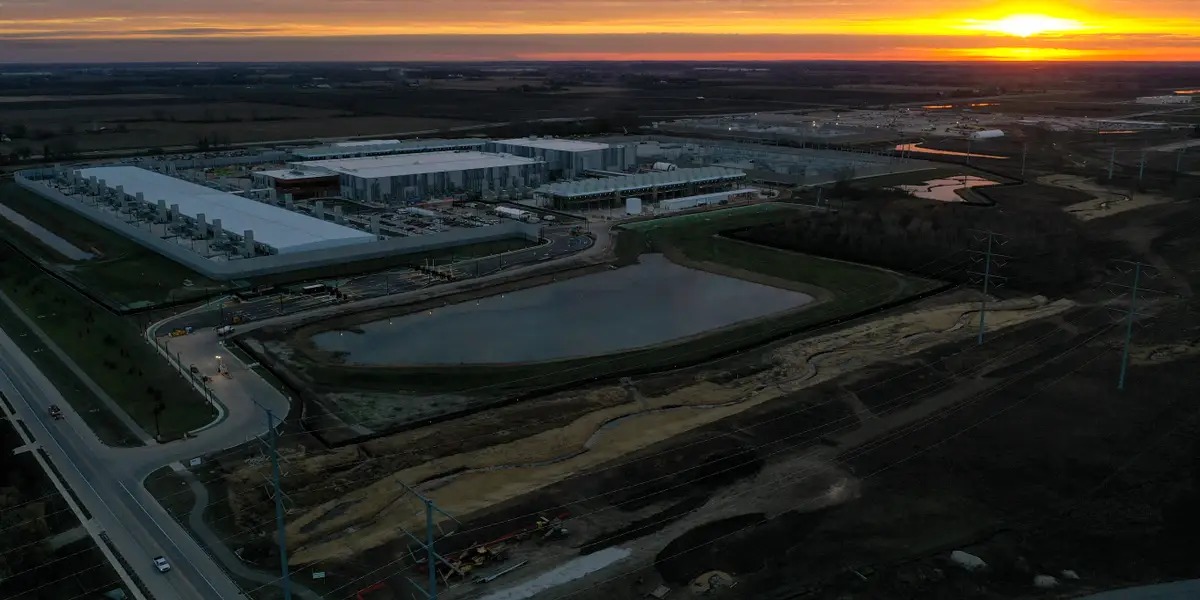
The rebound of AI data centers during the mid-term elections may benefit Amazon, Microsoft, and Google
In the U.S. mid-term elections, voters' backlash against the construction of AI data centers could benefit large technology companies such as Amazon, Microsoft, and Google, which have already built a large number of data centers, while squeezing smaller competitors. The article states that if new projects are delayed or canceled, the existing computing capacity will become even more scarce, potentially leading to increases in prices and profits.
Businessinsider
·2026-11-05 18:17:26
10
Sasken Selected to Support a Strategic Connectivity Platform Project
Sasken Technologies Announces a Multi-Year Engineering Cooperation Agreement with the Software Department of a Major European Automobile Group, Providing Software, System Integration, Hardware Engineering, and Verification Services for the Next Generation of Telematic Control Units
PR Newswire
·2026-11-05 18:09:30
13
Blue Wave Impacting Data Center Stocks Due to Increased Regulatory Prospects
Following the Democratic Party's overwhelming victory in the mid-term elections on Tuesday, stocks related to Neocloud were sold off on Wednesday, with companies such as CoreWeave, Nebius, and Iren experiencing declines. The market is concerned that the Democratic win could slow down the pace of data center construction, but some investors believe that this might also lead to a cooling of capital spending, and the market may not necessarily turn completely pessimistic as a result.
Businessinsider
·2026-11-05 17:59:12
22
Mywell's acquisition proposal triggers a sharp drop in Longmeitong's stock price, increasing the likelihood of third-party bidding
After receiving a full-stock acquisition offer from Mellanox, the stock price of Alcatel-Lucent, a manufacturer of optical network devices, weakened. The market questioned the prospects for the transaction to go through and was concerned about whether there would be other bidders or whether Mellanox would raise its bid. Analysts believe that despite the uncertainties in the construction pace of AI data centers, Alcatel-Lucent's strategic value in the optical interconnection segment remains high.
The Block
·2026-11-05 17:59:09
23
Why Has South Korea Postponed the Crypto Tax to 2029?
The South Korean government has officially proposed to postpone the implementation of the cryptocurrency income tax from January 2027 by another two years to 2029. Finance Minister Lee Hyung-eui stated that this will be the fourth extension since the tax regime was introduced in 2020. The government argues that this move is aimed at improving tax regulations, establishing a mechanism for exchanging information on overseas transactions, and preparing a more comprehensive system for tax declarations and supervision in the future. Under the current plan, the portion of annual cryptocurrency earnings exceeding 2.5 million Korean won will be taxed at 22%, with the tax rate itself remaining unchanged. The government also plans to introduce a loss carryforward system for up to three years and establish a joint public-private working group.
crypto.news
·2026-11-05 17:48:45
21
View More