Over the past two weeks, as a series of tech giants have successively released their financial reports, there was hope that these would provide some clear guidance for the stock market, which has been uncertain due to various risks, particularly doubts regarding the massive investments in artificial intelligence.
After the release of these performance figures, the outlook has indeed become clearer, but unfortunately, it has also become much less promising.
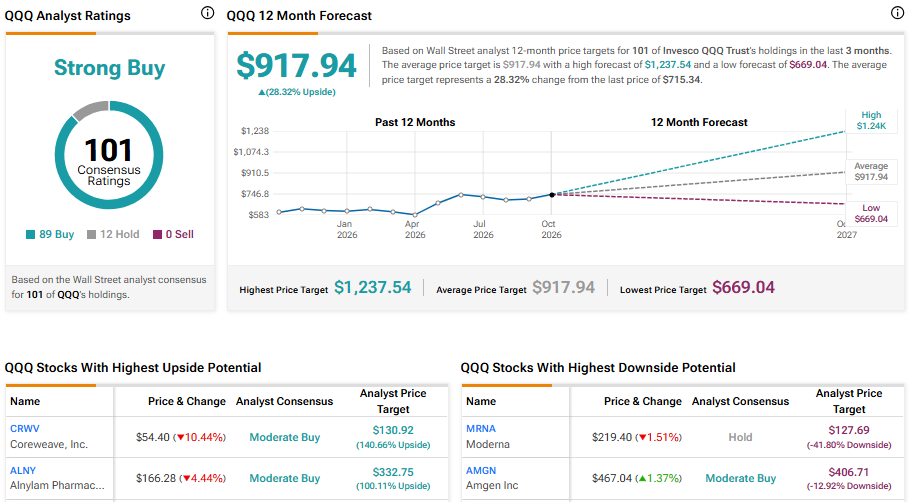
Despite the financial reports of AI's major spenders showing that its cloud computing business is still thriving, investors are not convinced. Instead, they are concerned about the rising costs of data center construction, which are eroding free cash flow. This led to a significant sell-off on Friday, causing the Nasdaq 100 index, which has a high proportion of tech stocks, to experience a 6.7% decline in October, marking the worst monthly performance since the tariff panic in March 2025.
"This reflects that investors have become more selective, as I don't believe that every large-scale cloud service provider will be a winner in the future," said Anthony Saglimbene, the chief market strategist at Ameriprise. "In the end, it will all boil down to how much money a company spends, how much return it can obtain, and how deep its moat is, which will determine whether it can continue to achieve revenue growth."
Alphabet Shares tumbled 13% on Thursday, recording the largest single-day decline in history. Previously, the sales figures for the company's core search business, which is a subsidiary of Google, were disappointing, and for the second consecutive quarter, the company experienced negative free cash flow, a situation that has never occurred since its listing. Subsequently, Amazon's financial report revealed that its negative free cash flow was even worse than analysts' expectations, mainly due to increased capital expenditures and the e-commerce business growing at its slowest pace in three years. The stock fell 5.6% on both Thursday and Friday, marking the worst two-day performance since July.
"Investors are assigning higher risk to companies with negative cash flows," said Brian Mulberry, the chief market strategist at Zacks Investment Management. "I truly believe that what you're seeing now is investors using real money to vote on what they consider 'quality' to mean."
In fact, AI was in a unfavorable position at the beginning of the week. Meta Platforms Inc raised its capital expenditure plan for this year when it released its financial report on October 21st. Since then, the stock has fallen by 12% in total. An indicator that measures the company's credit risk has risen to a historical high. On Friday, Standard & Poor's Global Ratings downgraded the credit rating outlook for this Facebook parent company from stable to negative, noting that it is still unclear when Meta's expenditures will generate revenue that exceeds the continuously rising costs.
"Investors are beginning to reward companies that can demonstrate their ability to convert expenses into revenue and actual investment returns, while penalizing those that have not yet achieved this, or are still increasing their expenses," said Chris Osmond, the Chief Investment Officer of Fifth Third Wealth Advisors.
Pessimistic sentiment has reached such a level that even companies capable of generating stable free cash flows are being sold off. Microsoft reported that the revenue growth of its Azure cloud business exceeded expectations, with free cash flow approaching $19 billion. However, its stock price was still affected this week, falling by 1.6% on Friday.
Concerns regarding AI are not limited to companies with extremely large market values. Software developer ServiceNow released disappointing quarterly sales forecasts, once again triggering market concerns about the impact on AI. As a result, the stock price plummeted by a record 31% on Thursday. Meanwhile, Fortinet Inc lowered its expectations for service business sales, leading to a sell-off in cybersecurity stocks.
Midterm elections in the United States will take place on Tuesday, and traders are already facing quite a few risks. Below is the current situation of AI trading as voters are about to cast their ballots.
The Survival Challenges of Alphabet
In terms of reflecting the contradiction between risk and reward that AI represents, perhaps no company is more representative than Alphabet. Its performance shows a strong growth in AI search queries. However, since the fees Google earns from this type of traffic are lower than those from traditional searches, the revenue from this business is disappointing. The search business accounted for nearly 56% of the company's revenue last year, so once it declines, the potential impact could be extremely severe.
Alphabet has previously faced concerns that its search business's market share could be impacted by competition from chatbots launched by companies such as OpenAI. Strong performance in the past few quarters alleviated these concerns to some extent, but this financial report indicates that Alphabet may be on the verge of disrupting its own business.
“Alphabet is building infrastructure, but doing so may carry the risk of eroding its own business,” said Saglimbene. “The next phase for AI will be the ‘prove it to me’ stage. The market has very high expectations for companies that build AI infrastructure; each quarter will be like a report card, either proving that these expectations are justified or leading the market to question them. When the actual situation does not match the market narrative, the stock price can fall sharply, as we have already seen.”
Software stocks decline
This round of financial reporting season has once again raised concerns in the market about AI's impact on the software industry. Products from companies such as Anthropic and OpenAI may weaken software companies' pricing power and compress their profit margins.
According to the compiled data, so far in this financial reporting quarter, 90% of the software companies in the S&P 500 index have exceeded expectations in terms of earnings, but only 70% have exceeded expectations in terms of revenue. Both figures have deteriorated compared to the previous quarter, when 100% of the companies exceeded earnings expectations and over 80% exceeded revenue expectations.
"The market is very uneasy about which software companies will be able to survive in the AI era," said Carnegie Investment Counsel's Chief Investment Officer, Ben Connard.
During this financial reporting season, several software stocks have come under selling pressure due to companies releasing weak performance figures or forecasts. In addition to ServiceNow and Fortinet, the stock price of communication software developer Twilio Inc fell by 18% on Friday due to disappointing performance forecasts. Industry research indicates that this is "clearly concerning" as it "means that growth will slow down significantly compared to the third quarter."
Devour cash
AI Huge infrastructure expenditures continue to erode the free cash flow of large tech companies. Among the four largest cloud service providers, three – Amazon, Meta, and Alphabet – experienced negative free cash flows this quarter. Amazon's negative free cash flow was nearly $35 billion, compared to $430 million a year ago. Microsoft is an exception, with a positive free cash flow of $18.6 billion.
“In the past, we viewed tech companies in a certain way,” said Saglimbene of Ameriprise. “They were once light-asset companies with abundant cash flows and very reliable growth. Now they have become heavy-asset companies, and their cash flow situations have changed. In some cases, the reliability of their growth has also changed. All of this means that we need to view them in a different way. Considering the scale of investment these companies are making, we must value them in a manner that is different from before.”
The Dilemma of Capital Expenditure
Data center capital expenditures continue to advance at full speed. Meta Platforms has slightly raised its forecast for expenditures in this area this year, with its future expenditure commitment rising to $825 billion. Microsoft's capital expenditures in the first fiscal quarter fell short of expectations due to bottlenecks, but the company stated that expenditures will increase in the second half of the fiscal year, which ends in June next year. Meanwhile, Alphabet's future expenditure obligations have soared to well over $1 trillion.
“I believe the demand for the AI tool is still astonishingly high, which means that these capital expenditures are necessary,” said the Mulberry of Zacks Investments. “But the problem now is that our expenditures this year have reached 800 billion dollars. How can we turn them into cash? And when we do realize that cash, can it be converted into positive cash flow – in other words, can it be profitable?”