News from the IT Home on October 29th: On Tuesday local time, American defense contractor Anduril Corporation (Anduril) and chip manufacturer Qualcomm announced a partnership to produce laptops in the United States. The first model (BlueChip) is scheduled to be launched in 2027. Both parties also set a long-term goal of promoting the computer industry to establish a complete domestic supply chain in the U.S.
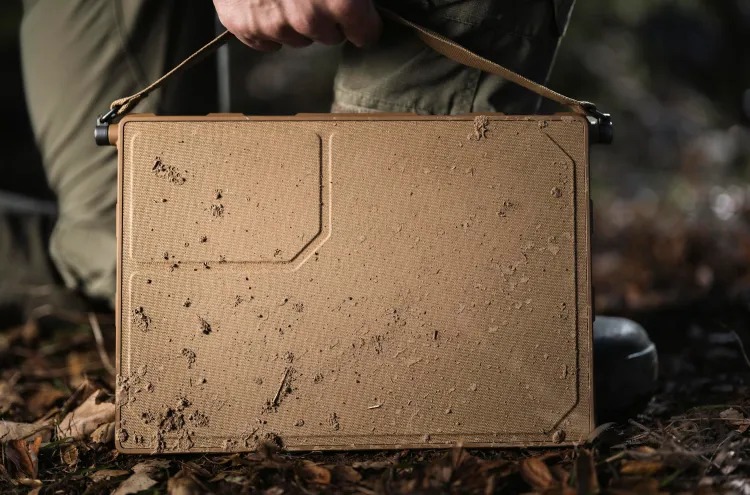
According to IT, it is quite novel to see a laptop manufactured in the United States, as the major American computer companies do not produce laptops locally; Apple, Dell, HP, and Microsoft are all the same in this regard.
Some companies briefly and strategically assembled computers in the United States, seemingly to cater to Donald Trump ( Donald Trump ); others promised to create jobs in America but left behind empty factories; and there was at least one fake company that operated under the guise of an American entity, lying to the U.S. government by claiming its products were domestically produced.
The Verge raised some questions to Palmer Luckey ( Palmer Luckey ), the founder of Anduril, and Cristiano Amon ( Cristiano Amon ), the President and CEO of Qualcomm. Within two days, Anduril made modifications to a key response.
Shannon Pryor ( Shannon Prior ), the vice president in charge of communications at Anduril, now states that when this laptop is launched in 2027, at least 65% of its components will be produced in the United States. This is a key figure, and earlier this week, Anduril had not made such a commitment.
Leki held a teleconference with reporters on Monday, where he clearly stated his desire for every component of computers to be manufactured in the United States. Anduril and Qualcomm have already drafted relevant plans. He told the reporters, "We have a technical roadmap to gradually achieve 100% domestic production."
Leki also mentioned that the design of this notebook will meet the requirements of the military and other government agencies, and it will be able to meet or even exceed a specific standard defined by the U.S. government.
"We didn't just barely meet the criteria for 'Made in America'; we truly wanted to create a product that is 100% American-made. Even the 'Buy American Act' itself doesn't require us to achieve the level we aimed for," said Leki.
The "Buy American Act" was first introduced in 1933, and during the Biden administration, it was revised: for a product to be considered domestic, at least 65% of its component costs must come from within the United States; this ratio is set to increase to 75% by 2029.
Many products must meet these domestically produced standards of the United States before federal agencies can purchase them; otherwise, an exemption application is required. Leki mentioned during a teleconference that currently, various agencies are making extensive use of exemption clauses. 'Quite a number of government agencies are legally obligated to purchase computers made in the United States... but all of these purchases are made under the premise of legal exemptions.'
In addition, Anduril's press release states that the first notebook will be "designed and assembled" in the United States, without explicitly stating that it must be "manufactured" in the U.S. (although future manufacturing plans are mentioned in the release).
When asked about the proportion of locally produced components for this first-generation laptop, Lecky's previous answer was not 65% or 70%, but rather "to be determined." Subsequently, The Verge followed up via email to specifically inquire about the 65% target. At that time, Anduril's response was that the current proportion of locally produced components for this laptop prototype is about 32%, and they could not commit to reaching 65%. Below is the complete response from Anduril's spokesperson, Stephanie Davis ( Stephanie Davis ):
Currently, based on the procurement costs of components, about 32% of the parts for the prototype come from within the United States, and the total procurement from the US and its allied countries exceeds 90%. We plan to continue expanding the scale of local procurement and production before the product is launched in 2027, with the goal of gradually phasing out components from overseas and ultimately establishing a end-to-end supply chain that is entirely based in the US. The proportion of locally sourced components at the time of product launch has not yet been determined, so it is not possible to confirm whether the final percentage will be higher or lower than 65% at this stage. Please also avoid using phrases such as "well below this threshold."
And in his latest statement, Pryor wrote that Anduril can now promise to achieve 65%. The latest declaration is as follows:
Our previous response regarding The Verge contained errors. The development goal for the BlueChip notebook is to have over 65% of its components being domestically produced by 2027, when it is launched on the market. Achieving this threshold is the core objective of the project. The exact proportion of domestically produced components in the final product will need to be determined during the process of selecting suppliers and iterating on the prototype. We plan to announce more details next year.
At the teleconference on Monday, Lecky told reporters that Anduril has finalized a deal with an American glass manufacturer to supply screen covers; they are programming field-programmable gate arrays (FPGA) to replace power management chips and other circuits that can only be purchased from China; at the same time, they are also developing batteries produced locally in the United States.
The press release also added that the casing design is adapted to American machining processes, and the laptop will use metal materials that can be mass-produced by local American industries.
As for the Snapdragon processor installed in the notebook, Qualcomm CEO Chris Anderson stated: "TSMC has factories in Arizona, and our chips will be produced there."