The extended Salt Workflows bridges the gap between detection and response through automated execution, threat containment, and enterprise-level risk remediation.
Palo Alto, California, October 28, 2026 / PRNewswire / — Today, we announce the launch of Autonomous Defense (Autonomous Defense) for Salt Agentic Security Platform, a feature supported by the enhanced Salt Workflows. Salt states that their platform now goes beyond just issuing alerts or generating tickets; it can automatically trigger defense controls to block malicious activities, revoke high-risk access permissions, and initiate repair processes within the systems already in use by customers.
The security team has been working for many years to improve their detection capabilities. However, detection does not equate to handling. When high-risk proxies, API with vulnerabilities, or ongoing attacks are identified, the response often still relies on manual handovers and changes are made within isolated systems. As AI accelerates the discovery and exploitation of weaknesses, this delay in itself can become a security risk.
Salt Security Vice President of Products Aner Gelman stated: "When attackers act at machine speed, security work cannot remain at the pace of ticket handling." Autonomous Defense transforms the security intelligence from Salt into actionable steps, ranging from blocking malicious activities and revoking high-risk access to implementing protective measures already in use by the enterprise.
From Detection to Defense
Autonomous Defense is built upon the breadth and depth of Salt Agentic Security Platform. Agentic Security Graph connects AI, MCP servers, tools, as well as downstream API systems, and integrates context information such as exposure surfaces, source code, configurations, and runtime behaviors. The company states that this intelligence helps to identify risky pathways and provides a basis for strategy-driven operations chosen by customers.
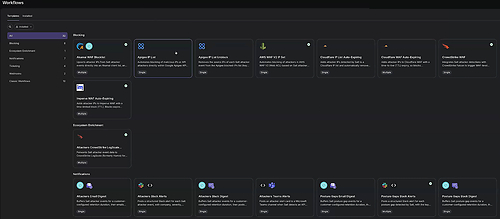
With the help of Salt Workflows and the already connected control points, the security team can:
- Revoke access permissions for high-risk proxies and MCP tools: Through supported management controls, disable unauthorized MCP connections, isolate shadow tools, or remove excessive permissions.
- Block ongoing exploitation activities: Issue targeted interception rules or virtual protection to the existing WAF, API gateways, and other execution points.
- AI and data protection: Update supported security policies through connected gateways, block insecure requests, or mask sensitive data.
- Fix security gaps: Trigger configuration changes to disable exposed API, restore rate limits, or revert to approved security settings.
Before deployment / After using SALT AUTONOMOUS DEFENSE
The company stated that the above is a schematic workflow, and the actual operations depend on the customer's strategy as well as the available execution capabilities.
SIEM Enhanced, ServiceNow or Jira tickets, notifications, and audit logs are still available, but they are no longer in the final state. They can become part of automated responses to proactively contain threats or initiate repairs.
Be autonomous when appropriate, and remain controlled when needed.
Customers can define for themselves: which findings will trigger immediate actions, which changes require approval, and which execution points to use. Salt indicates that this enables the security team to respond at machine speed, while maintaining control over sensitive operations and preserving an audit trail.
Flexible automation built into the platform
Salt has directly integrated a visual drag-and-drop workflow builder into Agentic Security Platform. The company claims that with over 200 out-of-the-box connectors and an integration market built by Salt, customers can design, execute, govern, and repair workflows around the tools they are already using, without the need for complex custom development.
These workflows can span security, infrastructure, IT, and collaboration systems, without the need for organizations to uniformly adopt a single gateway, proxy framework, or response product.
For more information about Autonomous Defense and Salt Workflows, please visit: https :// salt.security / blog / an-alert-doesnt-stop-an-attack-introducing-autonomous-defense
Bridging the AI speed gap
The company stated that the Agentic system can interact with multiple business systems and continuously perform operations that have a practical impact. At the same time, the offensive AI approach may also accelerate reconnaissance, vulnerability discovery, and exploitation. Salt combines Agentic Security Graph, security态势 intelligence, runtime detection, and automated execution, enabling teams to move directly from identifying high-risk paths to taking action within the same operational loop.
Salt Security, Co-Founder and CEO, stated: "Alarms cannot stop attacks; only action can." Salt protects the entire agentic path, from AI proxies to the downstream API. Autonomous Defense puts this intelligence into practical use to help security teams stop attacks and block dangerous paths before they affect business operations.
Salt indicates that Salt Workflows has been provided to Salt Security customers today. The company is migrating the existing workflows to a new user experience and supporting the specific needs of its customers.
About Salt Security
Salt Security indicates that the company is a leader in the fields of agentic security and API security, helping the most innovative enterprises around the world to defend against AI proxies and API attacks. Salt Security Agentic Security Platform can detect proxies running in the environment, MCP servers, and API; it manages the connections and permissions between them; monitors the runtime behavior of proxies; and eliminates them before vulnerabilities enter the production environment.
Salt Security was established in 2016, with investors including Sequoia Capital, S Capital, Tenaya Capital, Salesforce Ventures, Advent International and other leading investors.
For more information, please visit salt.security.
Contact person: Karl Bateson, Director of Communications, Salt Security, [ email protected ] | 617.306.6275