

McDonald's is withdrawing from the competition.
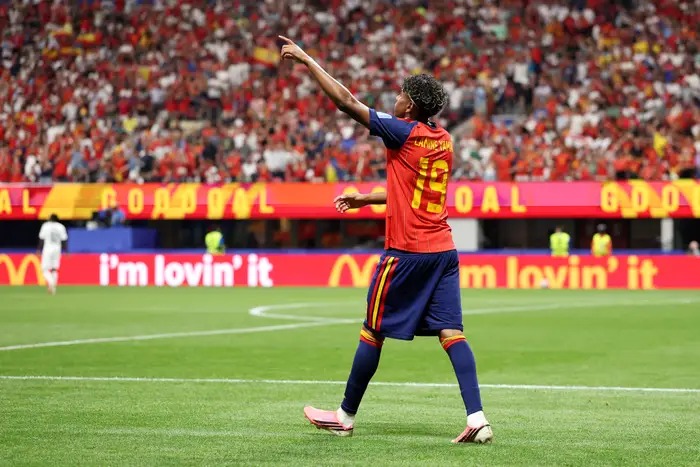
McDonald's launched the largest marketing campaign in its history during this year's FIFA World Cup, yet the company's Chief Financial Officer Ian Borden stated during the August earnings conference call that this investment was "below our expectations."
The company stated last week that it has decided not to renew the current agreement, which is set to expire this year. According to an informed source, McDonald's has also indicated to FIFA that it does not intend to invest in next year's Women's World Cup.
Vice President Forrester told me, "They have indeed received a lot of attention in terms of brand awareness, but it's not necessarily possible to come up with clear, concrete ROI figures to prove to the Chief Financial Officer that the funds and long-term commitments required for such sponsorship are necessary."
For McDonald's, these figures are clearly not sufficient to support a renewal of the contract. Research institution GlobalData Sport states that this agreement is worth $40 million per year.
For a globally renowned brand like McDonald's, it seems that the potential for another surge in brand awareness and related sales due to the World Cup is nearing its limit. Last year, Heineken made a similar judgment, stating that it would end its 30-year partnership with the Champions League in 2027. The beer manufacturer mentioned that it is shifting its sponsorship focus to platforms where "expenditure matches value creation," while continuing to support Formula One racing and adding Premier Padel.
Want to see more Business Insider content in your news feed?
Add BI to Google. This way, when you search for important content, our reports will be easier to find.
McDonald's Chief Marketing Officer Morgan Flatley stated last week in a statement that sports remains an important part of the company's marketing strategy. At the company's Investor Day in September, Flatley indicated that she is focusing marketing efforts on "McDonald's own iconic IP, rather than someone else's IP." The company is still sponsoring dozens of sporting events, including France's top football league, Ligue 1, as well as All - American Games.
According to FIFA, the 2026 World Cup reached nearly 6 billion people worldwide across various platforms, which also explains why brands are still willing to invest heavily in associating themselves with this event. Although FIFA has not yet disclosed the final total sponsorship amount for the 2026 World Cup, its latest budget forecast indicates that revenue from marketing rights over the entire commercial cooperation period from 2023 to 2026 will reach $2.8 billion. This is about 59% higher than the revenue during the 2019 to 2022 cycle in Qatar. For the 2026 event, FIFA has also introduced a plan that allows host cities to sell packages for local fans, making the sponsorship market more competitive compared to previous years.
This change may make smaller or newer sports events more attractive to established global brands. Although they may not be able to achieve the global coverage of long-term events like the World Cup, they offer brands greater flexibility compared to multi-year contracts that are tightly controlled by large rights holders, allowing for customized marketing targeting specific audiences and channels. For companies like McDonald's, this could present an opportunity to provide an experience that consumers will remember, rather than just another sponsorship they become accustomed to.
Executives Rory Stewart - Richardson who have been long involved in sports sponsorship business stated: "If they begin to enter new sports categories and try to attract audiences different from the global football fan base—for example, plate tennis targeting a more upscale audience, or similar projects—this would create a new and compelling entry point, as well as new space for creativity."