Anduril Founder Palmer Luckey vows to bring computer manufacturing back to the United States. What's mentioned here is not just assembly, but the production of every individual component, some of which are currently only produced in China.
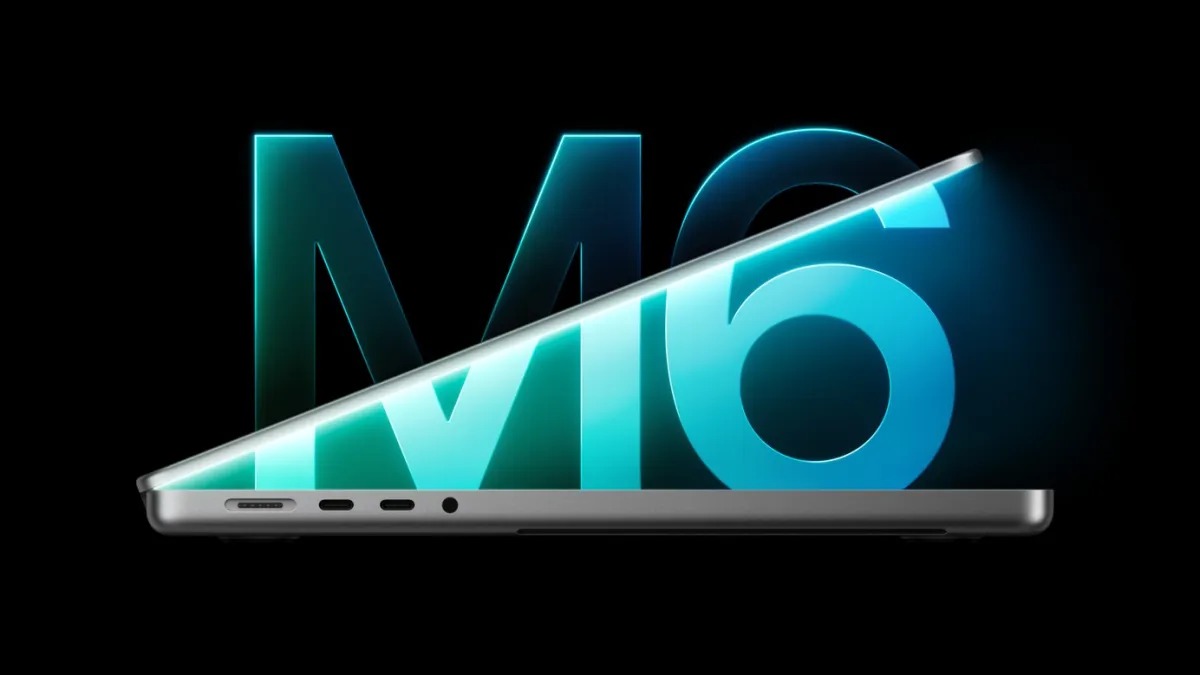
Anduril announced on Tuesday that it is collaborating with Qualcomm to advance this goal by launching a new computer named BlueChip. BlueChip reservations are expected to open in 2027.
Although there is still very little in terms of technical details – Luckey indicates that Anduril has not even completed contract signing with all component suppliers yet – this initial product will be a ruggedized laptop. It will be designed to withstand the harshest physical environments and meet the security requirements of the military, government, emergency personnel, and law enforcement departments.
Anduril indicates that approximately 90% of the components for the first-generation product will come from the United States or its allies, with its CPU being of particular note. BlueChip will be equipped with a Snapdragon X Series processor, which is manufactured at TSMC's large new factory in Arizona. Qualcomm CEO Cristiano Amon stated at the press conference that this CPU utilizes the same architecture as other laptops, including the architecture used by Microsoft Surface.
Luckey said, "As of now, approximately 90% of the components for this laptop come from the United States and its allies. We have a technical roadmap to gradually increase this to 100% localization over time." He added, "In the long run, our goal is to offer an option that is manufactured entirely in the United States, with 100% localization. That means everything should be locally produced, including the display screen, metal materials, magnetic materials, everything."
He gave an example, saying that they have already found an American supplier to provide the glass that covers the display screen, but the display screen itself is still one of those few components that are only produced in China, as he mentioned.
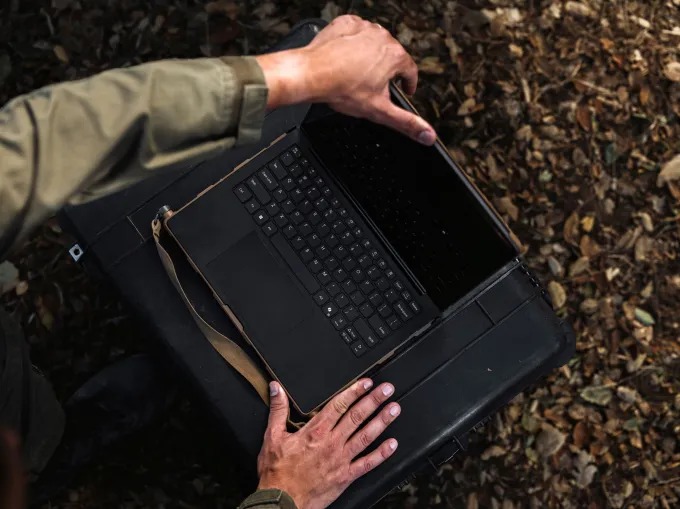
Luckey indicates that consumers can also place orders for BlueChip – the company may even establish a waiting list for interested consumers – but this first-generation PC is not designed for ordinary consumers. Firstly, as a ruggedized computer, it is relatively heavy, and due to the need to maintain durability in rainy, dusty, and other harsh conditions, the battery life is also limited.
More importantly, this product is designed to provide U.S. government agencies with computers that comply with relevant regulations and are manufactured in the United States. In this regard, its selling point is a transparent supply chain that customers can track and audit.
In a recent interview, Luckey said, "These computers are anti-surveillance computers. You have complete control over them. You know every single component inside of them, as well as every software component that runs on them."
Anduril is still working hard to ensure that this machine, based on the Arm architecture, can run the Windows applications smoothly, as well as some Linux released applications used by government departments, and it can even be compatible with some older software that is still in use by various institutions.
Although Anduril has not yet announced its pricing, Luckey is estimated to be about 20% more expensive than typical high-end PC.
Luckey said, "I really like BlueChip, but if I were an ordinary consumer making decisions purely out of rationality, rather than from any patriotic stance, I would prefer to buy a Dell laptop over a Anduril laptop because it is cheaper. I'm talking about ordinary consumers, right? They don't really need this product."
However, Luckey clearly hopes that Anduril will ultimately make laptops manufactured in the United States more in line with consumer needs. He said that this product is just the first in what he envisions as a complete line of BlueChip computers, and mentioned that he initially started his career by manufacturing virtual reality headsets for consumers.
He said, "I buy American cars, yet I end up purchasing computers made on the other side of the world – not only in China, but also in Japan and South Korea. As an American, I find this somewhat humiliating, because in my opinion, owning a computer should be an inherent right of mine, since it was the United States that invented them. Yet, I can't even afford to buy an American-made computer."
As for challenging China's electronic components manufacturing industry alone, it might be costly and almost adventurous. Luckey jokingly mentioned that his own reputation within the company is “a bit crazy,” as he always comes up with such grand ideas. (He admitted that he pushed the board of directors to spend $900 million on building a jet factory even before the company had secured any contracts.)
"This time it's not that case. In terms of this matter, my investors don't think I'm a madman," he said. In fact, the market for rugged computers itself is already worth about $5 billion.