IT News on October 25th: Samsung Electronics plans to launch the flagship Galaxy S27 series of smartphones at the beginning of next year, which are expected to be equipped with its own-developed processor Exynos 2700. According to a report by South Korean media Financial News this morning (October 25th), this chip outperformed Qualcomm's latest flagship processor in internal performance tests conducted by Samsung.
Test results show that Exynos 2700 outperforms Qualcomm products in both CPU and GPU. As a result, expectations for Samsung's self-developed mobile phone processors to regain competitiveness have increased.
Industry sources report that Samsung has recently used the Xiaomi 18 Pro Max for internal benchmark testing. The results show that the performance of the Exynos with 2700 points surpasses that of Qualcomm's sixth-generation Snapdragon 8 Super Elite edition.
IT's home has learned from the data that in the Geekbench 6.5 test, the multi-core score of Exynos 2700 was approximately 13,000 points, while the Qualcomm chip scored around 11,000 points, with the former leading by about 20%.
In the Geekbench 7.0 tests, Samsung's chip also led by about 15%. If compared with the slightly less advanced sixth-generation Snapdragon 8 Elite version, the lead of Exynos 2700 in the two tests increased to 44% and 36% respectively.
In graphics performance testing, Exynos also has a significant advantage with a score of 2700. In the peak graphics performance testing of large-scale games, the scores of Samsung chips are about 20% higher than those of Qualcomm's flagship models; in the basic graphics computation testing of common large 3D games, the lead is approximately 5%.
The Exynos series is a mobile phone processor independently designed by Samsung Electronics' LSI division, responsible for core tasks such as computing and graphics processing. The previous generation, the Exynos 2600, has been used in some models of the Galaxy S26 series as well as the Galaxy Z Flip8.
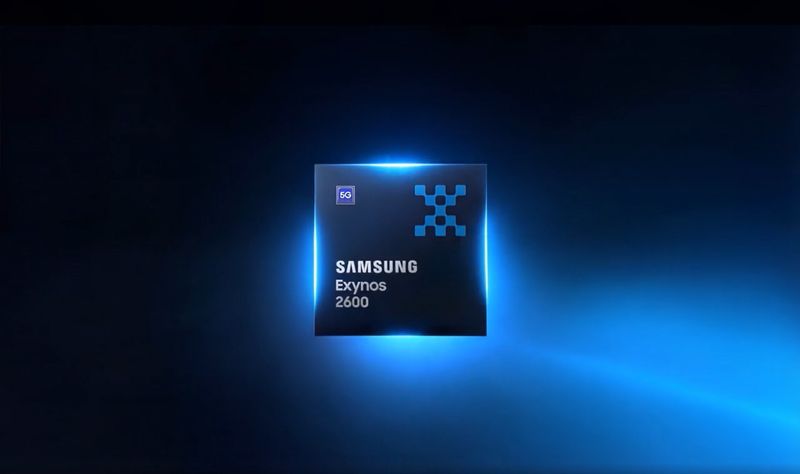
Exynos Plans to mass-produce using Samsung's second-generation 2nm process from its wafer foundry division (SF2P), and there is hope that by improving the heat dissipation package technology, the chip's heat generation can be reduced, further enhancing its performance.