

The so-called safe haven are what are known as "quality stocks." These stocks are typically defined as companies that have a long history of profit growth, possess sustainable competitive advantages, have a low level of debt, and whose management teams have been proven to be competent.
In recent weeks, driven by inflation stickiness, government borrowing, and the huge capital requirements for building AI infrastructure, interest rates have continued to rise, hitting hard many stocks related to AI transactions, including chip companies and cloud computing companies.
Investors had previously pushed these stock prices to astonishing levels based on expectations of future growth; but now they worry that if AI expenditures may decline, those expectations will also fall accordingly.
In contrast, quality stocks often have more mature businesses and a history of profit growth, therefore they exhibit lower volatility. Given market concerns about the sustainability of the AI construction boom transaction, Wall Street believes now is a good time to incorporate quality factors into one's portfolio.
Morgan Stanley has been emphasizing this factor in client reports over the past few weeks and once again supported this trading approach on Monday.
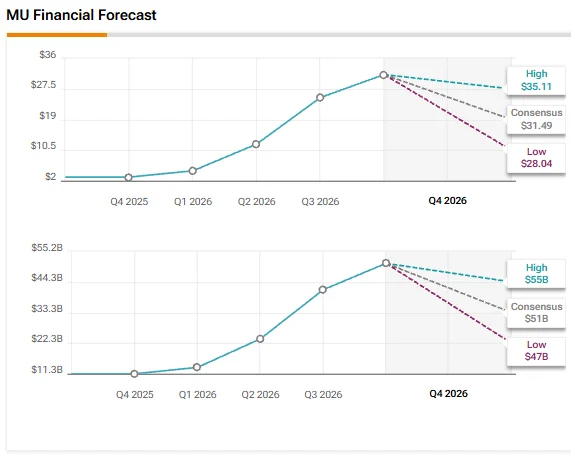
This line indicates that the gap in the breadth of earnings forecast revisions between high-quality stocks and low-quality stocks is worth noting. High-quality stocks are increasingly demonstrating better earnings growth compared to low-quality stocks.
The chief U.S. equity strategist, Mike Wilson, stated in a report: "Expected correction margins usually lead relative performance by about 6 to 12 months. When this indicator is at the top quintile of its historical correction range—like today—high-quality stocks tend to outperform low-quality stocks by about 8% on average over the following 12 months."
In a client report dated October 16, Piper Sandler indicated that quality stocks may be on the verge of outperforming. The institution noted that, based on historical standards, the performance of high-beta stocks seems to have peaked, and the returns of such companies are inversely correlated with those of quality factor stocks.
The company's chief U.S. equity strategist, Michael Kantrowitz, wrote: "When the best days of beta are behind us, the best days of quality lie ahead."
Manulife John Hancock Investments also stated in a report on Friday that, under the “significant concentration risk” posed by AI stocks, quality stocks and value stocks are two approaches they prefer to use for diversifying their investment portfolios.
However, shifting to quality stocks does not necessarily mean giving up AI trading completely.
AllianceBernstein, the portfolio manager of the US Strategic Core Stocks Strategy, James Russo, stated last week that he is "strongly shifting" towards quality stocks and mentioned that there are two sectors in AI trading that meet this criterion: large-scale cloud service providers and chip stocks with sustainable competitive advantages.
At the same time, AI Quality Growth ETF ( AQGX ) provides exposure to quality stocks in the AI transaction.