IT News on October 20th: According to the latest research report from JPMorgan Chase, Apple plans to invest heavily to secure TSMC's 1.4-nanometer production capacity in advance. The 2028 model of iPhone is expected to be among the first models to feature A-series chips manufactured using this process.
Last month, Apple released a A20 Pro chip based on 2-nanometer technology, which is used in the new iPhone 18 Pro, iPhone 18 Pro Max models, as well as the foldable screen model iPhone Duo. According to research reports, Apple has not slowed down its pace due to the mass production of 2-nanometer chips and has already begun to lay out for 1.4-nanometer chips in two years. Below is a screenshot of the relevant research report from IT:
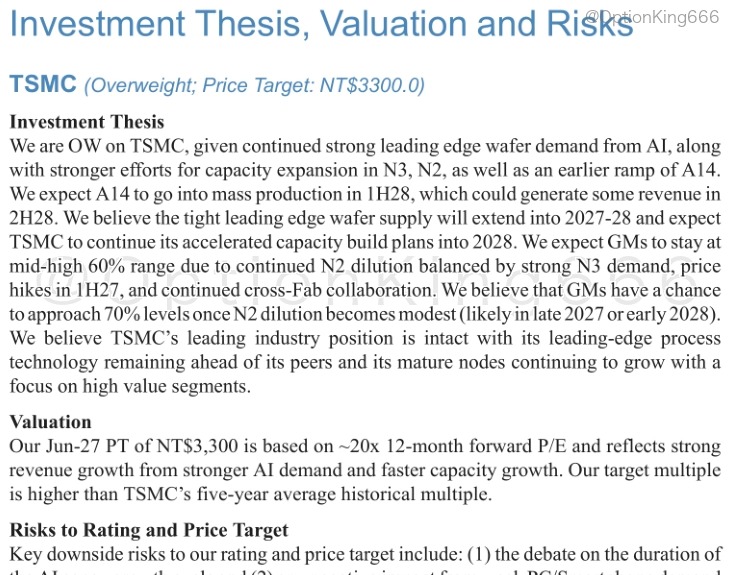
For ordinary users, reducing the process size from 2 nanometers to 1.4 nanometers typically means that more transistors can be accommodated within the same chip area, which is expected to result in stronger performance, lower power consumption, and better heat dissipation. In terms of actual user experience, this may translate into smoother functionality, longer battery life, and a thinner and lighter design.
The research report suggests that locking up production capacity in advance is also seen as a key strategy for Apple to compete in the AI computing power race. As AI chip companies such as NVIDIA compete fiercely for TSMC's most advanced manufacturing capabilities, Apple may face risks of capacity shortages and delayed deliveries if it does not place orders early enough.