Judge dismisses the request of CFTC and Gemini to revoke a $5 million settlement agreement
Cointelegraph
1h ago
Ai Focus
A U.S. federal judge rejected a request jointly filed by the cryptocurrency exchange Gemini and the U.S. Commodity Futures Trading Commission (CFTC) to overturn a $5 million settlement reached between the two parties in January 2025. The judge held that changes in the CFTC's enforcement focus, as well as allegations of improper conduct by its enforcement officers, were not sufficient to override that settlement.
Helpful
No.Help

Judge dismisses the request of CFTC and Gemini to revoke a $5 million settlement agreement

A U.S. federal judge rejected a request jointly filed by the cryptocurrency exchange Gemini and the Commodity Futures Trading Commission (CFTC) of the United States. Although regulatory authorities determined that, according to current enforcement standards, they would not have proceeded with this case, the court still refused to overturn the $5 million settlement agreement.

On Thursday, Judge Alvin Hellerstein in the U.S. region ruled that changes in the enforcement focus of CFTC and allegations of improper conduct by its law enforcement agencies were not sufficient grounds to overturn the settlement agreement reached in January 2025.

On May 27th, CFTC and Gemini jointly requested the court to revoke the settlement agreement. Prior to this, an internal review by regulatory authorities revealed that their enforcement departments were involved in suspected improper conduct, including relying on a questionable informant, exerting undue regulatory pressure, and attempting to prevent the disclosure of evidence.

This ruling means that the permanent ban on Gemini from making false or misleading statements to CFTC remains in effect. The settlement agreement also prohibits Gemini from publicly denying these findings, however, in June, the regulatory authorities stated that they would no longer enforce such restrictions.

Gemini has paid a fine of 5 million US dollars. CFTC previously informed Cointelegraph that even if the settlement agreement is overturned, this fine will not be refunded.

The judge stated that Gemini decided to reach a settlement on their own before the trial.

The core of this case lies in how Gemini operates its Bitcoin auctions. According to the consent order from January 2025, this exchange failed to disclose that some customers used borrowed funds for trading, self-trading occurred despite protective measures in place, and certain traders received special fee arrangements.

Gemini also submitted trading volume data, but did not disclose that some of the trading activities involved the aforementioned practices.

Hellerstein indicates that Gemini was aware of the issues present in the CFTC case at the time of agreeing to the settlement; less than three weeks remained until the trial was to begin. The judge noted that although the exchange later obtained more CFTC internal documents, this new information was still not sufficient to overturn the settlement agreement that Gemini had voluntarily accepted.

The judge also dismissed another claim that President Donald Trump's executive order on digital assets and the new enforcement methods of regulatory agencies were sufficient to constitute grounds for relief. The judge stated that these changes reflected policy adjustments, rather than any significant changes in the law.

The chairman, Timothy Massad, previously referred to the regulatory authorities' attempt to overturn a settled case as "extremely unusual" and stated to Cointelegraph that the public "deserves a better explanation."

Tip
$0
Like
0
Save
0
Views 26
CoinMeta reminds readers to view blockchain rationally, stay aware of risks, and beware of virtual token issuance and speculation. All content on this site represents market information or related viewpoints only and does not constitute any form of investment advice. If you find sensitive content, please click“Report”,and we will handle it promptly。
Submit
Comment 0
Hot
Latest
No comments yet. Be the first!
Related
To prevent a large loss of bank deposits, Citibank and Bank of America restrict AI smart entities from accessing customer accounts
According to the British "Financial Times," the U.S. banking industry is warning regulators that AI intelligents may automatically transfer idle funds for users in pursuit of higher returns, which could lead to a loss of bank deposits. Citibank, Bank of America, and JPMorgan Chase have already taken or announced measures to restrict external AI intelligents from accessing customer accounts, and regulators have privately welcomed these practices.
The Block
·2026-10-17 12:37:16
7
Micron or CoreWeave: Who is a strong buyer after today's decline, and who still has more room for upside? This is how Wall Street sees it
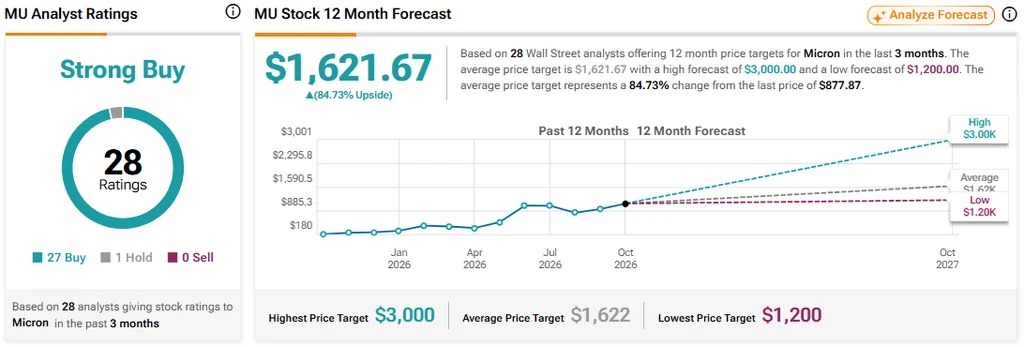
Tech stocks came under pressure on Friday, with the Nasdaq falling by about 2.2%, as the market re-evaluated its enthusiasm for AI. Wall Street believes that Micron received strong buy ratings, while CoreWeave carries higher risks, but also potentially greater returns.
Businessinsider
·2026-10-17 12:08:10
15
The most dangerous divergence in the US stock market: Ordinary stocks have already plummeted, how much longer can AI giants hold on?
Morgan Stanley's chief equity strategist Mike Wilson warns that tighter financial conditions are quietly accomplishing some of the Federal Reserve's tasks, but the impact is mainly concentrated on ordinary stocks rather than AI giants. Weighted indices such as the S&P 500 have clearly fallen behind market capitalization-weighted indices, and financial stocks, yield rates, and equity risk premiums are all signaling signs of pressure relief.
Wallstreetcn
·2026-10-17 11:56:26
24
Xiong Jijun, Vice Minister of the Ministry of Industry and Information Technology: Energy storage battery production exceeded 420GWh in the first half of the year, resolutely preventing "involution-style" competition
On October 15, 2026, the World Energy Storage Conference opened in Ningde, Fujian. Xiong Jijun, Vice Minister of the Ministry of Industry and Information Technology, stated that China has achieved significant progress in the development of new energy storage industries. In the next step, efforts will be made to balance development with safety, strengthen technological innovation, adhere to demand-driven approaches, jointly build a global ecosystem, resolutely prevent "involution-style" competition, and promote the industry's transformation from scale expansion to innovation-led growth. Data shows that in the first half of 2026, the production of energy storage batteries exceeded 420 GWh, a year-on-year increase of 110%; as of the end of June 2026, the cumulative installed capacity of new energy storage systems exceeded 153 million kilowatts, a 50-fold increase from the beginning of the 14th Five-Year Plan period.
The Block
·2026-10-17 11:36:55
25
View More