

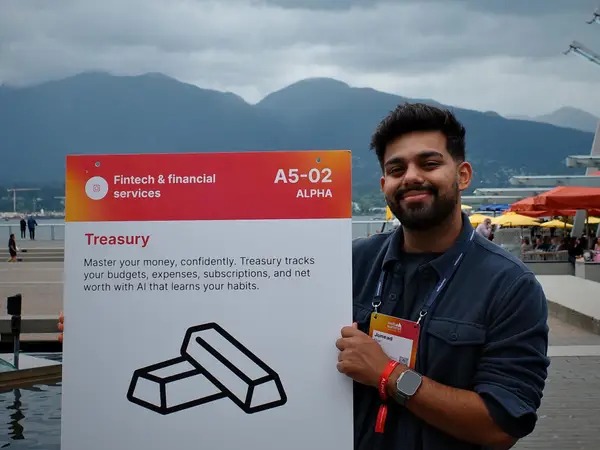
This is an autobiographical article compiled based on an interview with a 25-year-old entrepreneur from Seattle, Junead Khan. He used to work at Microsoft and after resigning last year, he focused on his own startup, Treasury. The following content has been edited for length and clarity.
When I joined Microsoft full-time in 2023, my experience was very good.
That was my first job after graduating from university, and I happened to catch the upsurge of AI. I participated in the deployment of data centers around the world, which was a great opportunity.
Later on, there were some service interruptions with Microsoft. By the beginning of 2025, I noticed that the company placed even more emphasis on security and service stability. The speed at which products were launched seemed to have slowed down. This began to make my work less enjoyable for me.
At the same time, I see new AI programming tools emerging continuously. I want to try them out more quickly, and I also want to obtain access to use these tools sooner. My income from Microsoft is quite good: in 2024, my earnings exceeded $200,000, which includes stocks and bonuses. However, I feel that I haven't learned those AI skills that I desire to acquire.
I started to consider leaving the company more seriously in order to work on a AI startup project that I have been working on part-time for a while.
However, I'm not ready to resign right away.
I am advancing my entrepreneurial project in addition to my full-time job.
My entrepreneurial idea first emerged in my fourth year of university.
I was born and raised in the UK, and in 2019 I came to the United States to pursue a Bachelor's degree in Computer Science at the University of North Carolina. I have funds that need to be managed in both the UK and the US, and I feel that the existing financial tools are not suitable for my needs.
Around the same time, the AI model also became increasingly powerful. I began to think that perhaps this technology could be used to create a financial advisory tool for ordinary people. Many people may not have access to financial advisors, or they are not willing to spend thousands of dollars each year to hire someone to provide such services.
So, after graduating from university and before joining Microsoft that same summer, I began to build Treasury. I describe it as a kind of "money coach" or financial mentor.
For the next approximately two years, I worked during the day and dedicated myself to this project in the evenings and on weekends. Later on, I began to seriously consider leaving Microsoft.
I didn't leave until I received Microsoft's stocks and bonus.

Last year, I applied to several startup accelerators, including Y Combinator. My plan was that if I got accepted, I would quit Microsoft and work full-time on Treasury.
But I wasn't admitted.
After that, I decided that I didn't want to wait for others to "approve" my full commitment to Treasury. So, I began to regard the money I earned at Microsoft as seed capital for starting my own business.
I also want to be more strategic when it comes to my resignation timing. I’ll wait until a portion of my stock options have vested, and after working at Microsoft for a sufficient length of time, I won’t have to repay any part of my signing bonus.
Last August, after working at Microsoft for about two years, I resigned, and two months later, I officially launched my own company.
I have built an audience by sharing my ups and downs in my experiences.
I also believe that as AI makes software engineering easier, personal branding and audience will become increasingly important throughout one's career. Even if Treasury ultimately does not succeed, I think documenting my entrepreneurial journey could put me in a more advantageous position if I were to look for a job in the future.
I think this approach has resonated with people. Over the past year, the total number of my followers on various platforms has grown to about 30,000.
About a year ago, I had less than 500 followers on TikTok. Today, I have more than 9,000 followers.
For some people, it might be writing articles or creating long videos. Find the platform and content format that best suit you and your style.
AI makes me feel that I can build the company on my own.
The reason I feel that I can try it alone is that AI has greatly changed software development.
A few years ago, I might have needed a co-founder to help me build the product behind my business. But now, with Claude Code and Codex, I can code much faster. Without a co-founder or venture capital, it feels feasible to create a basic version of a software product first.
If I ultimately decide to raise funds, I would prefer to do so after first verifying my idea with my audience, rather than giving up equity before even trying it out.
These days, Treasury, only I am still doing it alone.
I still live off my savings now.
Treasury now has paying customers, with revenue exceeding $6,000.
But this is still in a very early stage. I don’t pay myself a salary. All the money the company earns stays within the company, and I’ve been living off my savings accumulated before leaving Microsoft.
When I first resigned, I told myself that I would give the company a year to see how things would develop from there.
The reason I continue to do it is because I believe I have created a good product, and I also have a group of people who hope for the company's success. Now, my focus is on finding ways to reach more people and expand my business.
Leaving a high-paying job at a time when there were no paying clients or external financing was indeed risky. But one thing I learned from this experience is not to wait for others to give you permission to pursue something.
I used to think: if I get into this accelerator, then I’ll quit my job; if that happens, then I’ll move on to the next step. Sometimes, we regard these things as a form of recognition.
What I have learned is that sometimes the permission you truly need comes only from within yourself.