














Bitcoin fell below $81,000, triggering a large-scale liquidation of cryptocurrencies, while traders sent BTC to exchanges while in a loss-making state.
The sell-off of Bitcoin ( BTC ) and altcoins triggered over $1 billion in liquidations within 24 hours, with short-term holders transferring tens of thousands of BTC to exchanges while in a loss-making state.
Key points:
- After Bitcoin fell to $80,350, the scale of cryptocurrency liquidations in 24 hours approached $1.1 billion.
- Analyst Rekt Capital warns that a further decline in the price of BTC will increase the likelihood of breaking below a key support level.
- Short-term Bitcoin holders transferred over 55,000 BTC to exchanges on Thursday, and they are in a loss-making state.
Bitcoin falls to $80,350, triggering $1.1 billion in liquidations
CoinGlass data shows that within 24 hours up to 10 a.m. on UTC, the total amount of cryptocurrency settlements reached 1.09 billion US dollars.
This is the largest single-day liquidation volume since August 21st. At that time, BTC / USD rose from $73,000 to $79,500, reaching a two-month high and triggering a $1.3 billion cryptocurrency short liquidation. In contrast, on Thursday, long positions accounted for $1.05 billion of the total liquidation.
BTC / USD and the settlement situation of cryptocurrencies. Source: CoinGlass
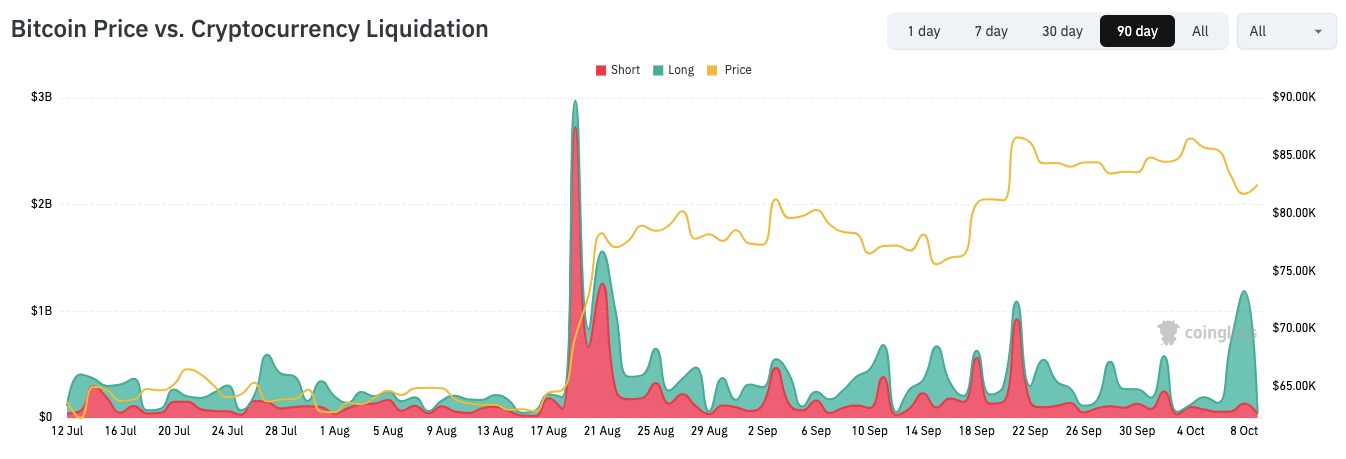
This sale occurred after the U.S. government transferred more than 12,000 BTC that had previously been confiscated. Such transfers may exacerbate potential sales expectations.
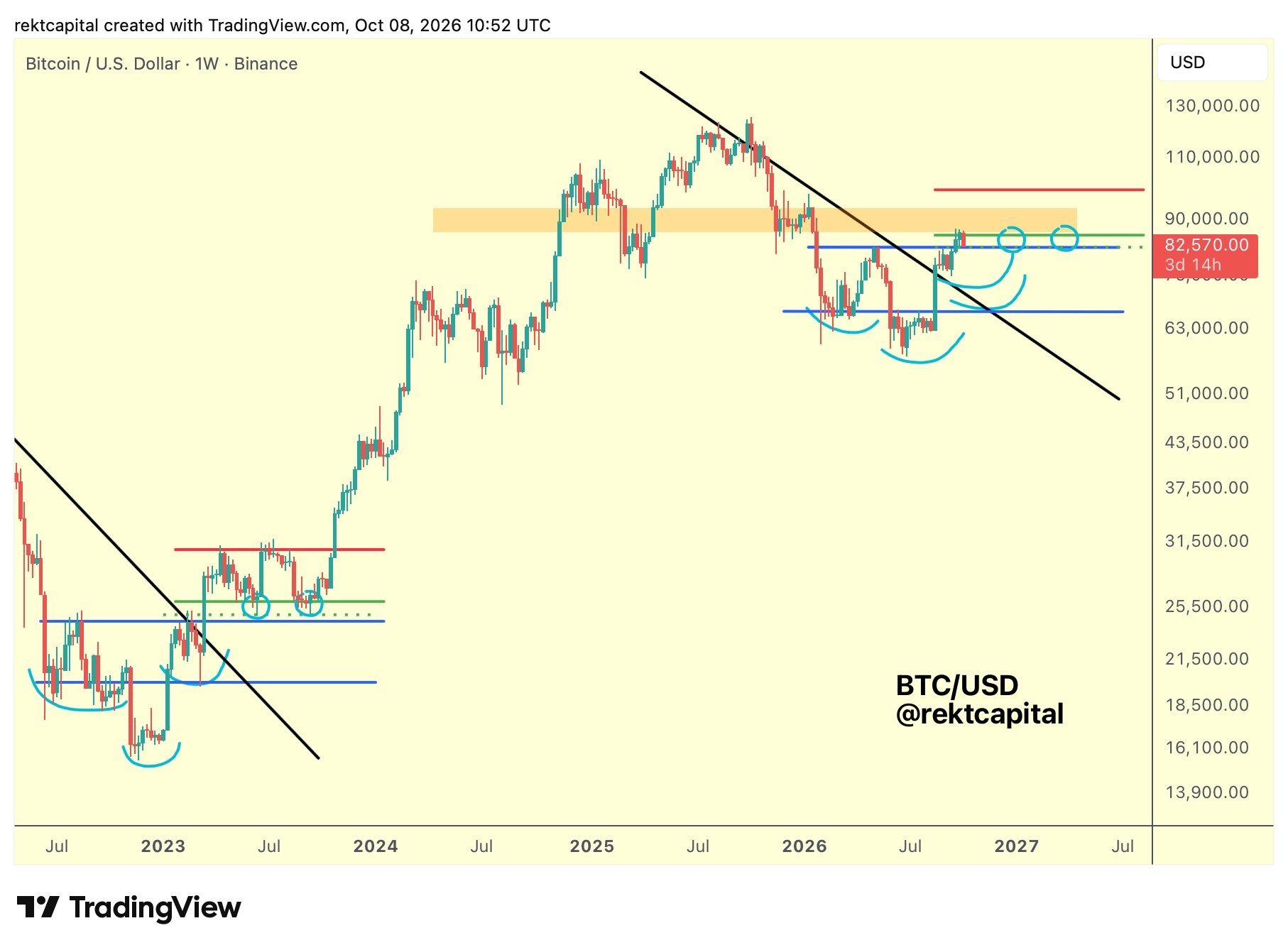
Data from Bitstamp shows that BTC / USD once fell to $80,350, hitting its lowest level since September 18, before rebounding to around $82,500 on Friday. This price level has been a key position in Bitcoin's overall upward trend since early July and also serves as a breakout point for a head-and-shoulders pattern. Bitcoin needs to hold this level as support in order to confirm a bullish reversal.
Trader and analyst Rekt Capital has been tracking this reversal pattern and its similarities to Bitcoin's recovery in 2023, and he now believes that the upcoming weekly close is of vital importance.
"Bitcoin is currently failing its backtest at around $82,500. If the weekly chart closes below $82,500 and this becomes a resistance level, then Bitcoin will return to its macro accumulation range," he stated on X on Thursday.
BTC / USD Weekly chart. Source: Rekt Capital on X.com
Short-term holders transferred 55,600 BTC to the exchange and are in a loss-making state.
On-chain data also shows that as the market declines, newer Bitcoin investors are under pressure.
According to Amr Taha, the author of the analysis platform CryptoQuant, short-term holders—entities that have held Bitcoin for no more than six months and have not sold it—transferred 55,600 BTC to the exchanges on Thursday, and they were in a loss-making state.
A loss-making trade refers to a situation where the price of a token at the time it is sent to an exchange is lower than its price in the previous transaction. This usually reflects investors' impulse to cut their losses and exit the market urgently, as they fear that delaying further sales would result in even greater losses.
CryptoQuant pointed out that the loss on Thursday exceeded the level of June 26th; at that time, Bitcoin fell below $60,000 for two consecutive days.
"It is worth noting that the trading price of Bitcoin at that time was higher than $81,000, while in June it was $59,300, representing a price difference of over 36%," wrote the author, and added that even if assets are transferred to an account, exchange users may not necessarily sell all their holdings.
Short-term Bitcoin holders transfer their profits and losses to exchanges. Source: CryptoQuant
"Historically, aggressive selling by short-term participants due to losses may occur simultaneously with surrender-style selling in the short term, which can deplete weaker holders and create conditions for a subsequent price rebound," the report states.