Nasdaq CEO claims tokenization could release tens of billions of dollars in trapped capital
CNBC
1h ago
Ai Focus
Nasdaq CEO Adena Friedman indicates that tokenization has the potential to release tens of billions of dollars in capital that is currently being held as collateral within the global financial system. She stated that tokenizing assets such as government bonds, stocks, and money market funds, as well as the flow of funds themselves, can make collateral more liquid. She also mentioned that institutional interest in tokenization has increased over the past year, partly due to the Genius Act passed by the United States to establish a regulatory framework for stablecoins.
Helpful
No.Help

Nasdaq CEO Adena Friedman stated that tokenization has the potential to release tens of billions of dollars in capital that is currently being held as collateral within the global financial system.

At the TOKEN2049 conference in Singapore, Friedman stated in an interview with Joanna Ossinger that tokenizing assets such as government bonds, stocks, and money market funds, as well as the capital flows themselves, could potentially make collateral more liquid.

She said, "If you tokenize all these tools as well as the capital flows, then the collateral will become very flexible."

Tokenization refers to the process of representing financial assets such as stocks and bonds as digital tokens that can be transferred through blockchain technology.

Friedman indicates that in the past year, there has been an increase in interest from institutions in tokenization. Part of the reason for this is that the United States has passed Genius Act, which establishes a regulatory framework for stablecoins.

She said, "If we can tokenize currency, then we can also tokenize capital flows."

She stated that this growing interest from institutions is converging with the needs of retail investors. Retail investors have long desired the ability to trade around the clock, and Friedman said that the retail ecosystem "is about 10 years ahead in this regard."

Moving towards 24/7 trading

Friedman indicates that transitioning to a fully 24/7 market will be a major undertaking for the financial industry.

She said, "The easiest part is the exchange infrastructure."

Friedman indicates that financial institutions traditionally update their systems and manage risks during market closures. However, to operate around the clock, these processes, including risk and collateral management, must be continuous.

She said, "Everything must always be real-time."

She stated that artificial intelligence can help financial institutions achieve this transformation. Nasdaq has already introduced a series of digital agents in its risk management platform, which initially provided suggestions, Friedman said.

She added that over time, banks could use these agents to take more direct actions.

Friedman said, " AI is crucial 24/7."

Connecting Cryptocurrencies with Traditional Finance

The co-CEO of cryptocurrency exchange Kraken, Arjun Sethi, told CNBC that overseas companies are also paying attention to tokenization and the opportunities to enter the US capital market.

Sethi mentioned that a company with an annual revenue of about $25 million is exploring ways to enter the capital market, while there are also larger international companies interested in tokenization and listing in the United States.

He said that tokenization can help companies around the world expand their access to capital markets.

However, Friedman indicates that not all assets are suitable for 24/7 trading.

She said, "Not every asset has sufficient liquidity to support a 24/7 environment."

Nevertheless, Friedman indicates that a stronger connectivity between the global financial systems may also open the door for some investors who were previously unable to access a wider range of asset classes.

Tip
$0
Like
0
Save
0
Views 42
CoinMeta reminds readers to view blockchain rationally, stay aware of risks, and beware of virtual token issuance and speculation. All content on this site represents market information or related viewpoints only and does not constitute any form of investment advice. If you find sensitive content, please click“Report”,and we will handle it promptly。
Submit
Comment 0
Hot
Latest
No comments yet. Be the first!
Related
Must-read before market opening: US semiconductor and storage sectors slump; many A-share companies report pre-increase in third-quarter earnings
The People's Bank of China issues a document on its stance on RMB exchange rate policy, emphasizing adherence to a managed floating exchange rate system based on market supply and demand; Federal Reserve Governor Powell suggests that further interest rate hikes may still be necessary in the future to curb inflation. The three major U.S. stock indices showed divergence, with sectors such as semiconductors, storage, and optical communications weakening, while several A-share companies disclosed pre-increase forecasts for their third-quarter earnings or business progress.
The Block
·2026-10-09 09:51:28
11
OpenAI Launches GPT-6.1 Sol Ultrafast Version: Price is 6 times that of the standard version, with a speed up to 8 times faster
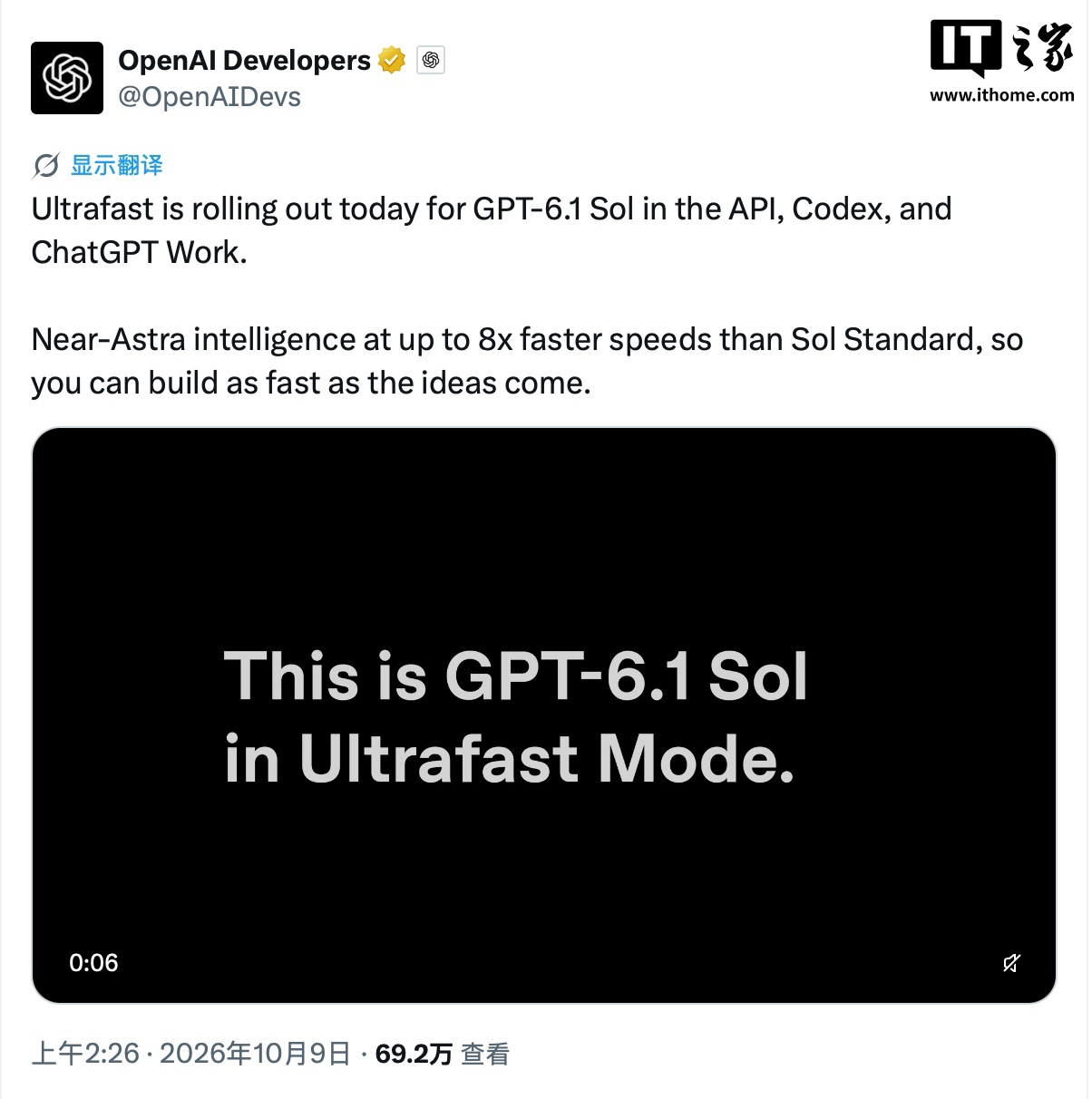
OpenAI Developers announces that the Ultrafast version of GPT-6.1 and Sol has been officially launched on API, Codex, and ChatGPT Work. This version can reach up to 8 times the speed of the standard version of Sol, and is priced at 6 times that of the standard version. The input price is $12 per million tokens, and the output price is $60 per million tokens.
The Block
·2026-10-09 09:51:27
14
Cook explains why he stepped down before the release of iPhone and Duo: to create a favorable start for Tenuis
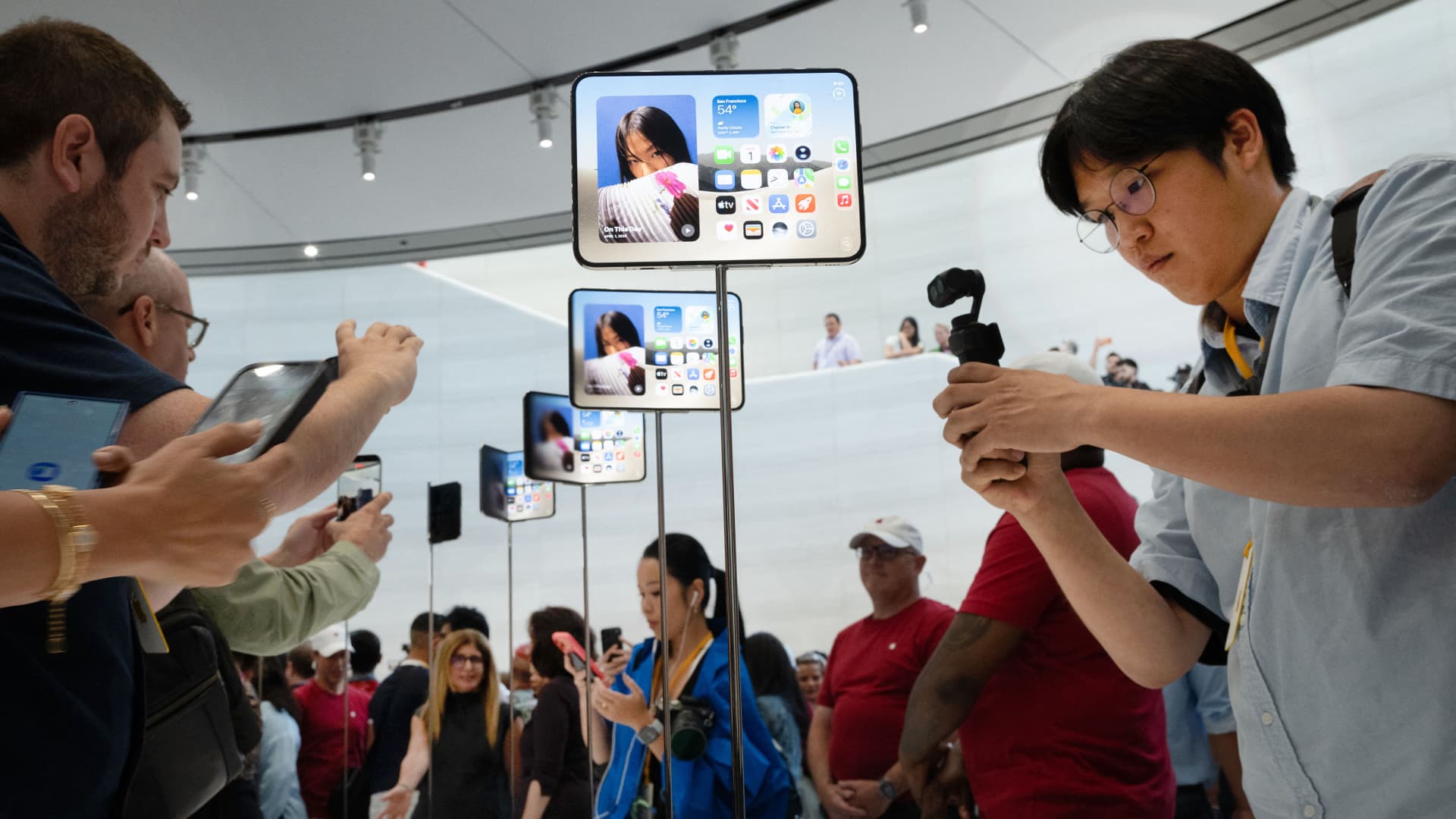
Cook stated that he stepped down from his position at Apple on September 1st. Part of the reason was to create a favorable starting point for his successor, John Ternus, 8 days before the release of iPhone and Duo. He mentioned that this transition process had been underway for several years, with the goal of achieving a "textbook" transformation.
The Block
·2026-10-09 09:41:52
11
Overnight News on October 9: NASDAQ Falls, AI Bubble Worries Rise Again, Gold Prices Rebound, Oil Prices Increase, US Mortgage Loan Rates Rise for Seven Weeks Consecutive
On October 9th, following the close of U.S. markets overnight, the Nasdaq index fell by more than 1%. AI trading came under pressure after OpenAI reported declining revenue; Apple will hold a product launch event in New York on October 13th. Most popular Chinese concept stocks declined, oil prices saw their largest increase in a month, and gold prices rebounded from their lows.
The Block
·2026-10-09 09:41:51
12
Nasdaq and S&P both closed lower; OpenAI sent chip stocks tumbling, crude oil soared; Trump says he won't attack Iran before midterms
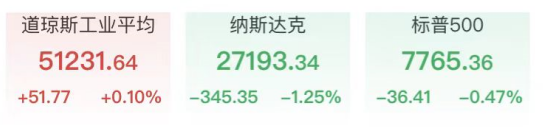
On Thursday, U.S. stocks showed mixed movements, with the Dow Jones slightly rising, while the Nasdaq and the S&P 500 fell. Affected by news related to OpenAI, chip stocks and the optical communications sector came under pressure, with Broadcom, Oracle, and others declining; at the same time, crude oil prices soared due to concerns about the Middle East situation, and U.S. Treasury yields declined. Stocks such as PepsiCo and Palantir performed relatively well.
The Block
·2026-10-09 09:41:49
12
View More