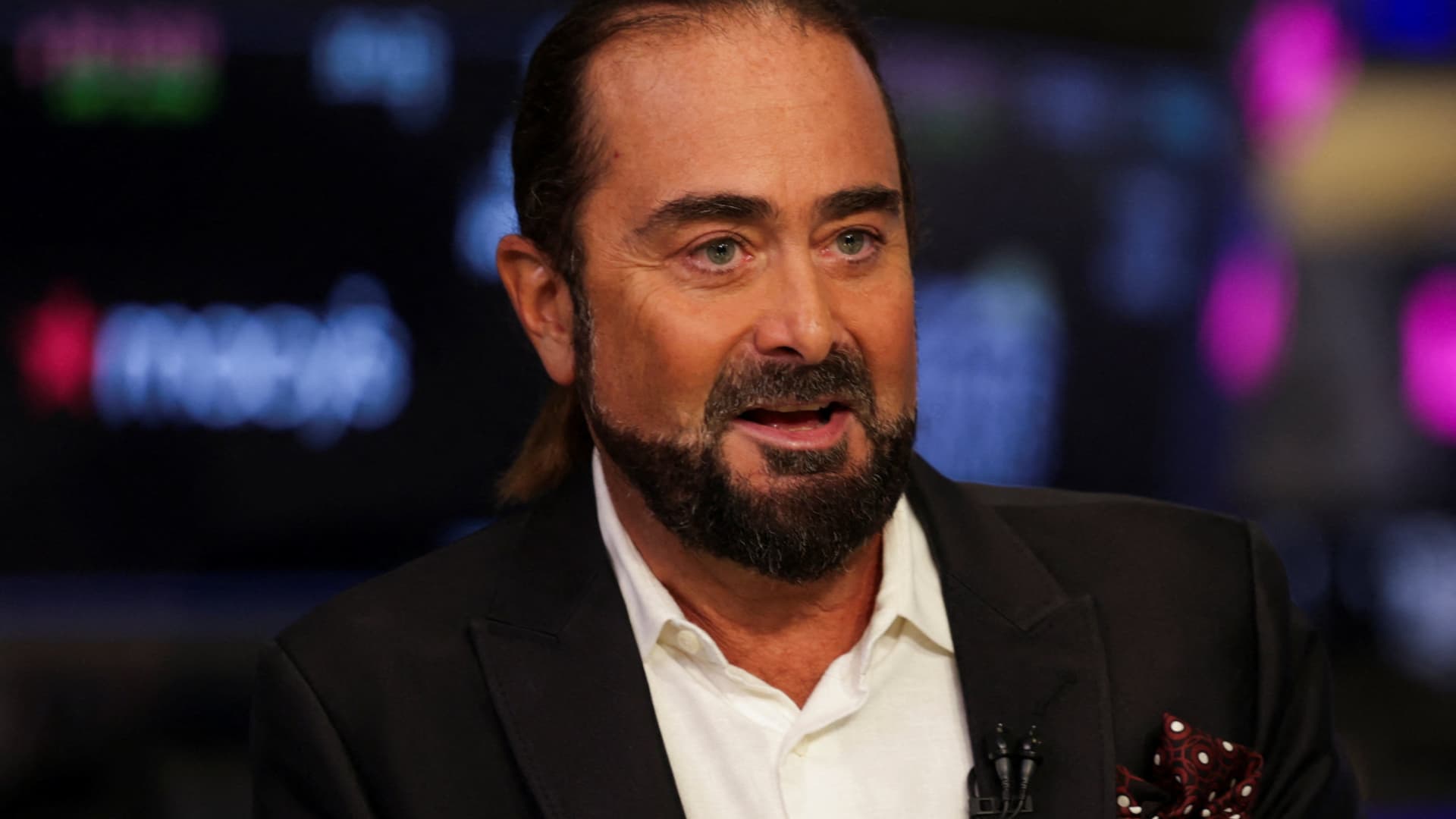


It seems that "Catch Me If You Can" made the wrong choice for the male lead back in the day, because the real "secret genius" is actually Ben Affleck. Earlier this year, this actor sold his own film production startup company AI to Netflix, with a reported transaction amount of 587 million dollars; and this week, he became popular online for demonstrating his understanding of AI technology, neural networks, machine learning, and other topics in several recent interview videos.
He said he could even write a bit of Python.
The last time Affleck talked about his interest in technology was during this week's “One More Question” series on GQ. He started off modestly by saying, “I’ve always had a bit of a fondness for computers since I was a child.” Then, he went on at length about the development of AI in film production, using terms such as machine learning, neural networks, transformer, tensor, GPU, and reasoning.
In a snippet that is widely circulating, Affleck explained to interviewer Zach Baron that he entered this field during the transition from film to digital cinema. Throughout his speech, he continuously clarified terms for the interviewer to ensure they understood what he was saying.
“I’m becoming increasingly interested in that area, and visual effects workflows have always involved machine learning over the years,” Affleck said. “So I can write some pretty crappy Python scripts and the like. Because convolutional neural networks – which are sort of the predecessors to what transformer can do – and transformer can do even more calculations at the same time – you do things like what’s known as tensor; it’s basically converting visual images into numbers, such as batch numbers, frame numbers, the red, green, blue values of each pixel in each frame, and so on. That’s pretty simple, right?”
No, Ben Affleck, it’s not that simple, and that’s also why this video has become so popular.
Subsequently, the actor continued to discuss how neural networks can be used for pattern recognition, edge detection, or feature extraction. He described it as "recognizing enough patterns so that we know, for example, that this is a windowsill, and therefore we can more easily remove the green screen image and replace it with something else."
He also admitted that he sometimes uses his status as a Hollywood star to connect with emerging AI technologies. Affleck said that he has visited institutions such as OpenAI, which ultimately helped him understand how he could more directly participate in the field of AI.
When the interviewer continued to press for details, Affleck explained how AI can assist in film production without replacing it, which also led to his founding and selling his own startup in this field. (He referred to the figure of $587 million as "not accurate" and pointed out that he does not hold a majority stake in the company.)
“I bet on the idea that if we want to do this in an ethical manner, and in a way that allows this technology to truly collaborate closely with the artists in this community – a community that has very fixed and long-standing relationships surrounding issues such as portrait rights – then we must create our own dataset,” he said. “So I raised funds, spent about eight months, and utilized many cameras and equipment to create a dataset that serves as training data for open models, to accomplish some discrete tasks. That is, to link the training code with the inference code, and to focus on tasks that are truly concrete and capable of creating value.”
In another popular segment, Affleck was interviewed by Lucas Shaw from Bloomberg at the Screentime 2026 conference held in Los Angeles. He talked about how he fine-tuned the AI model by using open-source models, unfreezing weights, and then training them to meet certain film standards. In this way, film producers can retain their own proprietary works while also benefiting from the learning outcomes obtained through training their unique models.
This actor also used this technology in his own movie " Animals ", and AI helped to complete the post-production process.
At one point, he also mentioned the concerns from the outside world regarding AI and its potential for causing “doomsday”-like consequences. However, his concerns were clearly more realistic.
"When I worry about AI, what I worry about is the situation of the children at school. I'm concerned that the distribution of A in universities has increased by 30% over the past three years. I'm worried about learned helplessness. I'm concerned about responsible use. I'm not worried about The Internet of Things, nor do I think it will take over the [film] industry in any meaningful way. I think it will have a beneficial effect," Affleck said.