














Good morning. Chevron is moving its Chief Financial Officer from a financial position to a core role in operations.
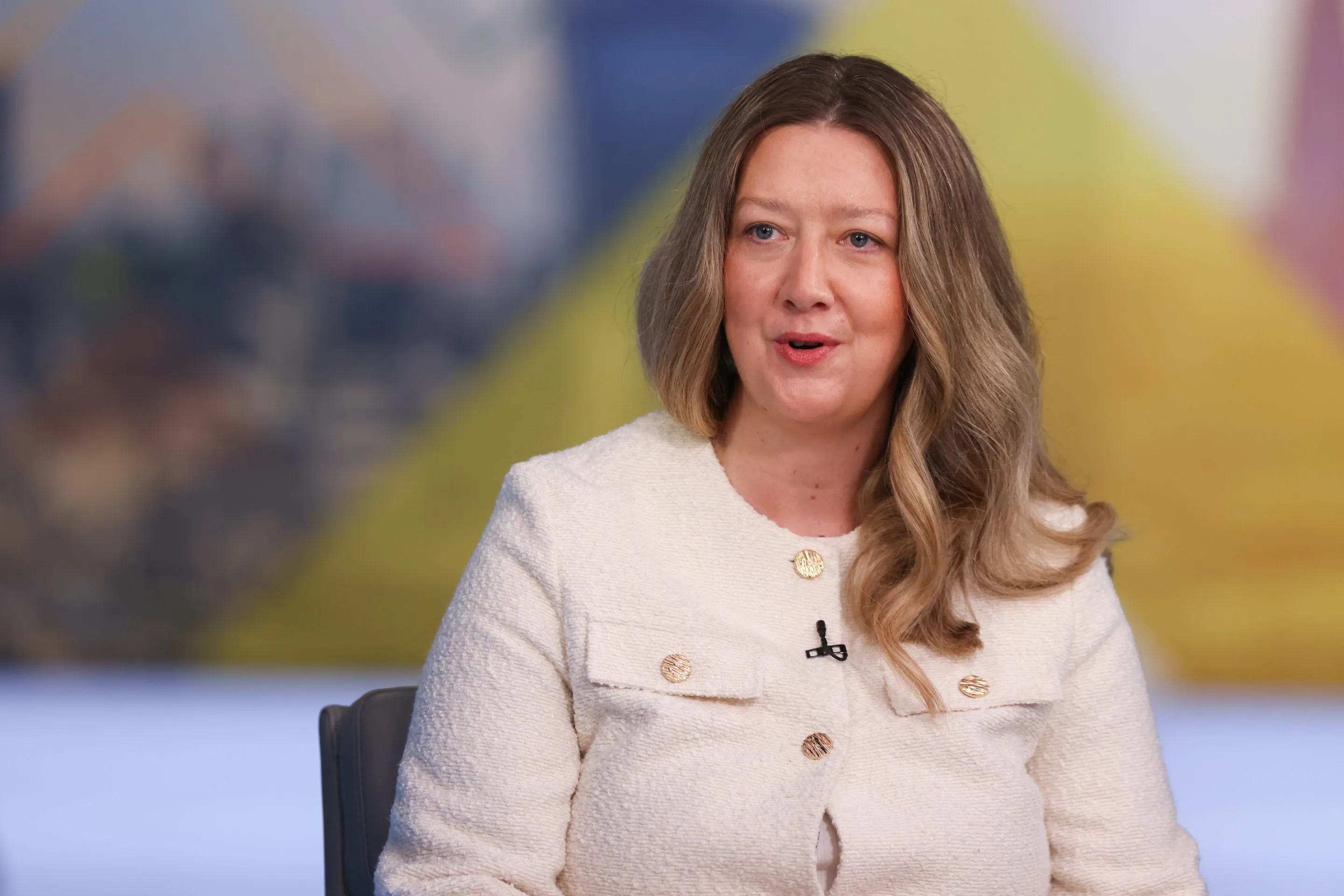
Chevron announced on Monday that the current CFO Eimear Bonner will take on the role of President of Oil, Products, and Natural Gas Business starting from January 1st, responsible for the company's core businesses throughout the value chain. The current President of New Energy Business, Jeff Gustavson, will succeed her in the position of CFO.
Bonner's career path at Chevron is quite unique: starting as an engineer, then becoming the technical leader, and now she has taken on the role of President of Operations. Such a combination might make her a particularly well-rounded candidate to lead a large oil company, but Chevron has not indicated whether this is part of any succession plan for CEO.
She joined Chevron in 1998 and initially worked as an offshore petroleum engineer in the UK. Over the course of more than 20 years, she held various engineering, operational, and strategic positions, including that of General Manager at Tengizchevroil LLP in Kazakhstan. In 2021, she became Chevron's first female Chief Technology Officer. Three years later, she transitioned from CTO to CFO.
In the new role, Chevron stated that Bonner will be responsible for safe and reliable operations, strict capital allocation, outstanding performance across asset classes, and optimization of the value chain.
This appointment is not just an operational position; it allows her to apply the financial and strategic insights she has accumulated while working on CFO to some of Chevron’s largest operational challenges.
I inquired with Chevron whether Bonner and Gustavson are considered potential internal successors to the chairman and CEO Mike Wirth. Wirth has led the company for nearly a decade.
A spokesperson stated in an email: "Chevron is overseen by its board of directors, which maintains a robust succession planning process. We have a strong leadership team within the company and a deep pool of senior executives ready to lead the business at any time. Our strategy, priorities, and commitment to strict execution remain unchanged, and we are well-prepared for continued success."
For recruitment experts, the career trajectory of Bonner is quite representative. Scott W, co-managing partner of the executive headhunting firm Crist Kolder Associates, said that her promotion path was a "perfect script" cultivated by CEO. He mentioned that her experience in technical and financial positions provided her with "in-depth on-the-ground training" in two key areas.
“Simmons indicates that the CFO position provides a uniquely insightful perspective, allowing executives to see the overall picture of the company.” He expects that the board of directors will continue to consider transfers to the CFO position as part of the CEO training program. “Diverse experiences are crucial for nurturing future CEO, and the background of Bonner serves as an excellent model.”
Transform scale into returns
This CFO handover occurred at a critical moment for Chevron, which ranks 21st on the Fortune 500 list. In the second quarter of this year, Chevron reported profits of $12.1 billion and a return on invested capital of 21%. At the same time, U.S. crude oil production reached a record high, with global production increasing by 20% year-on-year, in part due to the existing assets of Hess as well as the growth in the Permian Basin and the Gulf of Mexico.
The current challenge is to transform this scale into higher returns. Analyst Allen Good wrote on October 1st that Chevron is aiming to achieve higher returns and stronger free cash flow by 2030, with supporting factors including production growth, profit margin expansion, cost reduction, and operational improvements. Morningstar
These are precisely the tests of operational executives' judgment: where to invest, which assets to prioritize, where to cut costs, and with what intensity to pursue growth. Bonner has seen Chevron from both the front lines of engineering, the technical departments, and the CFO offices. Now, she will have to operate the company in person.
Sheryl Estrada
Sheryl.Estrada @ fortune.com
Leaderboard
Insmed (Nasdaq ticker: INSM) indicates that Chief Financial Officer Sara Bonstein will step down on October 30, ending her nearly seven-year tenure. Bonstein states that she plans to seek a broader leadership role. The company mentioned that during her tenure, Insmed raised over $4.2 billion in funds. She will continue to serve as CFO until Insmed releases its third-quarter financial report and participate in the financial report conference call on October 29. Insmed has hired a executive search firm to find a successor.
Pinterest ( NYSE : PINS ) appoints James Dibbo as Chief Financial Officer, effective from October 26th. He will succeed Julia Brau Donnelly. Dibbo previously worked at Amazon, most recently serving as Vice President of Global Entertainment, Advertising, and Corporate Development. During his ten years at Amazon, he also held positions in Global Consumer Business and North American Consumer Business. His professional experience also includes serving as P.F at Chang, as well as holding senior financial leadership roles at Tesco and BT Group. His financial career began at PwC in London.
Big Deal
According to a new report titled "The New Economics of Capital" by EY-Parthenon, the era of low-cost and easily accessible capital has come to an end, and CFO need to adjust their financing and investment strategies. The author points out that there are four structural forces driving up long-term borrowing costs: an expansion in government deficits, an increased demand for capital from the private sector – especially in AI infrastructure – heightened inflationary fluctuations, and concerns about the credibility of fiscal and monetary policies.
These pressures are not limited to the Federal Reserve's next interest rate decision; they also pose a more severe environment for refinancing, mergers and acquisitions, and investments that rely on cheap debt. The report urges corporate leaders to update their assumptions about capital costs, conduct stress tests on the required return on investment, examine the debt maturity structure, and prioritize projects that can bring measurable improvements in productivity and sustainable cash flows.
Going deeper
The latest episode of the Wharton School podcast “Future of Finance” discussed the impact of AI on the financial services industry. Professor Itay Goldstein joined with Wharton Professor Jeremy Siegel and WisdomTree, the Global Chief Investment Officer, Jeremy Schwartz, to explore the potential of this technology to improve productivity, transform investment research and work processes, reshape the financial workforce, and change the way companies recruit and train talent. They also explained why human judgment, trust, and responsibility remain important.
Overheard
"We all bear a great responsibility, and we must not allow our own interests, profit incentives, or any other factors to stand in the way of that."
– CEO Sam Altman stated in an interview with the editor-in-chief of Fortune, Alyson Shontell. Altman expressed his view that humanity can maintain control over AI, even in the face of super intelligent AI. However, this requires always being a few steps ahead in technological capabilities.