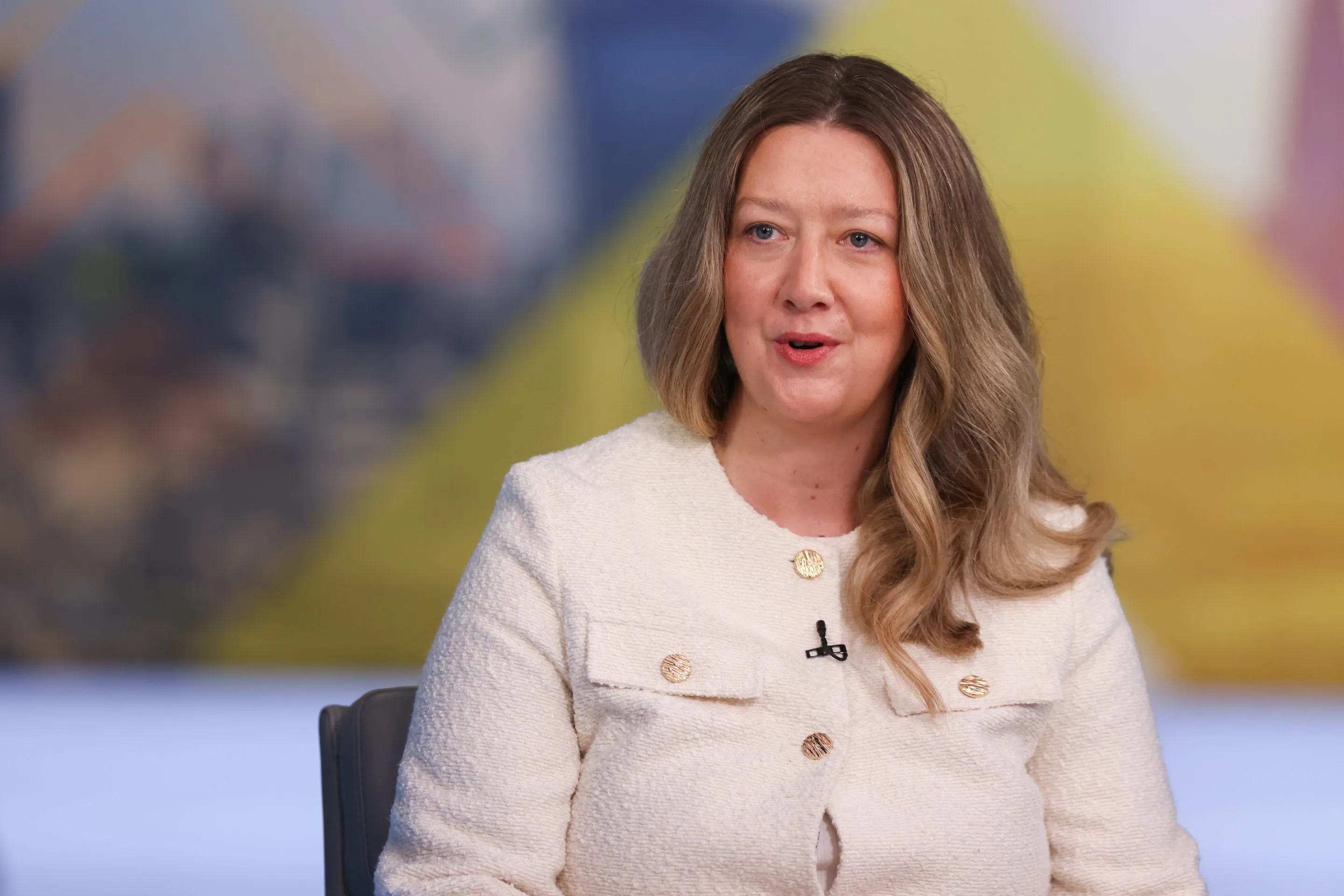















McKenzie Scott is not like many billionaire philanthropists. She has donated over $26 billion while saying almost nothing in public. Therefore, when Jeff Bezos’ ex-wife, the founder of Amazon, completed and released her first novel in 13 years last month, readers eagerly sought clues and insights into her inner thoughts from it.
But what many people end up with is confusion.
In her book review for “Business Insider,” author and editor Eve Schneider described the ending of the book as “a confusing conclusion that is fitting for a confusing project,” and noted that readers were left with more questions than answers after reading it, especially regarding what Scott actually intended to convey. The “New York Post” referred to the book as “difficult to understand.”
Scott started releasing this novel chapter by chapter on Substack from August 8th. In this way, she published Last Days in Two Nations ( A History in Eighteen Minds ), bypassing publishers and all major book retailers—including Amazon. She holds approximately 4% of Amazon's shares through her divorce in 2019. The book is about 80,000 words long and has 317 pages; it is available for free to any subscriber, with the last chapter being released on August 31st.
The novel is set in a near-future America where the country has split into two parts: the still-united states of “Still United”, and an authoritarian separatist regime known as “Dakota Membership”, led by President Damian Paxton. Scott tells the story through the perspectives of 18 characters. Schneider describes this as a “shift” compared to her earlier, more traditional novels. Her other works include “The Testing of Luther Albright” (2005) and “Traps” (2013).
Scott has never really wanted to take the easy route when it comes to writing. After all, she was once a student of the unique Toni Morrison.
"I'm usually more interested in complex problems than simple ones," Scott said in an interview with Charlie Rose in 2013. "I enjoy working on long-term projects. I like to analyze conversations endlessly, think about words, and ponder over them repeatedly."
"Deliberate ambiguity still has to prove its value."
However, it is precisely this complexity that has led to debates in the commentary community. In addition to the plot, Schneider also raised objections to the way the story is presented: the downloadable PDF is typeset as if it were a manuscript still in the drafting stage. She also mentioned that the text uses double-line spacing and contains some spelling mistakes, making the entire book appear like an unfinished work.
Other media, on the other hand, start from literary elements more often, drawing parallels between the characters in the novel and Jeff Bezos as well as Trump's second term in office.
Not everyone regards this kind of confusion as a failure. Morissa Schwartz, the founder of GenZ Publishing and holder of a Doctor of Literature degree, told Fortune magazine that this ambiguity seems to be intentional – at least in the prefaces and epilogues she has evaluated.
"In the framework section, the ambiguity seems to be deliberately arranged," said Schwartz, "but deliberate ambiguity still has to prove its value. Readers can accept not being certain about what something means, but they still need to know who is speaking, what time it is, and what the stakes are. These are different types of confusion."
She also reminded that this book should not be interpreted as a case of "roman à clef" – that is, real people being slightly disguised and written into the novel – to imply anything about Scott's ex-husband or anyone else.
"If you treat each character as a clue, it will distract attention and prevent you from seeing their psychological contradictions," Schwartz said.
Scott has received mixed reviews, which is nothing new. “The Testing of Luther Albright” won the American Book Award, but “Traps” received even colder reception. In 2019, Katie Waldman wrote in The New Yorker that this book hardly inherited any of the strengths of her debut work, yet it “retained almost all of its weaknesses.”
Scott's other two novels were both published by traditional publishers; Substack A spokesperson told Inc, the platform was not aware in advance that she would be releasing her works.
"We hope to provide people with the tools and flexibility to publish content in their own way, without the need for invitations or permissions," the spokesperson said to Inc.
Scott hardly ever responds to media inquiries, whether regarding her writing or her charitable work. This novel is still available for free to read on Substack, so for now at least, this might be the clearest statement she is willing to make.