IT News on October 3rd: According to reports from foreign media The Verge, Netflix is gradually adjusting its original content strategy. In recent weeks, the company has terminated some of its cooperation agreements, which may indicate that it is reducing its long-term reliance on well-known filmmakers and shifting more resources towards series, reality shows, live broadcasts, and sports content that can continuously attract users.
For example, Netflix recently confirmed that its six-year production agreement with director David Fincher is coming to an end. The agreement was initially announced in 2020 and was originally planned to last for 4 years, but was later extended to 6 years. According to the agreement, Netflix obtained the exclusive streaming rights for Fincher's future works at that time, including the biographical film "Mank."
In terms of commercial performance, the films produced by Fincher for Netflix in recent years have not reached a particularly outstanding level. Taking the biographical film "Mank" as an example, although this work received widespread praise from critics and won 10 Oscar nominations, ultimately winning two of them, the film's global box office during its three-week release period was only about 100,000 US dollars, while the production cost amounted to 25 million US dollars. After being released on Netflix, "Mank" only stayed on the platform's film Top top 10 list for one day, and it ranked last.

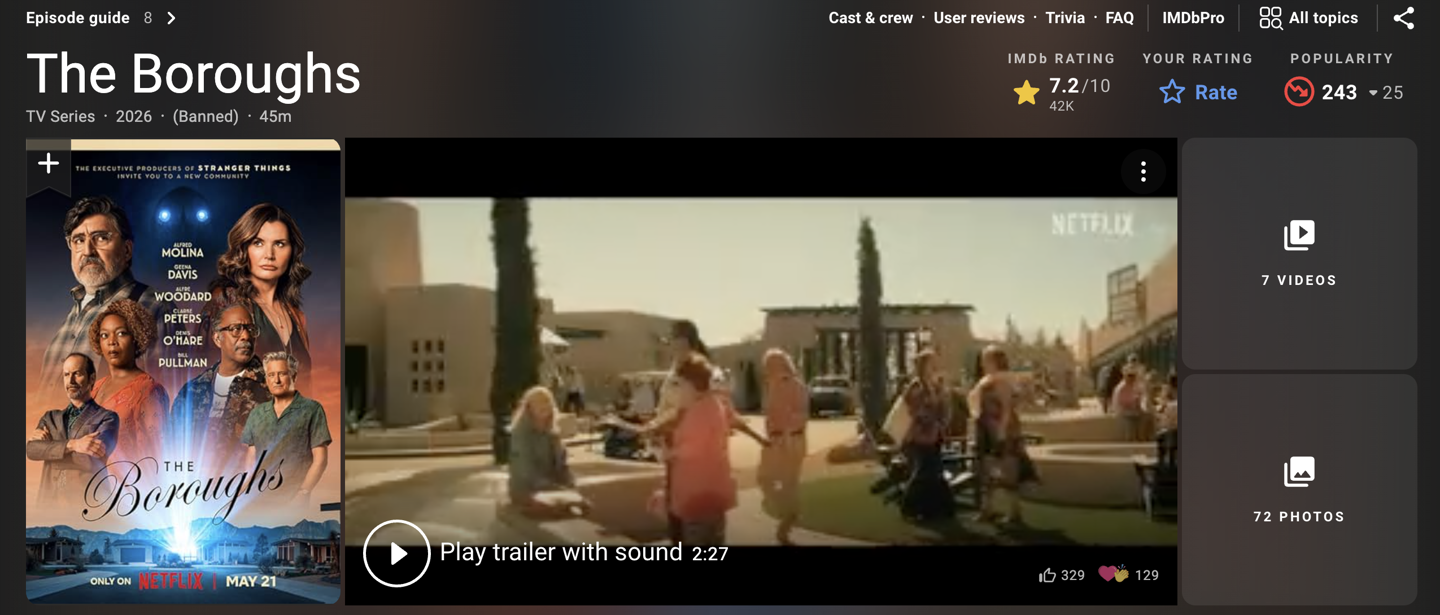
In addition, the creators of "Stranger Things," Matt Duffey and Ross Duffey, also announced their departure from Netflix in 2025, signing a four-year film and television production agreement with Paramount instead. The two may still participate in projects related to "Stranger Things" in the future. Their new series, The Boroughs, premiered on Netflix in May of this year, but was canceled just one month later.
Netflix has also recently ended its collaboration with Noah Baumbach, the screenwriter and director of "Marriage Story." Baumbach has previously created works such as "White Noise" and "Jay & Kelly" for Netflix, but these films did not achieve particularly outstanding market success.
However, this does not mean that Netflix has completely given up on collaborating with well-known directors. Compared to the past, when large investments were made in renowned directors and high-budget films, Netflix now seems to place more emphasis on content that is relatively less costly and can continuously generate viewership demand. The company has not abandoned its film business, but series, reality shows, live events, and sports programs may receive higher priority in terms of resources in the future.
In recent years, Netflix has continuously launched reality show programs such as "Squid Game: Real-Life Challenge," "Wanka's Golden Ticket," and "The New Stanford Prison Experiment." Not all of these works may become phenomenon-level content, but for Netflix, as long as they can bring stable viewing hours and encourage users to continue subscribing, they may possess commercial value.
Foreign media believes that after investing a large amount of money in making films over the past few years, with some of these works failing to bring about corresponding increases in subscriptions, Netflix seems to be adopting a more cautious approach to content investment. By focusing on programs with controllable costs that can continuously generate viewership demand, they are aiming to maintain user retention. This change may result in Netflix having less of a "top Hollywood film platform" vibe compared to before, but from a long-term operational perspective for the company, it could also indicate that they are seeking a more stable content production model.