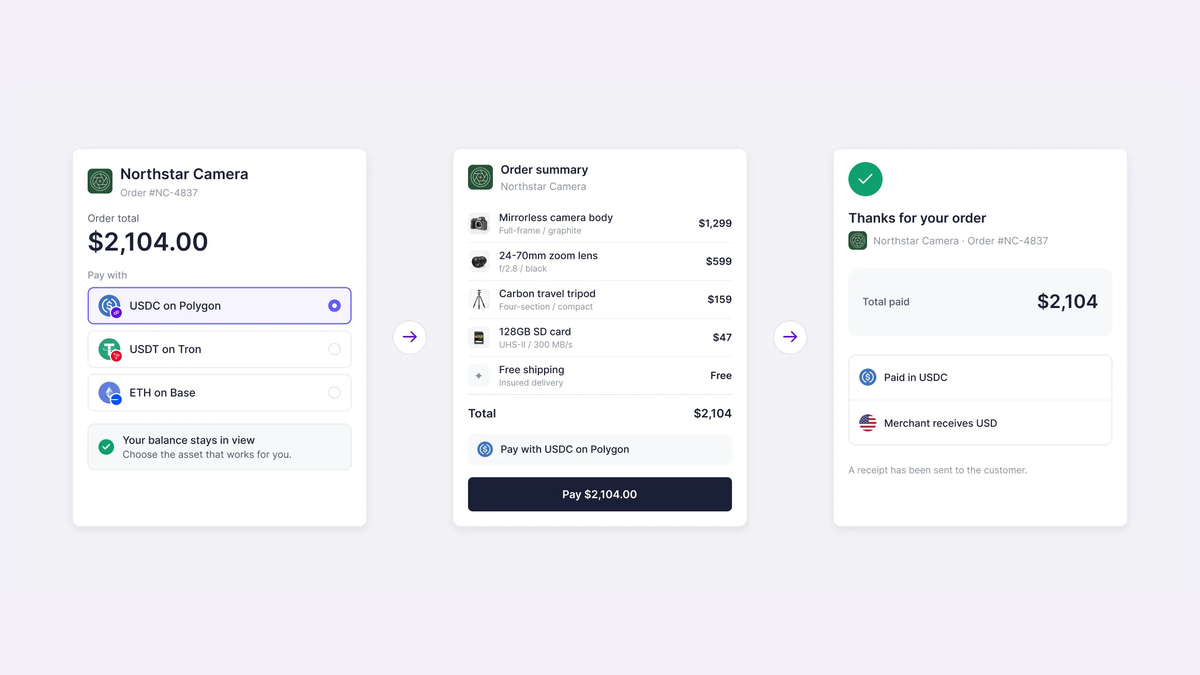


Lloyd’s Banking Group of the UK and Visa disclosed a cross-border settlement pilot on September 30: both parties used USDC to complete an inter-bank obligation settlement worth $750,000, and the funds reached the US end at Visa in less than an hour during the test, which included weekends. For those accustomed to waiting on weekdays and relying on multiple correspondent banks for cross-border payments, the reduction in time is the most noticeable aspect. However, this is a pilot with limited scale using real funds and cannot be described as a stablecoin remittance service that has been fully launched for all customers.
Lloyd's announcement provides a relatively detailed explanation of the process. The bank purchases USDC through the regulated digital asset institution Archax. The relevant assets are recorded in the account of Lloyds Bank Corporate Markets, which is located in Jersey, and then sent to the US end of Visa to fulfill the settlement obligations between the two parties. The participants are financial institutions, not ordinary users making payments to overseas merchants using wallets. Digital assets merely serve as a medium for the transfer of funds between these institutions; there are still respective requirements for front-end merchant acceptance, foreign exchange quotes, anti-money laundering checks, and final accounting processing.
Why are banks willing to test "24 hours a day, 7 days a week"?
Traditional cross-border settlements involve different jurisdictions, business hours, and bank clearing arrangements. Funds initiated on Friday evening may not be processed until the following working day due to weekends or holidays. Stablecoin networks operate continuously, theoretically allowing for the separation of fund transfers from certain back-office operations outside of business hours. This test takes the weekend as one of the scenarios, indicating that what both parties need to verify is not only whether on-chain transfers can be successful but also whether banks can complete reconciliation and risk control during non-working hours.
It is important to understand that "less than an hour" refers specifically to the results of this pilot program that have been announced, and not to a service commitment for every future remittance. The actual payment speed depends on factors such as asset acquisition, compliance verification, network congestion, the recipient's account receipt, and whether conversion back to fiat currency is required. While on-chain confirmation may be quick, the customer's ability to ultimately use their balance still involves the internal systems of banks. Applying the speed of one inter-bank experiment directly to all consumer cross-border payments can easily lead to misperceptions.
Another feature of this experiment is cross-network collaboration. Lloyd mentioned that he operates a Canton network node, while Visa uses an independent public blockchain environment. The two parties tested the interoperability between different infrastructures. This does not mean that the two networks have been merged, nor that all assets can be freely transferred across networks without any conditions. True interoperability also requires that identities, asset ownership, message formats, and settlement responsibilities match; if only tokens are transferred but both parties' ledgers cannot confirm that the same obligation has been fulfilled, then the efficiency of payment remains merely nominal.
The US dollar-denominated attributes of USDC make it easier for the pilot program to correspond with existing US dollar obligations, but stablecoins also introduce new counterparty and technical risks. Issuer reserves, redemption arrangements, custody security, wallet keys, and the irreversible nature of on-chain transactions all need to be incorporated into the bank's management framework. Archax plays a role in purchasing digital assets within this process, but this does not automatically eliminate the bank's prudential responsibilities. Financial institutions that choose this path still need to explain to their internal risk control, audit, and regulatory authorities who holds the assets at each point in time and how they are accounted for.
The real barrier to commercialization lies outside of the internet.
Pilots have shown that with selected participants, predetermined amounts, and controlled processes, banks can complete cross-border settlements more quickly using stablecoins. However, it has not yet been proven that the same mechanism is equally efficient with thousands of customers, multiple currencies, and different regulatory jurisdictions. As the scale expands, sources of liquidity and the depth of redemptions will affect prices and speed; errors in addresses, freeze requests, and the investigation of abnormal transactions will test the operational processes. Financial infrastructure must not only appear fast when everything is running smoothly but also need to be explainable and manageable in the event of errors.
For Visa, stablecoin settlement is a type of backend fund transfer option, which is not the same as the Visa card transaction interface that consumers see. Merchants still need to be clearly informed about how much local currency they will receive, when the funds will arrive, and who will be responsible in case of disputes. For Lloyd's, the weekend processing capability would only have stable commercial value if it could be integrated into existing corporate banking services. This is also the gap that must be bridged between interbank pilots and products for the general public.
In the past, news about stablecoin payments often described them as “replacing banks.” However, this experiment is being jointly driven by banks and payment networks, reflecting a more realistic approach: to switch to a different backend settlement tool while maintaining existing compliance requirements and customer relationships. The market should now focus on whether both parties will expand the range of currencies, transaction amounts, and participating institutions, as well as whether they will disclose costs, failure rates, and settlement responsibilities, rather than just announcing the speed of on-chain transfers once again. What can be confirmed for now is that a $750,000 transaction was quickly settled within a controlled pilot program; full commercial adoption remains the next challenge.
Even if cross-border transactions can be transferred around the clock, it does not mean that banks can complete the final settlement in all countries at all times. If the recipient needs to convert the funds into local currency, the foreign exchange market, bank operating hours, and local payment systems may still become bottlenecks. In the next phase of the pilot program, what is most worth watching is the end-to-end timing: from the moment a company initiates a payment instruction until the recipient receives the available funds, who is responsible for each stage of the process? Only by quantifying the cost and speed of this entire process can a fair comparison be made with existing cross-border banking services.