Newsletter
DogeOS launched its EVM compatible application layer public test network for Dogecoin on September 30th.
The testing network fees are paid using DOGE. The teams involved in the construction include those responsible for lending protocols, perpetual exchanges, stablecoins, and prediction market aggregators.
The mainnet launch date has not yet been determined.
According to its press release, DogeOS launched the public test network for the application layer of Dogecoin on Wednesday. The test network is a trial version of the network where developers will test applications; real funds are not involved yet.
Jackson Palmer and Billy Markus created Dogecoin in 2013, which was initially just a joke. It started as a peer-to-peer digital currency. Since then, it has undergone significant changes and has evolved into a network with a market value of several billion dollars, a social symbol, and a serious investment target in the eyes of some well-funded investors.
Technically speaking, DogeOS wants to incorporate what Ethereum is good at: applications. In layman's terms, Dogecoin is the ledger, while DogeOS attempts to build software on top of it. This project was founded by the MyDoge wallet team and operates as an independent layer, rather than directly altering the tokens themselves.
Its documentation refers to it as the "application layer rollup network on Dogecoin," which runs on zkVM. zkVM is a software that generates cryptographic proofs, which are essentially mathematical certificates of transaction validity. It is also compatible with EVM, which means that smart contracts on Ethereum, as well as wallets and tools built around Ethereum, can also be used here.
The testing network fees are paid with DOGE. DOGE is the native token of the Dogecoin network. The faucet of DogeOS will distribute 42.069 DOGE tokens daily.
The press release lists the teams that are already in the process of development. Superposition Finance is a lending protocol where users can use their deposited crypto assets as collateral to borrow funds. Derps is a perpetual exchange where users can place price bets without a maturity date.
USDoge is a type of CDP stablecoin, which is a token that is minted by locking collateral and designed to maintain a stable price. Snag is launching a prediction market aggregator, which is a marketplace hub where people can place bets on real-world outcomes.
Mini-game publisher PlaysOut is also on the list. The company plans to launch around 15 casual games themed around Doge by the end of 2025.
DogeOS, the founder and CEO, Jordan Jefferson, described this launch as a transformation defined by Dogecoin: "Today marks the beginning of __BJWKEEP_00004#'s evolution from an asset to an ecosystem."
In a statement, Dogecoin Foundation, the director, stated: 'The purity of the L1 ledger must remain unchanged, while at the same time we introduce practicality at the higher level, and that is precisely what DogeOS signifies to me.' L1 refers to the underlying blockchain, which is Dogecoin itself.
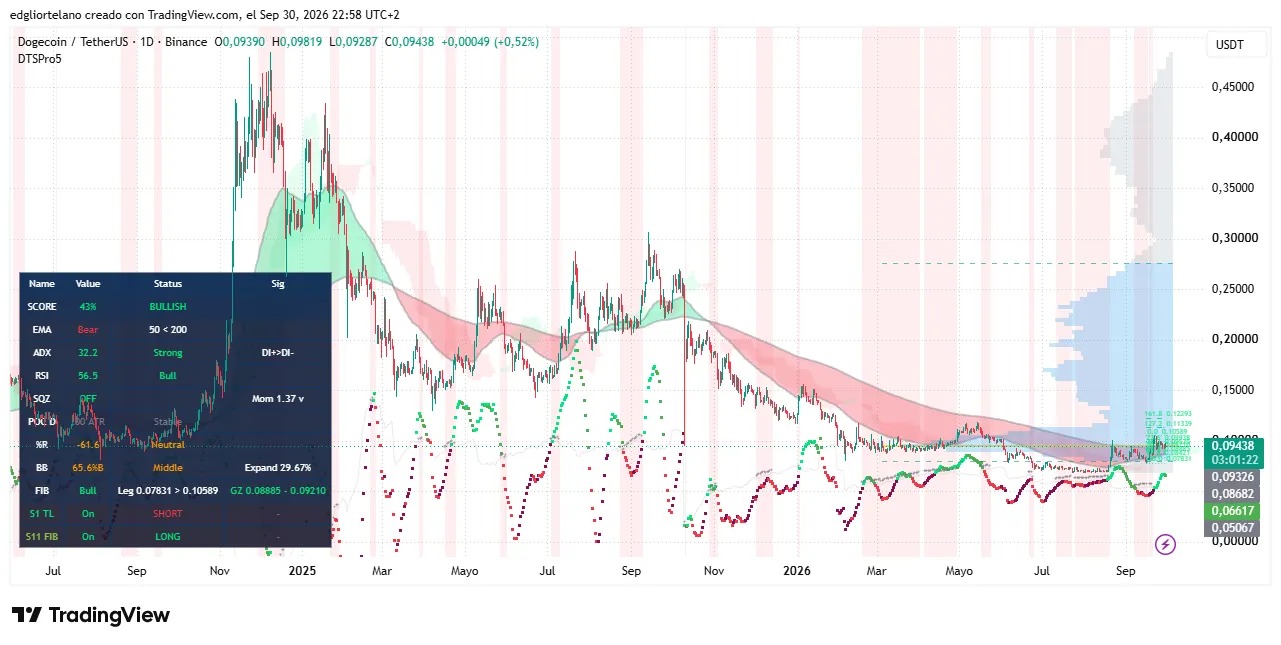
There is a reason for this caution, as modifying Dogecoin itself is a slow process. The DogeOS team submitted a proposal in July 2025 to introduce zero-knowledge proofs into the base layer. Dogecoin does not have formal on-chain governance; therefore, such changes require review by contributors, community discussion, security audits, and support from miners.
There is a rationale behind the push to increase the uses of Dogecoin. Dogecoin has fallen by about 75% since its historical high and is one of the few large cryptocurrencies that are still in a clear bear market trend. Nevertheless, several Dogecoin ETF products and funds that can be purchased through brokerage accounts have already been launched.
The press release does not provide a launch date for the mainnet; the mainnet is the official version that operates with real funds.