

I am an American college student who enjoys flying with airlines that most people have never even heard of. When I found an economy class ticket on Iraqi Airways for just $123, I booked it without much thought.
Whenever I start telling people about this, the reactions are always the same. Among those who have talked to me, no one knows that Iraq's national airline even exists, and most of them doubt its safety. Decades of war and sanctions have kept the airline relatively small in scale, making it very difficult for them to purchase new aircraft and spare parts.
In fact, almost no Americans have ever flown on it. Iraqi Airways has never operated commercial flights to the United States, mainly due to limited demand for travel to the Middle East and concerns regarding the safety regulations of Iraqi Airways by international authorities. Due to safety issues, this airline has been completely banned from flying by the European Union since 2015.
However, this airline still exists and is quietly rebuilding itself. On a 2.5-hour flight from Baghdad to Dubai in February, I was on a brand-new Boeing 787, and throughout that entire day, I found myself constantly reevaluating my initial assumptions about the airline.
The following are the four things that surprised me the most.
Iraqi Airways did not respond to the request for comment regarding Business Insider.
The fleet is much newer than I expected.
I have to admit that when booking the ticket, I thought I would be assigned to an old plane that had long exceeded its retirement age. But the plane parked on the Baghdad runway today is not that kind of aircraft.
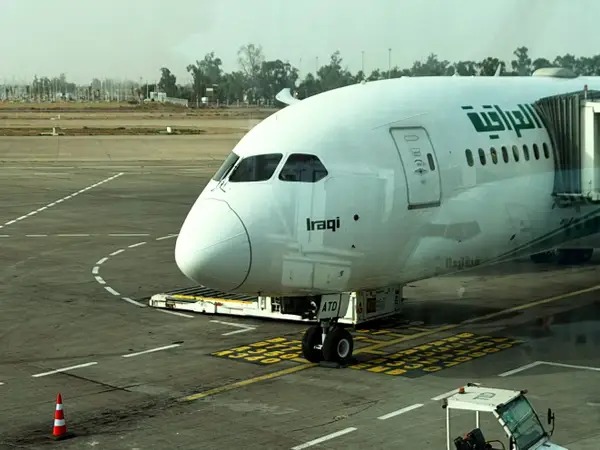
The plane I was on was one of two almost brand-new 787-8 aircraft, which were delivered in 2023. More planes are expected to arrive before 2027.
Over the past few years, this airline has been constantly replacing a large portion of its fleet. The average age of its fleet is around 11 years, which is comparable to that of larger Middle Eastern airlines such as Emirates and Qatar Airways. It is also one of the first airlines in the Middle East to operate Airbus A220. Since 2023, the next-generation Boeing 737 Max 8 has also been delivered gradually.
Although this plane looked beautiful from the apron, the interior of the cabin left me puzzled. There were stains on the seats, crumbs on the edges of the seat cushions, and the pockets in the back of the seats were also very dirty. I was surprised that this cabin had not received the maintenance it deserved for a plane that is only 2 years old.
I also have concerns regarding safety issues. The only air accident involving Iraqi Airways occurred in 1986, which was a hijacking incident, and to this day, the airline is still on the EU's no-fly list. Regulatory authorities have identified serious safety deficiencies in its operations and company management, and the Iraqi Civil Aviation Authority has not met international aviation regulatory standards.
It's indeed difficult to feel at ease knowing that the airline one is about to fly with has such a history of safety issues.
There is a pigeon problem at Baghdad Airport.

On the morning of my flight with Iraqi Airways, I first took Turkish Airlines from Istanbul to Baghdad International Airport. I processed my visa online through a third-party service for about $200, but since I didn't leave the airport, I had plenty of time to explore around.
In the airport terminal, what caught my attention the most was not the unique architecture or shops, but the birds.
Pigeons are everywhere in the waiting hall, trying hard to imitate the appearance of airplanes. A few of them even consider the top of the security cameras their own territory.
As a person who loves birds, I only enjoyed about 10 minutes of the flight: when boarding the plane, I witnessed with my own eyes a pigeon defecating on a man’s head. His reaction was probably much better than mine would have been.
Hot meals are available on two-hour flights.
Many American airlines stopped providing meals to passengers years ago. On domestic flights of two hours, economy class passengers are usually only given a drink and a small snack, and that's it.
However, Iraqi Airways served a complete hot meal on flights of the same duration. It wasn't just a sandwich or a snack box; it was a steaming plate of chicken with rice, and there was enough time to finish it before the plane began its descent. Everything on the plate was delicious.
This type of meal service is different from what many Western airlines offer. The latter operate in markets with extremely fierce competition, where cost control is one of the top priorities.
Many American airlines have come to believe that there is no need to offer a full meal on short-distance flights in order to compete. In contrast, Iraqi Airways is a state-owned airline, funded by the government, and thus faces different cost pressures.
I met a few interesting people at the airport.
Flying is a nerve-wracking experience almost anywhere, and airports often lead most people into a state of "minding their own business": putting on headphones, looking down, and trying to get through as quickly as possible. This has become the general atmosphere I've gradually gotten used to during my travels.
However, Baghdad Airport surprised me. A man in front of the check-in counter took the initiative to strike up a conversation with me because he wanted to know where I came from. As an American, I’m not someone he encounters every day, and before we knew it, we spent nearly an hour comparing our respective families and the customs we encountered during our upbringing.
Later, while I was wanting to buy a bottle of water in front of a coffee stall, another traveler volunteered to help with the translation. Then the conversation turned to how he learned English in college.
Overall, it has indeed been a whirlwind journey full of surprises.
This plane itself has quite a few shortcomings, and Iraq still faces challenges to aviation safety as well as significant geopolitical tensions. However, as an American – despite being the kind of person who actively seeks such unconventional travel experiences – flying with Iraqi Airways is still quite interesting.
I encountered a hub airport "managed" by pigeons, a flight in the economy class of an American airline that did not provide hot meals, and a fleet that is quietly being rebuilt, despite the airline still facing regulatory challenges.