

According to data published by SUBFROST, which maintains this protocol, a Bitcoin meta-protocol similar to Ordinals accounted for the majority of Bitcoin transactions over a 90-day period ending in September.
SUBFROST indicates that from June 23 to September 20, Alkanes transactions accounted for 61.1% of all Bitcoin transactions, covering blocks 954,917 to 967,918, which is approximately 59.9 million transactions. The company stated that during the same time period, Alkanes accounted for 40.3% of the block space weight, 94.2% of the OP_RETURN bytes, and 13.4% of the transaction fee revenue.
Alkanes is a Bitcoin meta-protocol built upon the Runes protocol. This protocol is maintained by SUBFROST, a company targeting the American market, led by co-founder Gabe Lee. The original protocol author used the name RWP IV. The Alkanese community is almost entirely from the Asia-Pacific region, demonstrating an active group of Bitcoin-related technology users that may not be well-known in the West.
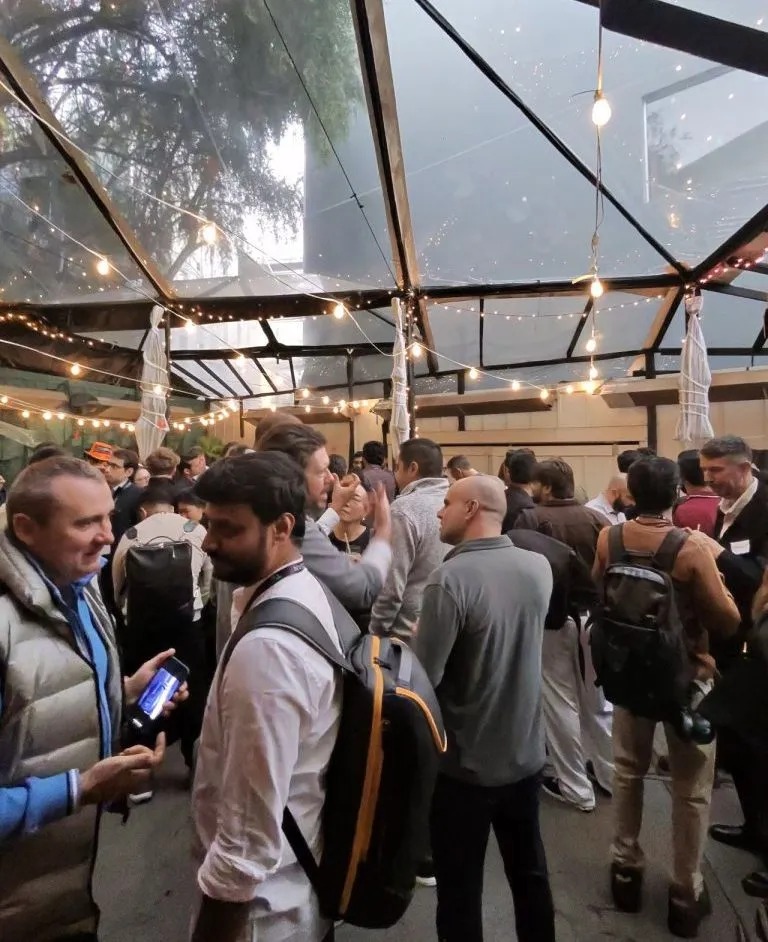
SUBFROST provides complete Chinese documentation and Chinese data pages, and operates an official Chinese Telegram group for DIESEL. In 2025, Chinese media pointed out that most discussions about Alkanes on X came from Chinese users, many of whom mentioned a wallet called UniSat that is very popular in Hong Kong. This year, the company held a workshop in China, allowing Lee and RWP IV to step onto the Chinese stage, and also set up a booth at the Bitcoin Asia in Hong Kong.
These on-chain traffic data come from the daily files published with permission under MIT by SUBFROST. Real-time charts can be viewed at subfrost.io / metrics, and the underlying sequences are hosted on GitHub. The company's definition of a transaction is as follows: when an OP_RETURN runestone contains a protostone with protocol tag 1, that transaction is counted as a Alkanes transaction.
In a press release sent to Bitcoin Magazine, SUBFROST stated that within the aforementioned time frame, 99.7% of the UNCOMMON • GOODS Runes creations were also DIESEL creations. This refers to the issuance function on the Alkanes Genesis Contract. In a statement in July, the company wrote, "Almost all of these Alkanes activities are essentially one operation, which is the DIESEL creation." It can be said that this represents a rune on the rune.
Alkanes will not change the Bitcoin consensus, nor is it a sidechain. The contract code uses WebAssembly and is deployed only once in the witness data. Afterwards, users send function calls within runestone in Runes format. Another indexer, Metashrew, will execute these calls. The full nodes confirm the Bitcoin transactions themselves and do not verify the balances of Alkanes.
This packaging method explains why the same activity was classified as Runes in June. CryptoQuant reported that Bitcoin network activity had risen to its highest level since the end of 2024, with daily transaction volumes exceeding 800,000, and attributed the surge in OP_RETURN to Runes, Ordinals, and BRC-20. Bitcoin Magazine repeated this statement on June 22nd. CoinDesk cited Glassnode stating that daily transaction volumes exceeded 820,000, of which runestone exceeded 600,000, and attributed this change to Runes. None of the aforementioned reports mentioned Alkanes.
According to separate statistics on writing Bitcoin Block Space Weekly and tracking BIP-110's Renaud Cuny, within a 60-day period, Alkanes and protostone accounted for 91% of OP_RETURN outputs.
Alkanes was launched on block 880,000 on January 20, 2025, at which time the DIESEL contract was deployed. The project was initially constructed by Oyl Corp. Oyl announced in January 2026 that it would gradually cease operations and stated that SUBFROST would be responsible for the maintenance of the protocol.