Jensen Huang responds to the controversy over the AI model distillation: This is market competition behavior
The Block
1h ago
Ai Focus
NVIDIA CEO Jensen Huang indicates that the distillation of the AI model is a form of market competition, not theft. In the CNBC program, he stated that companies can test other products, and competition will make everything better.
Helpful
No.Help

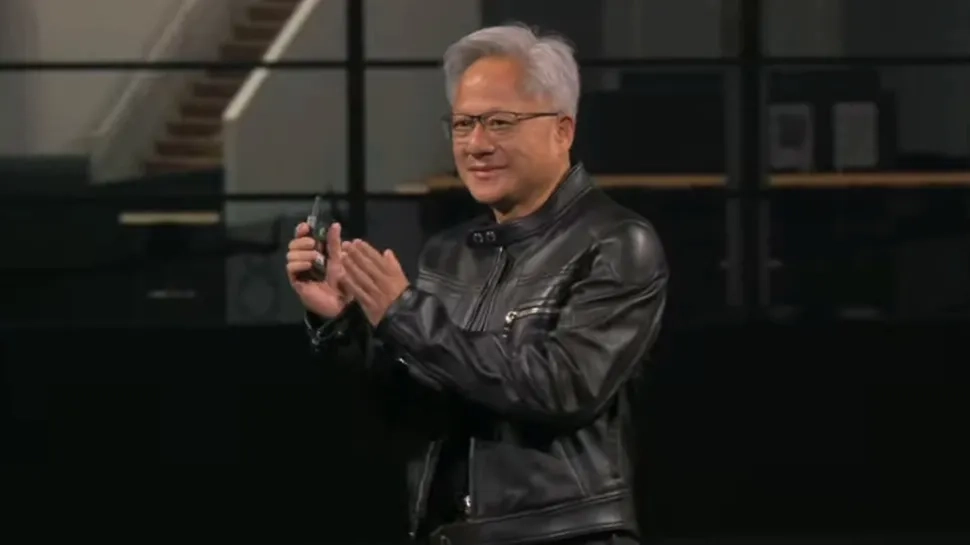
News from the IT Home on September 29th: Jensen Huang, CEO of NVIDIA ( Nvidia ), stated that model distillation—which involves using the output results of other models to train new models—is a form of market competition; however, the White House has categorized this practice as theft.
IT noticed that US Treasury Secretary Scott Bessent once referred to distillation as "thiefery" in July and threatened to impose sanctions on overseas companies that used this method to extract technical capabilities from the US's own developed models.

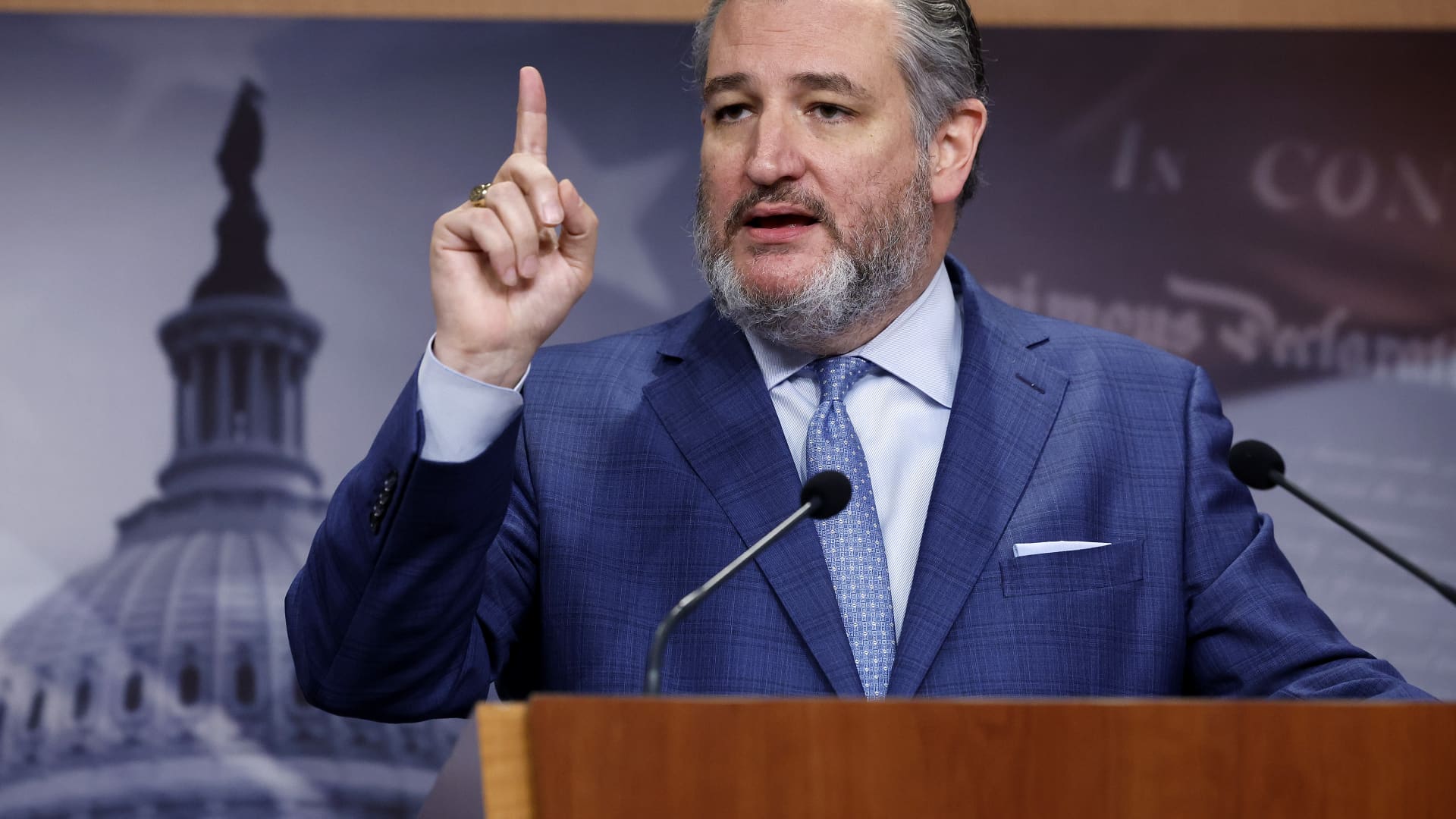
But on Monday local time, when Jensen Huang appeared on the program “Financial Morning” ( Squawk Box ) on the American consumer news and business channel ( CNBC ), when asked whether model distillation could be considered “plundering,” he replied: “This is called competition. ( That ’s called competition .)”

He said, "You're completely free to test other products to your heart's content." He also added that some companies, in order to understand how NVIDIA's products work, disassembled and analyzed them so thoroughly that only the basic framework remained.

Of course, I don't want them to do that. I certainly hope that no one will study or copy our product, so that we can continue to develop smoothly. But to be honest, competition makes everything better.

Jensen Huang said, "If you don't like this situation and don't want others to use your product, you just need to understand your customers and turn off the corresponding services."

Earlier this month, the US Cybersecurity and Infrastructure Security Agency accused Chinese AI companies of conducting "industrial-scale knowledge distillation operations," claiming that such actions violated the user service agreements of American companies.

Anthropic also stated earlier this month that it had discovered that both Alibaba, which develops the Qianwen (Qwen) series of models, and Deep Quest (DeepSeek) engaged in 'illegal distillation' practices.

The Chinese side has refuted the aforementioned allegations.

Tip
$0
Like
0
Save
0
Views 23
CoinMeta reminds readers to view blockchain rationally, stay aware of risks, and beware of virtual token issuance and speculation. All content on this site represents market information or related viewpoints only and does not constitute any form of investment advice. If you find sensitive content, please click“Report”,and we will handle it promptly。
Submit
Comment 0
Hot
Latest
No comments yet. Be the first!
Related
The U.S. Senate advances a college sports bill aimed at regulating NIL transactions
The U.S. Senate passed a bill on Monday with 77 votes to 22, aiming to establish a national framework for the trading of names, images, and likenesses ( NIL ) in college sports. The bill will enshrine athletes' rights to earn NIL income in law and grant NCAA , leagues, and schools antitrust exemptions in the enforcement of certain rules; the bill will next be sent to the House of Representatives, but its prospects remain uncertain.
CNBC
·2026-09-29 11:26:56
14
Solana Launches Alpenglow onto the test network: 150 milliseconds per transaction is still not the real speed for mainnet users
"Reducing from 12.8 seconds to 150 milliseconds" can easily be interpreted as a completed network speed improvement. However, the current more accurate status of the Alpenglow consensus upgrade for Solana is still in the testing phase: the official test network browser has already shown that Alpenglow is running, yet the foundation's upgrade page still describes the target time of around 150 milliseconds as a definitive goal, rather than a commitment that has already been fulfilled for users on the mainnet. When the mainnet will be enabled depends on subsequent tests, client preparations, and formal activation arrangements. For trading platforms and application developers, what needs to be done now is not to claim on their promotional pages that "second-level speed improvements have been achieved," but to confirm whether their systems can adapt to the new requirements.
币界网
·2026-09-29 11:16:29
27
The Bank of England sets a balance sheet reduction target until 2034: selling £20 billion in government bonds each year, rather than withdrawing all liquidity immediately
The central bank's "balance sheet reduction" sounds like a huge and sudden move, but in reality, it is more like a long-term process with a clear timeline. On September 28th, Dave Ramsden, the Deputy Governor of the Bank of England, explained the latest arrangements: The Monetary Policy Committee has decided to gradually reduce its holdings of government bonds acquired as part of previous loose monetary policies over a multi-year period, with the goal of completing this policy-driven reduction by the end of 2034. Thereafter, the plan is to sell about 20 billion pounds worth of government bonds each year, while allowing some bonds to mature naturally on schedule. To summarize this as "the Bank of England plans to sell all its government bonds at once" is not only exaggerated but also misleading to readers regarding the bond market and interest rates.
币百科
·2026-09-29 11:16:24
15
GPT-6 Sol and Luna filling in the mid-to-low price range: What's reduced is the unit price of the model, while workflow costs will be calculated separately.
When a team has to process tens of thousands of tickets per day with AI, the most expensive ones are not necessarily the most difficult ones; rather, they are the numerous requests that seem simple but occur repeatedly. OpenAI has recently expanded its GPT-6 series to include Sol and Luna precisely for such tasks. The flagship Astra continues to undertake high-difficulty tasks, Sol focuses on complex coding and proxy work, while Luna leans towards high-frequency tasks that are cost-sensitive. OpenAI announced that compared to the previous promotional prices of the GPT-5.6 series, the unit price of the two new models API has been reduced by about half. This is a change in product pricing, but it does not mean that every company...
CoinMeta
·2026-09-29 11:16:20
18
Claude Sonnet 5.5 is here: 30% faster, but what businesses really need to calculate is the total cost of each order.
When companies purchase large models, they usually first look at the price per million token. However, the actual cost of completing a task also depends on how many steps the model goes through, how many times tools are used, and whether there is any need for repeated rework. On September 28th, Anthropic launched Claude Sonnet 5.5, making these costs more transparent: according to the official claims, its generation speed is over 30% faster than that of Sonnet 5. Although the listed price has not been reduced, in the company's tests, the cost of completing similar tasks can be lowered by up to about 30%. This is not a promise to reduce each customer's bill by 30%, but rather indicates that under certain task and testing conditions, the new model can result in lower costs due to its output.
CoinMeta
·2026-09-29 11:16:17
19
View More