After receiving investment from Mubadala, Luckin Coffee reconsiders entering the Middle East market
CNBC
1h ago
Ai Focus
After receiving support from Abu Dhabi's sovereign wealth fund, Mubadala, Luckin Coffee is re-evaluating its entry into the Persian Gulf market. The company's management stated that they are considering expanding into Gulf countries; meanwhile, Luckin continues to advance its overseas expansion and maintains rapid growth in the Chinese market, although there is still no clear timeline for its re-listing on the US main board.
Helpful
No.Help

Singapore – After receiving support from Abu Dhabi’s sovereign wealth fund Mubadala ( Mubadala ), Luckin Coffee is re-evaluating its entry into the Persian Gulf market.

Lui Hui, the chairman of Luckin Coffee, said in an exclusive interview with CNBC on Monday that Luckin's senior management team is considering expanding into Gulf countries. Lui Hui is also the co-founder and CEO of Dacheng Capital, a private equity firm (Centurium Capital); Dacheng Capital is the controlling shareholder of this Chinese coffee chain company.

Li Hui stated, "We are currently still focusing on other markets and may enter regions such as the Gulf countries."

At the beginning of September this year, after jointly investing $1 billion with Dacheng Capital, Mubadala became a direct investor in Luckin Coffee. However, neither party has disclosed their respective shareholdings. This sovereign wealth fund, which manages assets worth $385 billion, has invested over $20 billion in China, with its investment targets including the e-commerce giant Shein as well as Dalian Wanda's shopping center business.

Lucky Coffee once planned to open stores in the Middle East and India in 2019, but those plans were never realized. Six years ago, the company was involved in a financial fraud scandal. Investigations revealed that its former executives inflated sales by hundreds of millions of dollars, which led to the company filing for bankruptcy protection in the United States and delisting from NASDAQ. This incident also intensified U.S. scrutiny of Chinese companies seeking to list in the U.S.

Lucky Coffee's CEO, Guo Jin, has stated on a weekly basis to CNBC, that the attractiveness of expanding into the Gulf market lies in the local demand for coffee, which is stable and frequent, as well as the increasing preference among consumers for low-sugar, health-oriented beverages.

With the support of Dacheng Capital, Luckin Coffee has managed to make a significant turnaround and has surpassed Starbucks in sales, becoming China's largest coffee chain brand. This private equity firm, headquartered in Beijing, is also further increasing its investment in the coffee business. In April this year, it acquired the high-end coffee brand Blue Bottle Coffee from Nestle for a reported price of less than $400 million.

Lucky Coffee's shares are still traded on the over-the-counter market, which is less regulated at present, with the company's valuation being around $9.6 billion. Last November, Starbucks valued its China business at over $13 billion in a transaction and sold its controlling stake to the Beijing-based private equity firm Boyu Capital ( Boyu Capital ).

Last year, at an event hosted by the government in Xiamen, where Luckin Coffee's headquarters is located, Guo Jinyi stated that Luckin "is actively advancing the process of re-listing on the US main board." However, the company still needs to obtain approval from Chinese regulatory authorities for the re-listing, and no clear timeline has been mentioned since then.

Lucky Coffee's turnaround has attracted the support of an increasing number of institutional investors. Temasek disclosed in a regulatory document in May that it holds a 6.4% stake in Lucky Coffee and expressed optimism about the management's ability to achieve growth. Meanwhile, Lucky Coffee continues to expand its presence in two Asian markets: Singapore and Malaysia.

However, compared to Luckin's scale in China, its growth overseas remains relatively limited. About a year after entering the US market, the chain had 23 stores in New York City, 150 stores in Malaysia, and 100 stores in Singapore; in contrast, the total number of its stores in mainland China and Hong Kong has exceeded 36,000.

In the second quarter, Luckin's revenue increased by 28.5% year-on-year to 15.9 billion yuan, approximately 2.34 billion US dollars; the average number of monthly trading customers grew by 23% to 112.7 million. During the same period, the chain brand added a net of 2,714 new stores.

Tip
$0
Like
0
Save
0
Views 29
CoinMeta reminds readers to view blockchain rationally, stay aware of risks, and beware of virtual token issuance and speculation. All content on this site represents market information or related viewpoints only and does not constitute any form of investment advice. If you find sensitive content, please click“Report”,and we will handle it promptly。
Submit
Comment 0
Hot
Latest
No comments yet. Be the first!
Related
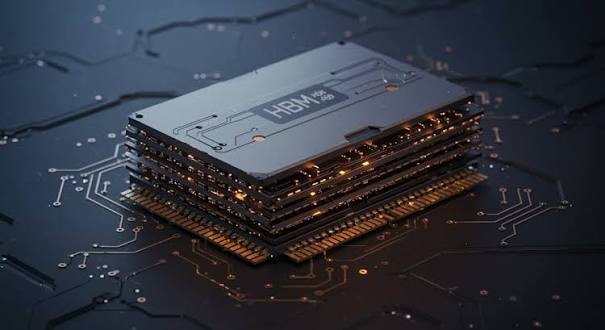
Samsung executive expects that next year, HBM will account for nearly 30% of the total production capacity of the DRAM industry
According to Reuters, a senior executive from Samsung Electronics stated that high-bandwidth memory is expected to account for nearly 30% of the total wafer production capacity of all DRAM chip manufacturers next year, up from the current level of about 20%. Kim Tae-yu, Executive Vice President of Samsung Electronics, said that the competition between HBM and ordinary DRAM for wafer production capacity may squeeze the supply of standard DRAM.
The Block
·2026-09-29 11:03:51
4
MGLD Shareholders Reminder: Ademi LLP Investigating Whether the Valuation of Marygold Acquisition Case is Fair
Ademi LLP indicates that shareholders of Marygold will only receive $2.00 per share. The company is investigating whether the acquisition proposed by Madison Dearborn Partners fairly reflects the value of Marygold, as well as whether the board of directors adequately protected the interests of shareholders during the negotiation and approval of the transaction.
PR Newswire
·2026-09-29 10:43:48
11
FT Morning Report | Iranian Foreign Minister Says Conditions for Reopening the Strait Proposed with Qatari Mediators; 10-Year U.S. Treasury Yield Surpasses S&P 500 Earnings Yield; NVIDIA Adds $150 Billion to Repurchase Program; SpaceX "Starship" Achieves First Earth Orbit Flight; Benmi Technology, Jingwang Electronics, Tongcheng New Materials, Robotech List on Hong Kong Stock Market Today
Iranian Foreign Minister says talks with Qatari mediators have taken place and conditions for re-opening the Strait of Hormuz were proposed; Trump denies reports by US media about easing sanctions and unfreezing funds for Iran, while there are also reports that he is willing to consider relaxing sanctions when substantial progress is made on the Iranian nuclear issue. OpenAI postponed due to security issues GPT-6.1 Astra released, Anthropic launched Sonnet 5.5; 10-year US Treasury yield exceeds S&P 500 earnings yield, and the three major US stock indices closed lower. In terms of individual stocks, NVIDIA announced an additional $150 billion in share repurchases, SpaceX "Starship" achieved its first Earth orbit flight but ended the mission ahead of schedule, Meta, Qualcomm, AMD, and others also had new developments.
The Block
·2026-09-29 10:25:42
16
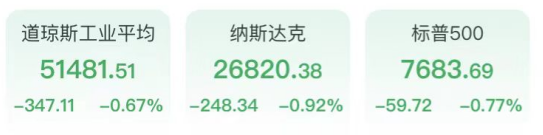
U.S. debt clouds loom large; Dow Jones falls over 300 points, chip stocks slump, crude oil surges then declines
U.S. stocks opened lower on Monday and continued to decline, with the Dow Jones falling 347.11 points, and both the Nasdaq and the S&P 500 indices also declining. U.S. Treasury yields continued to rise, with the 30-year yield breaking through 5.50%. Chip stocks, optical communications sectors, and some tech stocks came under pressure. Boeing saw a sharp drop due to the delay in the 737 MAX 10's airworthiness certification, and there were also fluctuations in crude oil and precious metals prices.
The Block
·2026-09-29 10:25:40
21
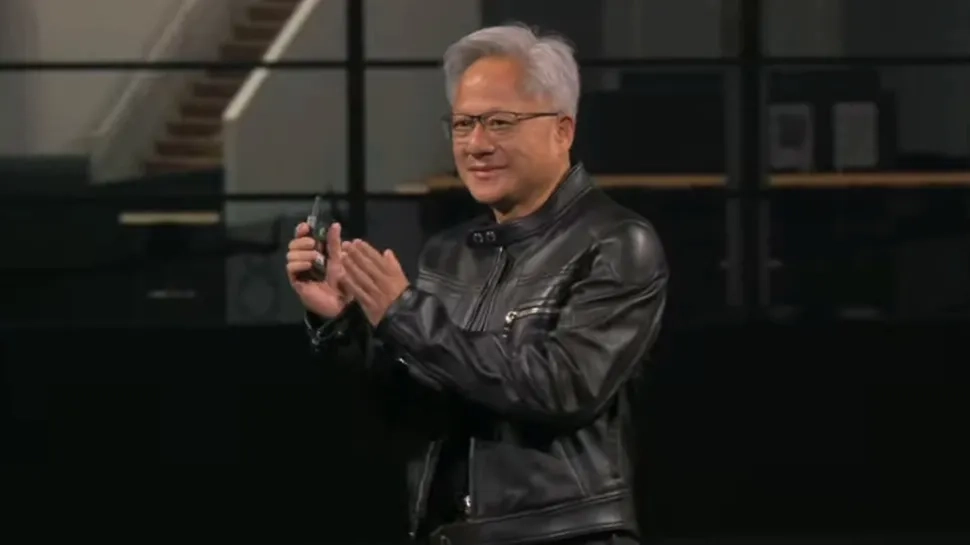
Jensen Huang responds to the controversy over the AI model distillation: This is market competition behavior
NVIDIA CEO Jensen Huang indicates that the distillation of the AI model is a form of market competition, not theft. In the CNBC program, he stated that companies can test other products, and competition will make everything better.
The Block
·2026-09-29 10:15:00
20
View More