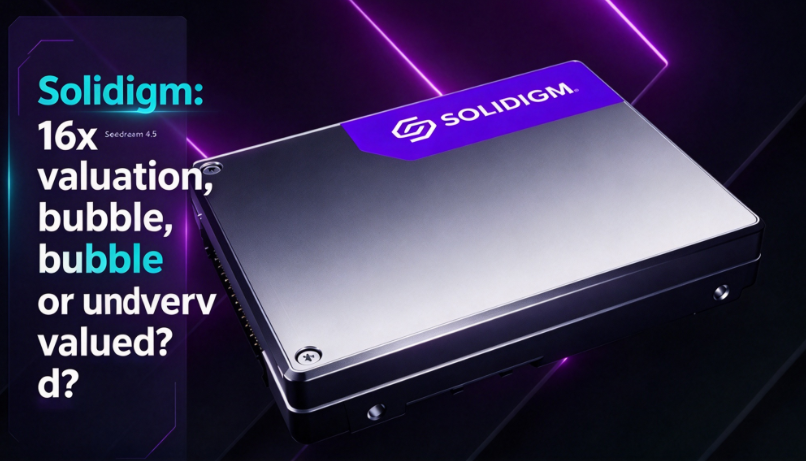


In September 2026, Reuters reported that Solidigm, a subsidiary of SK Hynix, is considering an IPO in the US as early as next year, with a target valuation of up to $150 billion, potentially setting a new record for a US semiconductor IPO. Six years ago, SK Hynix acquired its predecessor, Intel's NAND flash business, for only about $9 billion. From $9 billion to $150 billion, a 16x valuation leap—is this reasonable pricing for the AI storage supercycle, or just another bubble in the capital markets?
Table: Overview of Solidigm's Current Key Data
| Metric | Details |
|---|---|
| Acquisition Price vs. IPO Target Valuation | Acquired by SK Hynix for ~$9B; targeting a $150B US IPO in 2026 |
| H1 2026 Revenue | 12.25 trillion KRW, up 265% YoY |
| H1 2026 Net Profit | 5.839 trillion KRW, up 44x YoY, net profit margin at 47.7% |
| Q2 2026 Enterprise SSD Market Share | SK Hynix Group's eSSD revenue at $8.63B, ranking 2nd globally |
| Solidigm Q2 Bit Shipment Growth | Up 40% QoQ; SK Hynix ranks 2nd globally with a 22% shipment share |
| Max Capacity eSSD Product | 122.88TB capacity, the world's highest-capacity PCIe SSD, featuring QLC technology |
| Dalian Fab Capacity Plan | Fab 2 restart adds 50,000 wafer starts per month |
| 2027 eSSD Demand Forecast | Up 52.9% YoY |
| NAND Supply-Demand Gap Forecast | 6.1% gap in 2027, 5.5% gap in 2028, ~4.8% in 2026 |
Note: The above content is compiled and summarized by CoinMeta based on public market data. Please refer to actual data if there are any fluctuations.
Who is Solidigm?
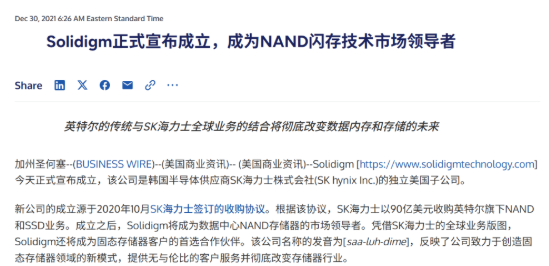
Solidigm's core business is NAND flash-based solid-state drives and supporting storage technology, focusing on data centers, cloud computing, and edge AI. Its business foundation comes from Intel's original NAND flash and SSD business. In 2020, SK Hynix announced its acquisition for approximately $9 billion. In 2021, the Solidigm brand was established for independent operation, and in March 2025, SK Hynix completed full ownership.
 I
I
mage: Establishment of Solidigm
What are Solidigm's Advantages?
From a technical asset perspective, Solidigm's core advantages are concentrated in the technological leadership of QLC enterprise SSDs, the first-mover positioning in ultra-high-capacity products, and the resulting customer lock-in capability.
Solidigm's QLC technology is leading. QLC stores 4 bits per cell, providing over 30% more storage capacity than TLC while significantly reducing production costs. The high entry barriers of this technology make it difficult for competitors to catch up.
In terms of products, Solidigm can already ship enterprise SSDs of 30TB and 60TB in mass quantities. In our view, what truly sets it apart is the 122TB D5-P5336. In January 2026, it also launched the world's first single-sided cold plate liquid-cooled SSD, the D7-PS1010 E1.S, specifically designed for fanless GPU servers. We think this move is very smart: turning heat dissipation into a selling point, directly addressing the pain points of AI server architecture. On the customer side, CoreWeave signed a multi-year strategic agreement with it in August 2026 to prioritize supply.
From $9 Billion to $150 Billion: What Happened Behind the IPO
Why can Solidigm's valuation achieve a leap from $9 billion to $150 billion? Our analysis suggests the direct driver is the explosive demand for high-capacity storage in AI infrastructure construction.
According to TrendForce data, in Q2 2026, the revenue of the top five global enterprise SSD brands reached $37.59 billion, doubling quarter-over-quarter. Among them, SK Hynix Group (including Solidigm) generated over $8.63 billion in revenue, with Solidigm's QLC technology advantage being the core driving force. Counterpoint Research data shows that in Q2 2026, enterprise SSDs accounted for 48% of global NAND shipments. AI inference workloads are replacing training to become the main engine of demand, and Solidigm's shipments increased by 40% year-over-year.
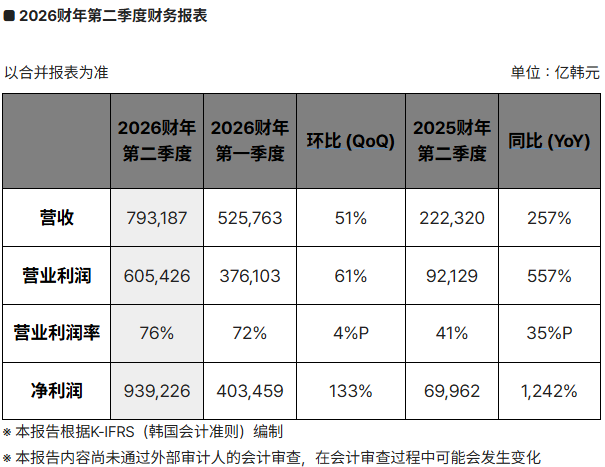
Image: SK Hynix Financial Report
SK Hynix's financial report shows that, using Solidigm as the statistical scope, H1 revenue was approximately $9.03 billion, a year-over-year increase of 265%; net profit was approximately $4.31 billion, a 44x year-over-year increase, with the net profit margin soaring from 3.9% in the same period last year to 47.7%. In 2022 and 2023, Solidigm lost 3.3 trillion and 4 trillion Korean won, respectively. In August this year, Solidigm reached a supply agreement with AI cloud provider CoreWeave, which explicitly stated that storage has become a key constraint in AI platform capacity planning.
From the above data, we find that Solidigm's transformation from consecutive huge losses to a half-year net profit of $4.3 billion is not primarily due to how brilliant the management is, but because the demand for storage capacity from AI inference happens to fall right on the QLC track.
Solidigm's 16x Valuation: Bubble or Undervalued?
Whether Solidigm's 16x valuation is reasonable, in our view, needs to be examined separately.
Solidigm's Upside Potential
A recent research report from Citi predicts that eSSD demand will rise 52.9% in 2027, and the NAND market will see a supply-demand gap of 6.1%—in short, supply will fall short of demand. Citi's logic is that AI is shifting from "fixed after training" to "continuous learning," where data must be stored continuously and accessible at any time. This directly pushes enterprise SSDs from a supporting role to a rigid necessity. The replacement demand from HDDs to SSDs is also adding fuel to the fire.
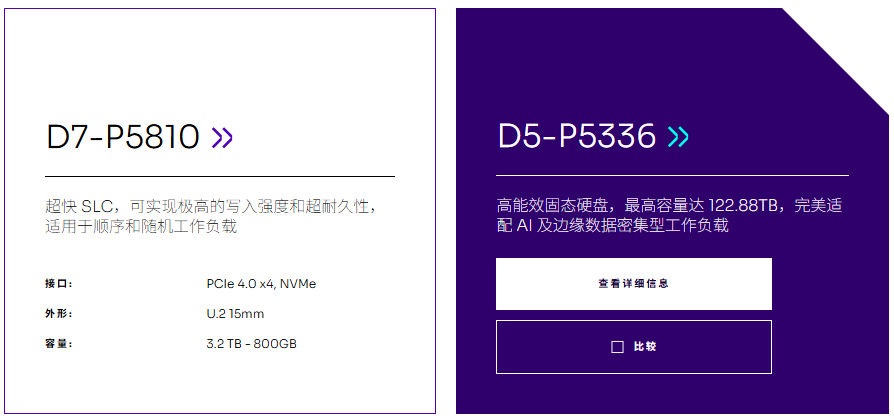 Image: Solidigm Advantageous Products
On the supply side, Solidigm's Dalian Fab 2 has restarted, with the new production line investing 50,000 wafers per month. Combined with Fab 1's 100,000 wafers, total capacity will increase by about 50%, with production planned for the first half of next year. Donga Daily also mentioned that investors believe that at similar EV/E multiples, Solidigm has more upside potential than Kioxia, primarily because its QLC technology barrier is high enough that competitors cannot easily catch up.
Solidigm's Risk Profile
We must see clearly that Solidigm's production base is only in Dalian. Previously, due to uncertainty over US export controls, the introduction of advanced equipment was stuck for a long time. Financially, in 2024, its debt ratio was as high as 4484.6%, more than ten times the healthy level. The working capital lent to it by SK Hynix had rolled over to 11.32 trillion Korean won by early 2025.
Additionally, Micron is aggressively chasing in the enterprise SSD space. In Q2 2026, its revenue was $6.98 billion, a quarter-over-quarter surge of 126.3%, the fastest growth among the top five, with its market share also rising from 15.4% to 17.1%. This catch-up speed puts real pressure on Solidigm's high profit margins.
Our Perspective
Our view is that the 16x valuation is essentially a bet on "the continued explosion of AI inference storage demand after 2027." If the bet is right, it is reasonable pricing in the early stages of the cycle; if wrong, capacity bottlenecks and financial leverage will become two landmines detonating simultaneously. The key variable is not whether Citi's demand-side forecast materializes, but whether the Dalian factory's capacity implementation speed and yield ramp-up can keep pace. The supply side is the true link that determines whether profits can be pocketed.
FAQ
Q1: What is the relationship between Solidigm and SK Hynix?
Solidigm is a wholly-owned subsidiary of SK Hynix. In 2020, SK Hynix acquired Intel's NAND flash and SSD business for approximately $9 billion. In 2021, it integrated the related assets and established the Solidigm brand for independent operation. In March 2025, SK Hynix completed full ownership.
Q2: How did Solidigm perform financially in H1 2026?
The performance was extremely impressive. H1 2026 revenue was approximately $9.03 billion, a year-over-year increase of 265%; net profit was approximately $4.31 billion, a 44x year-over-year surge, with the net profit margin soaring from 3.9% to 47.7%, achieving cumulative profitability for the first time.
Image: Solidigm
Q3: What risks will Solidigm's IPO face?
Capacity bottlenecks and geopolitical controls are the biggest risks. The Dalian factory is its only production base. Previously, due to US semiconductor export controls against China, equipment procurement was hindered, and the construction of Fab 2 was suspended for a long time, only resuming construction in the first half of 2026.
Conclusion
Solidigm's IPO is essentially a head-on collision between the AI storage cycle and capital pricing. The $150 billion valuation anchors not the past six years' book numbers from $9 billion to $150 billion, but whether AI inference storage demand can be sustained after 2027. Solidigm's core value lies in its QLC technology barrier and enterprise customer stickiness. However, the pace of capacity expansion at the Dalian factory and whether the 4484.6% debt ratio can continue to improve are the true variables determining whether "16x is undervalued or a bubble."
Disclaimer: Readers are strictly advised to comply with local laws and regulations. This article is compiled based on public market data for reference and educational purposes only, and does not constitute investment advice. Follow CoinMeta for the latest updates.