According to a new report, Tesla is currently producing hundreds of Optimus humanoid robots per week at its Fremont factory, which is about ten times the output of the second quarter. However, the robots that have just come off the production line are still not capable of performing general tasks, which limits their utility.
The report also mentioned that robot hands are fragile, there are issues with parts misalignment on the assembly lines, and suppliers find it difficult to maintain quality as production volumes increase. These are precisely the two key factors that determine whether humanoid robots can be profitable: generalization ability and reliability.
Hundreds of robots, most of which are for internal use by Tesla.
The Information This morning's reports stated that during the small-scale testing in the second quarter, Tesla produced only dozens of Optimus per week, but by August, this number had increased to several hundred per week. The management's goal is to establish a continuously automated production line by the end of this year, with a capacity of over 1,000 units per week, and the ultimate goal is to reach about 20,000 units per week.
This production line is located at the previous production sites of Model S and Model X. Tesla ended the production of these two flagship models at the beginning of May and converted the Fremont production line into the Optimus production line. At the same time, the workers and engineers originally responsible for the S/X models, as well as dozens of employees from the Model Y project, were transferred to the robotics project.
So where have all these robots gone? According to reports, most of them are used for internal testing, training, and data collection. The robots that work inside Tesla's factories are also confined to highly controlled areas under supervision, performing specific tasks rather than operating as general-purpose machines.
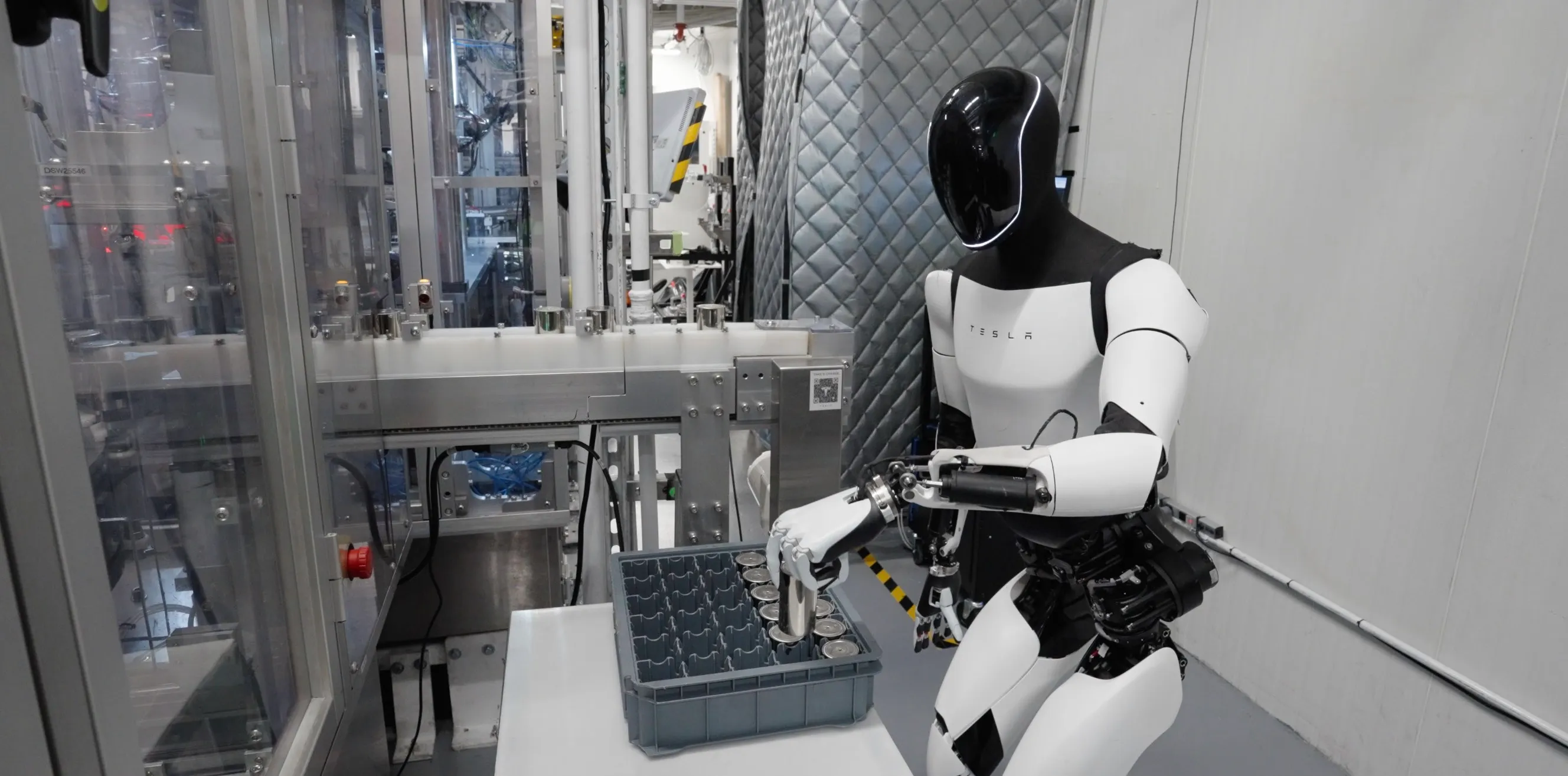
Moreover, the V3 robots currently produced by Tesla are not even the version intended for commercialization. This version still needs to meet more stringent requirements in terms of durability and reliability.
The hand is the most difficult part to work on.
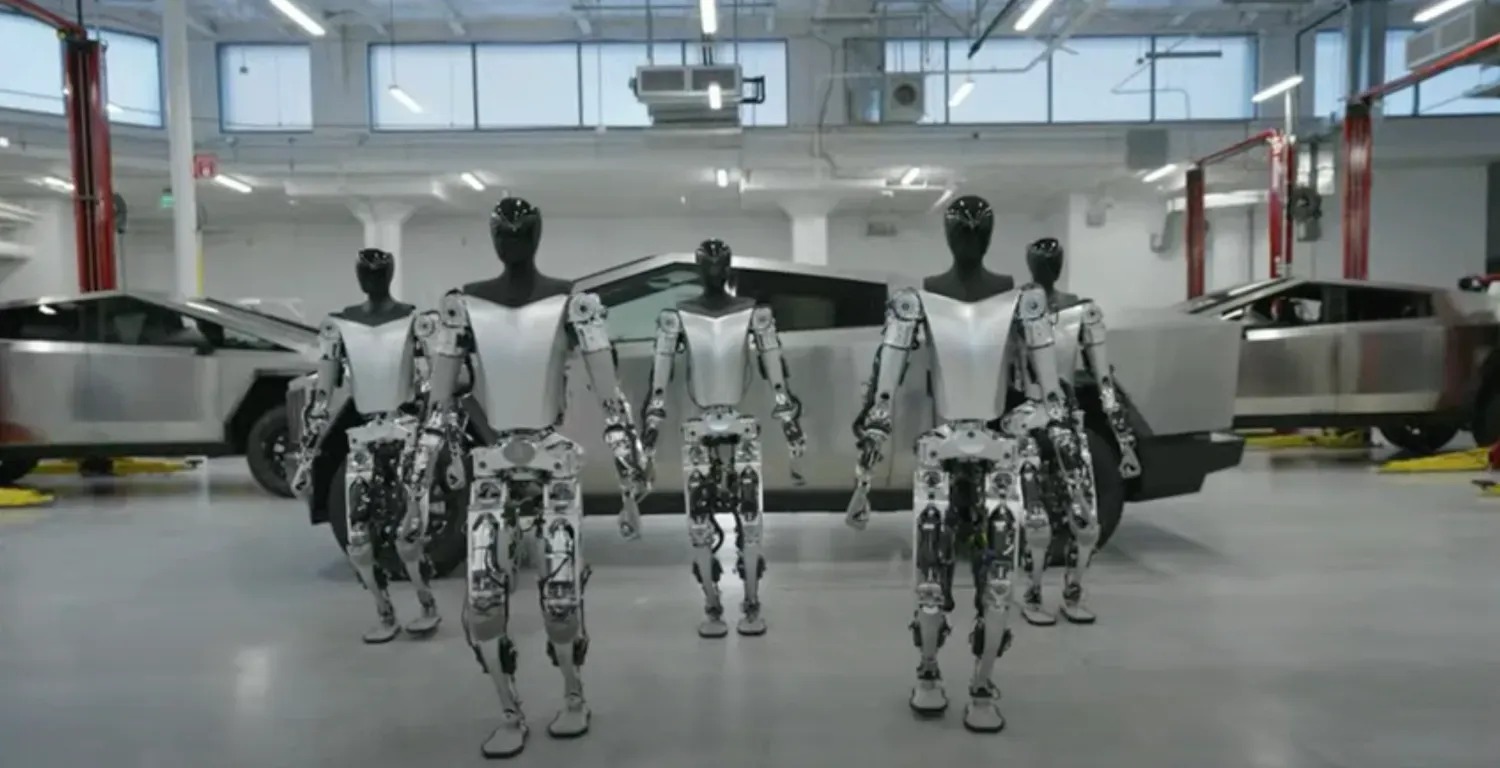
Elon Musk once promised that Optimus would possess dexterity close to that of humans. Clearly, achieving this in mass production is not an easy task.
According to The Information, the hand and forearm contain over 100 screws and small parts, and workers still need to assemble them by hand. Multiple workstations, including those for handling the hands, joints, and electronic testing, are unable to align these components accurately, as they are much smaller than car parts and have stricter tolerances. As a result, more robots require rework after leaving the production line.
Durability is also an issue. Some tactile sensors on the hands have experienced reliability problems, and Tesla's solution is to introduce a replaceable "sensing glove" next year, so there will be no need to replace the entire hand.
In addition, there are supply chain issues. Tesla relies on external suppliers, many of whom are from China, who provide motors and precision gears for the joints. Some of these suppliers can produce qualified parts in small quantities for prototypes, but it is difficult for them to maintain consistent quality at higher production volumes.
How many days does it take to learn a basic task?
The bigger problem lies with the “brain”. Three people familiar with the system told The Information that AI of Optimus is currently not capable of reliably handling a wide range of tasks, and its behavior in untrained situations may be unpredictable.
Tesla is attempting to establish a basic action library that would allow robots to recombine these actions into new tasks. However, it is reported that even for learning basic tasks, Optimus still takes several days.
To train the models, Tesla has accumulated over 500,000 hours of training data and hopes to double this amount by the end of the year. The company has reassigned most of its autonomous driving data annotation teams to the Optimus project, hired dedicated data collectors who wear camera-equipped helmets and motion capture suits, and established training centers in Colorado, Arizona, and Florida.
The customer-oriented plan follows the same logic. Reports indicate that Tesla intends not to sell Optimus directly, but to rent it to a few companies whose factory and warehouse environments are similar to its own. This way, the robots can adapt more easily, and at the same time, Tesla can use the data generated by these deployments to improve AI. This is the strategy behind FSD: first launch the hardware, collect fleet data, and then promise that the software will catch up.
This is also quite far from what Musk said last year. In January 2025, he stated that Tesla would produce about 10,000 units of Optimus in 2025 and claimed that by the end of the year there would be "several thousand" units performing useful tasks. A year later, he admitted that not a single unit of Optimus within Tesla was performing any useful work. He also promised to showcase a version of V3 by mid-2026. Now, at the end of September, this demonstration has still not appeared.
Meanwhile, competitors have not stopped either. Xpeng has already launched an automated IRON humanoid robot production line in Guangzhou this month, with the goal of achieving commercial sales by 2027.
Views of Electrek
We believe that humanoid robots will become an important new category of robots. However, we also think that their proportion in the entire robotics industry will be very small. For most tasks, robots designed specifically for those purposes, such as assembly line robotic arms or wheeled warehouse robots, are several times more efficient than humanoid robots. The only true advantage of humanoid robots is that, in theory, they can perform any task in a space designed for humans.
But this advantage only holds true when two things happen. First, AI needs to have generalization capabilities. A humanoid robot that takes several days to train for each task and must also remain within a fenced area is simply an expensive and less efficient specialized robot. No one has yet solved the problem of generalization, and it's difficult to predict when someone will do so. Second, the robot must be reliable enough to recoup its cost over many years of use. Tactile sensors failing, as well as each arm having over 100 manually assembled parts, is not a good start.
Top comment by PurpleCone
The report also described… misalignment of parts on the assembly line, as well as suppliers who were unable to maintain quality during increased production volumes.
“So you're saying this is a Tesla product?”
According to this report, Tesla has problems in both of these areas.
But this is not the first time Tesla has made major product decisions based on unimplemented AI. In 2016, the company began telling customers that all new cars were equipped with the hardware for fully autonomous driving. Later, the company admitted that HW3 models would need upgrades, and "fully autonomous driving" still required human supervision nearly a decade later. Now, in order to build a robot that its AI is not yet capable of performing the required functions, Tesla has cut back on Model S and Model X.
Maybe Tesla will eventually be able to do it. But once again, the company is betting its factory production lines on an unpredictable software schedule. How many more times will this happen before investors take this into account when evaluating the company's value?
If you follow AI and the robotics trend, you may have already noticed its impact on electricity demand and electricity prices. With electricity prices rising by nearly 10% last year and expected to continue to climb, installing solar energy is one of the best ways to offset the increasing costs. Through leasing and PPA programs, you can start with zero down payment and immediately start saving money. If you want to find the best option, you can check out EnergySage. This is a free service where hundreds of selected installers will compete to provide you with quotes for your business, so you can save 20% to 30% compared to searching on your own. There will be no sales calls before you choose an installer. Click here to get a free quote.
FTC:We use automated affiliate links with commissions. For more information.