

Gold prices recently fell below $4,300 per ounce. The strengthening U.S. dollar, rising yields on U.S. Treasuries, and the Federal Reserve's resumption of interest rate hikes have put pressure on gold in the short term. Nevertheless, TD Securities and BMO both believe that the medium-term support for gold has not disappeared, and the return of demand is accumulating conditions for the next round of gains.
Daoming Securities is optimistic about subsequent repairs.
Ryan McKay, a senior commodity strategist at TD Securities, stated that the downside potential for gold may be limited. The firm believes that geopolitical risks, de-dollarization, concerns about currency devaluation, and fiscal pressures will continue to support safe-haven buying.
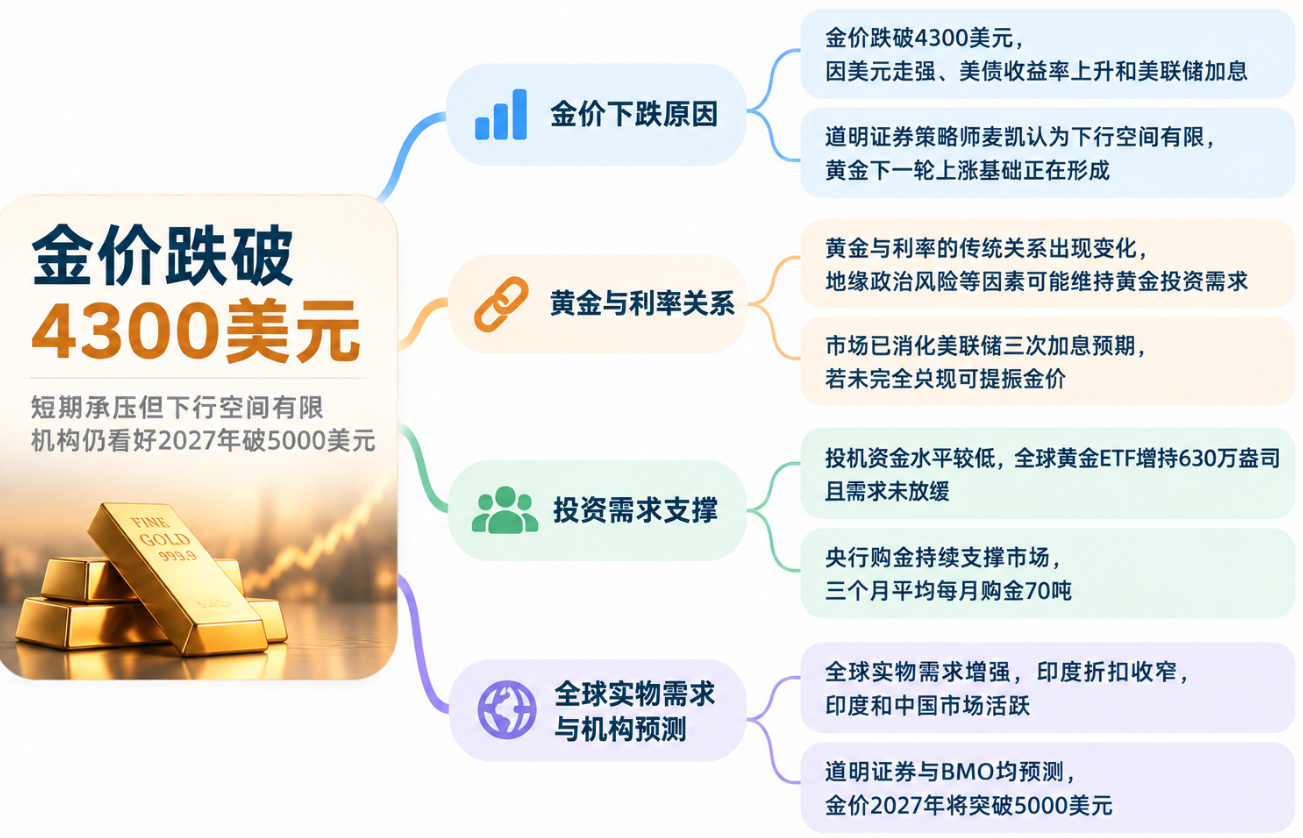
McKay expects that the foundation for the next round of gold price increases is being laid, and gold prices are expected to break through $5,000 per ounce again in 2027. He also pointed out that the market has already factored in the expectations for three future interest rate hikes, and if these hikes do not fully materialize, gold could gain additional upside potential.
ETF and central bank buying rebound
DMG Securities stated that since June, discretionary macro investors have been rebuilding their net long positions. The firm estimates that global gold holdings have increased by approximately 6.3 million ounces since July, and there is no sign so far that demand has slowed down significantly due to the Federal Reserve's tightening measures.
Central bank demand is also providing support. TD Securities estimates that, based on a three-month moving average, central banks around the world purchase nearly 70 tons of gold each month. The firm also mentioned that there is a continuous inflow of gold into China, and the net gold position of the largest trader on the Shanghai Futures Exchange is near its highest level since it began tracking in 2017.
BMO Seeing the need for physical items, passing on the task
BMO Capital Markets also believes that the demand for gold is improving. The report points out that investors are still using gold to hedge against currency devaluation and concerns about the sustainability of the U.S. fiscal policy, while the physical demand in India and China is also increasing.
BMO indicates that the demand during the Indian wedding season remains resilient. In August, China's net imports of non-monetary gold increased by 48% year-on-year, reaching 124.5 tons. At the same time, China's ETF gold holdings increased by about 44 tons, and the average daily trading volume of gold futures on the Shanghai Futures Exchange grew by 36% month-on-month.
BMO It is expected that the Federal Reserve may raise interest rates by another 25 basis points before the end of the year, but it is still believed that gold is expected to regain the $5,000 level in the first quarter of 2027. The bank believes that upcoming Sino-US talks and core PCE inflation data will continue to influence market perceptions of interest rates and inflation.