




U.S. stock markets opened lower on Thursday. With the year-on-year increase in the Producer Price Index expanding in August, and Brent crude oil reaching $100 per barrel, concerns about a resurgence in inflation grew, which also renewed bets for interest rate hikes by the Federal Reserve.
The S&P 500 index opened down 0.55% at 7,594.74 points; the Nasdaq Composite Index fell 0.88% to 26,021.05 points; the Dow Jones Industrial Average declined 0.17% to 52,291.85 points. Among the three major indices, the Nasdaq Index had the largest decline.
In August, PPI increased by 5.4% year-on-year.
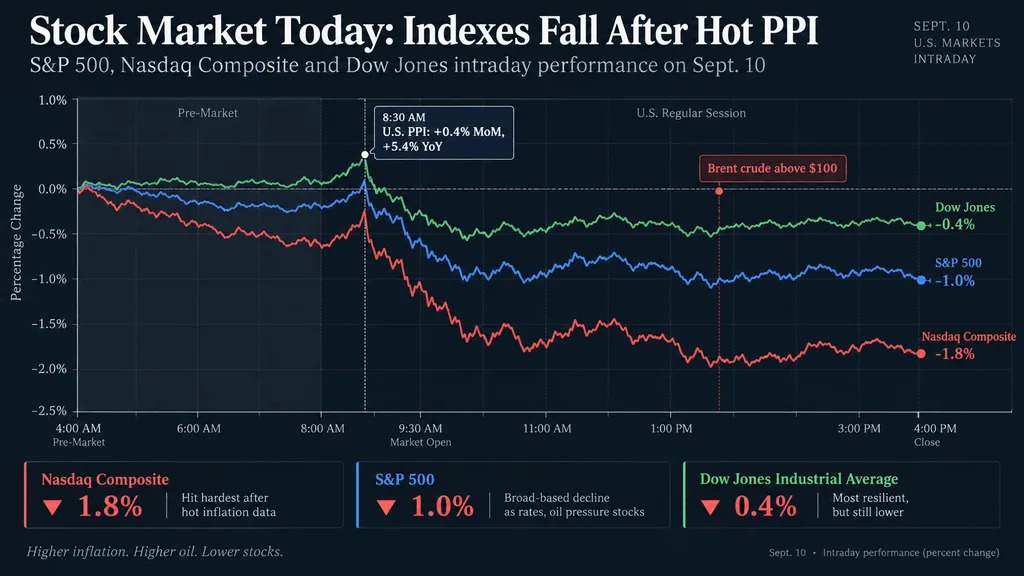
In the United States, on PPI of August, there was a month-on-month increase of 0.4%, in line with market expectations. However, the year-on-year growth rate accelerated from 4.8% in July to 5.4%. Among these, energy prices rose by 4.2% month-on-month, indicating that the upward trend in oil prices is still being passed on to upstream costs.
The market is concerned that if energy prices continue to remain high, costs at the transportation, manufacturing, and consumption levels could be further pressured, which would make it more difficult for the Federal Reserve to shift to a more accommodative stance on inflation.
Tech stocks are under more pressure.
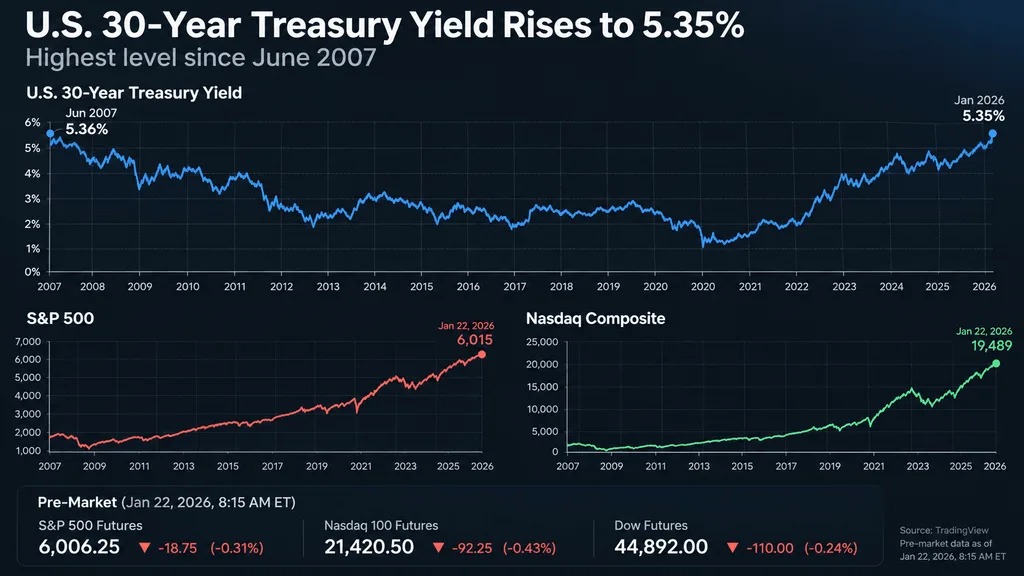
High inflation and rising U.S. Treasury yields typically put greater pressure on high-valued growth stocks. The reason is that higher interest rates lower the valuation of future earnings and also increase the attractiveness of bonds to funds.
In this context, AI and the semiconductor sector have become focal points of market attention. The related stocks already had high valuations after the financial reporting season, so they are more sensitive to changes in interest rates and yields.
Oil prices and CPI become the next focus
Brent crude oil remained above $100 per barrel on Thursday. Reuters reported that the price during the session was around $104.79. After stronger attacks on Gulf shipping, concerns about disruptions in energy supply increased, further exacerbating inflationary pressures.
Before the release of the PPI data, the market had already factored in a 62% probability of the Federal Reserve raising interest rates by 25 basis points at its September meeting. Reuters later reported that this probability had risen to around 65%.
Next, the market will shift its focus to the U.S. Consumer Price Index (CPI) released on Friday. According to a Reuters survey, economists expect the overall CPI to rise 0.4% month-on-month and 3.4% year-on-year in August; the core CPI is expected to rise 0.2% month-on-month and 2.4% year-on-year. If the data continues to be strong, interest rate expectations and U.S. Treasury yields may rise further, and the pressure on tech stocks could also increase.