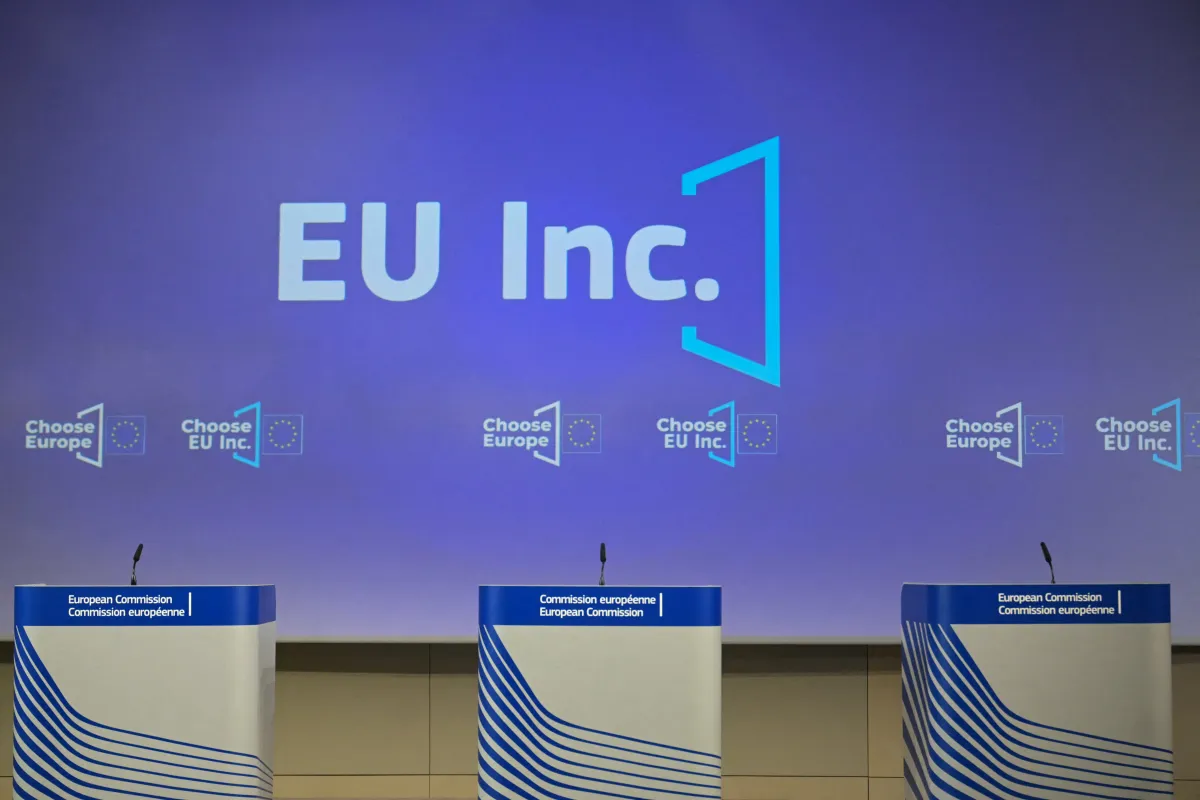





Europe is pushing to establish a new form of company that can be used across member states, which is often compared to the C Corp in Delaware, USA. As the European Parliament and Council continue to negotiate the final text, European entrepreneurs and venture capital firms have spoken out again, urging legislators not to weaken this proposal.
A public letter released on Thursday stated that if “EU Inc” proceeds in its original direction, it is expected to reduce the institutional frictions encountered by companies when setting up, financing, and operating across borders in Europe, and to improve the entrepreneurial and investment environment. The signatories believe that Europe has long faced issues of fragmented regulations and repetitive processes, which continue to slow down company expansion and the entry of capital.
Open letter highlights two core clauses
The co-signatories particularly emphasize that two seemingly technical aspects of the design should not be downplayed: firstly, the establishment of a single central registration system; and secondly, employees' options should be taxed only at the time of actual sale, rather than in advance during the grant or exercise stage.
In the view of supporters, these arrangements are directly related to whether the founders are willing to adopt this corporate structure. If the registration process still needs to be handled separately for each country, or if the tax burden on employee stock options is imposed too early, the attractiveness of this system for startups will significantly decrease.
Interest groups from various countries have begun to exert pressure.
As the legislative process enters the negotiation phase, lobbying efforts from various countries have also come into play. Reports indicate that the German Notaries Association has criticized certain aspects of the European Commission's proposal, suggesting that the final version may still be subject to adjustments in implementation details.
The open letter mentions that there are approximately 100 days left before European institutions enter their winter recess. Supporters hope to use this period to exert pressure on the parliament and council to prevent key provisions from being weakened during negotiations.
Venture capital firms continue to expand their support base
This initiative is not a recent development. As early as 2024, supporters argued that what determines whether a system is truly usable is often not the formulation of principles, but rather specific provisions regarding registration, taxation, and other aspects.
The signatories of this joint statement include partner Sonali De Rycker, partner Sequoia, partner Michael Moritz, as well as Atom, the founder of the token issuance Niklas Zennstr öm. The supporting camp hopes to use this to indicate that this issue is not only a legal and technical matter, but also relates to whether Europe can enhance its attractiveness to startups and long-term capital.