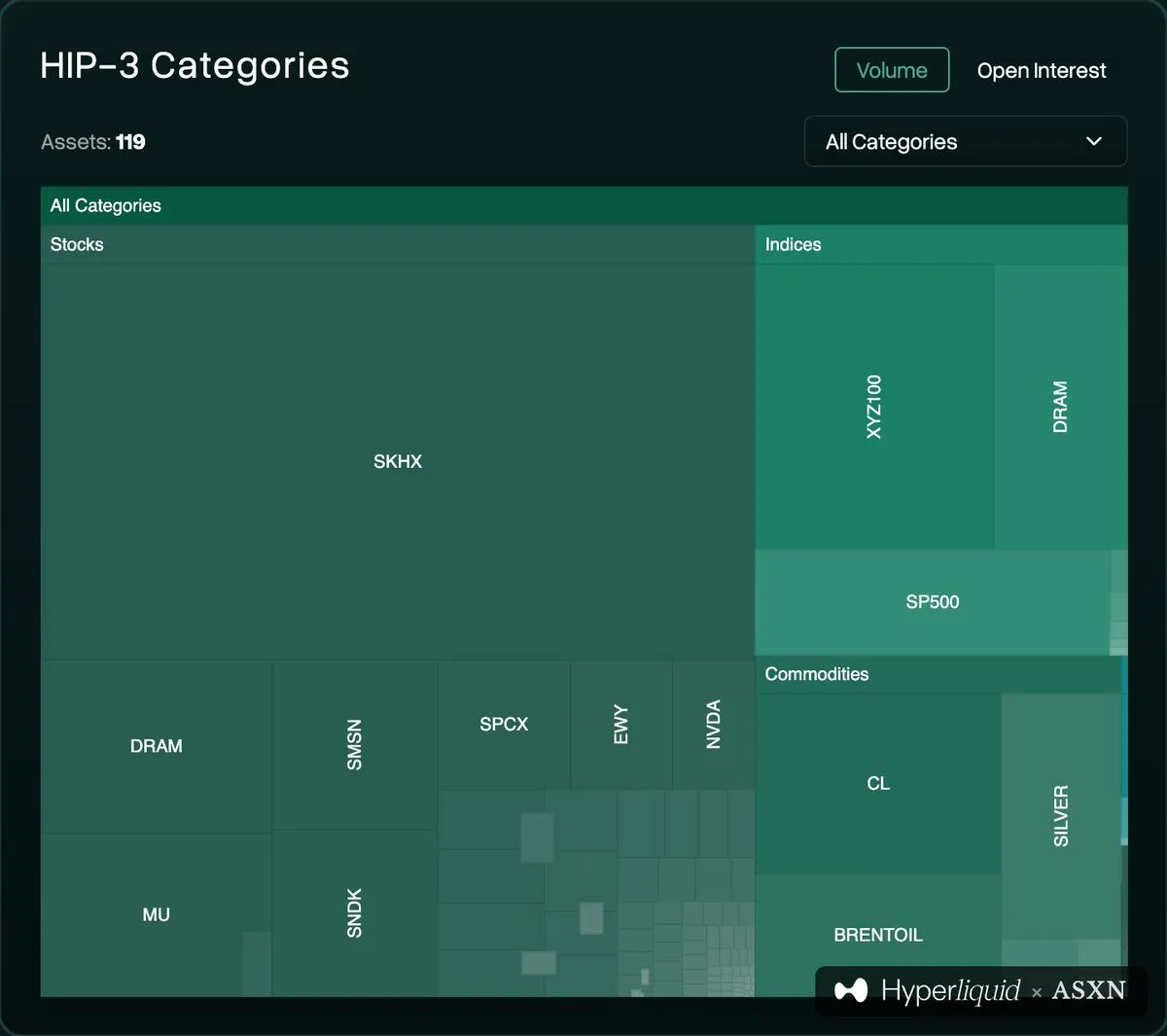


The transaction structure on the Hyperliquid platform has undergone new changes. The trading volume of real-world assets (RWA) has surpassed that of crypto assets, indicating that the activity of these products on on-chain trading platforms is on the rise.
RWA's transaction share increased.
This means that platform users' trading interests are no longer solely focused on traditional crypto assets like Bitcoin and Ethereum, but are increasingly shifting towards on-chain products linked to real-world assets. For Hyperliquid, this change reflects the expansion of its platform's product structure.
RWAs typically refer to tokenized products that are linked to real-world financial assets, commonly including government bonds, credit products, or other traditional financial instruments. These products have seen a continuous increase in attention within the crypto industry over the past year, partly because their yield characteristics are closer to those of traditional financial markets.
The platform ecosystem continues to expand.
Hyperliquid previously garnered attention primarily for its perpetual contracts and high trading activity. The recent increase in RWA trading volume indicates a shift in fund usage on the platform and demonstrates that on-chain trading platforms are attracting more non-purely crypto-native demand.
From an industry perspective, these changes may drive more trading platforms to expand their RWA-related product offerings. As the scope of tokenized assets expands, the connection between on-chain platforms and traditional financial assets is also strengthening.
Reflecting new trends in on-chain transactions
The fact that RWA's trading volume has surpassed that of crypto assets does not mean that demand for the latter has disappeared, but rather indicates that the trading focus within the platform is undergoing a phase of adjustment. For the market, this change is more like a signal of expansion in on-chain trading categories.
If this trend continues, RWA may gain greater weight on more crypto trading platforms and further change the way on-chain liquidity is distributed.