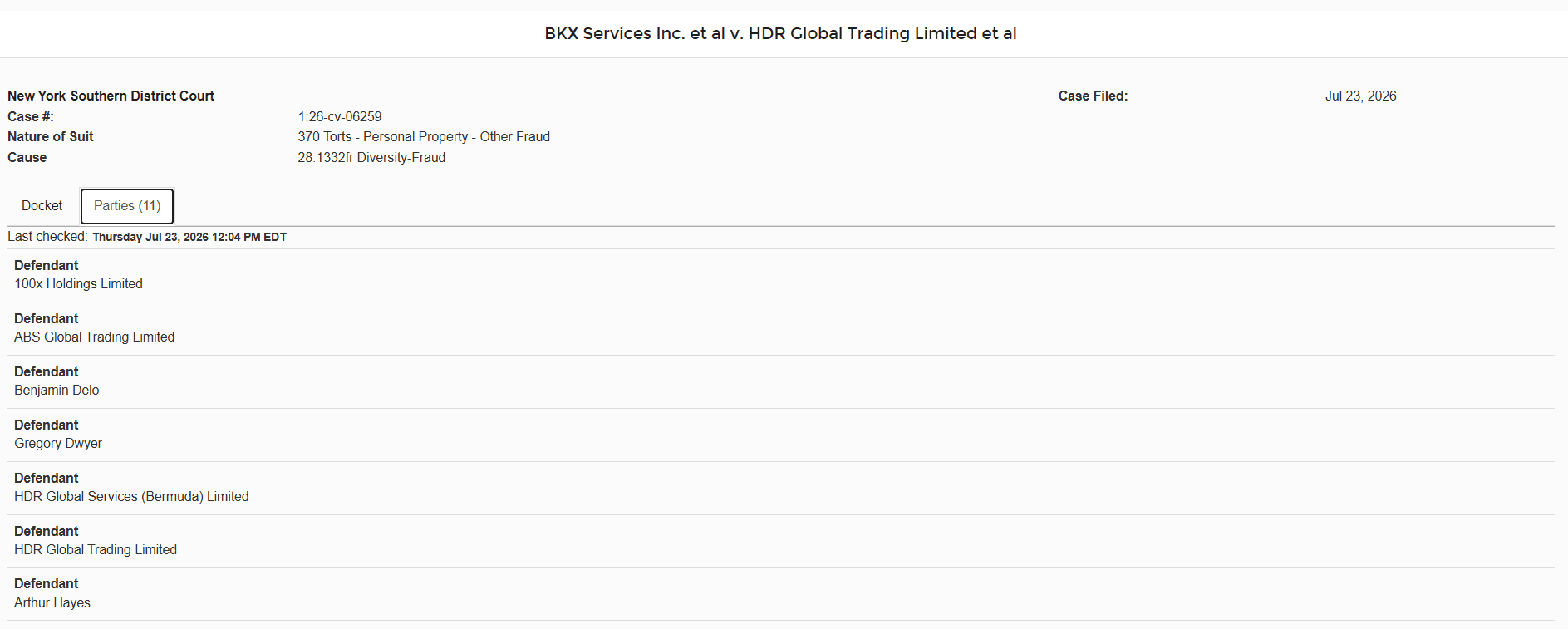


On the same day it announced its cessation of operations, BitMEX was hit with a class-action lawsuit. The plaintiffs allege that the cryptocurrency derivatives exchange improperly handled client positions through its liquidation mechanism and withheld Bitcoin collateral that should have been returned. The case has been filed in the United States District Court for the Southern District of New York.
The plaintiffs include BKX Services Inc. and investor David Namdar. The lawsuit alleges a combined loss of 622.66 BTC, with BKX Services losing at least 305.81 BTC and David Namdar losing over 316.85 BTC. The plaintiffs argue that these losses were not solely due to market volatility, but rather related to BitMEX's liquidation methods.
The plaintiff claims that the platform withheld the remaining collateral.
The lawsuit alleges that some positions, when forcibly liquidated, still had excess collateral in the accounts beyond what was needed to cover losses. However, after the positions were closed, this excess Bitcoin was not returned to the clients but was retained by the platform. The plaintiffs therefore argue that BitMEX was not merely implementing risk control but was directly profiting from the liquidation process.
The complaint also states that the practice caused ongoing losses in multiple transactions, and therefore the plaintiff is seeking damages and other legal remedies.
The controversy centers on the liquidation engine
At the heart of this lawsuit lies the design of BitMEX's liquidation engine. The plaintiffs claim that the system operates in a way that benefits the platform itself rather than helping traders control losses in a high-leverage environment. BitMEX was previously known for its crypto derivatives trading with leverage up to 100x, allowing users to build larger positions with less collateral, thus inherently increasing liquidation risk during periods of high market volatility.
The plaintiff further alleges that during periods of heightened market volatility, the platform experienced server outages or service disruptions, preventing some users from adjusting or closing their positions in a timely manner, ultimately resulting in automatic liquidation by the system. The complaint argues that these avoidable liquidations amplified customer losses and allowed the platform to accumulate more Bitcoin from its customers.
The lawsuit and the shutdown announcement appeared on the same day.
BitMEX previously stated that, following a business strategy review, it planned to cease operations on September 23, 2026, and had reminded clients to close open positions and withdraw assets before the closure. The timing of this lawsuit, coinciding with the closure announcement, has once again drawn market attention to its final asset disposal and historical trading practices.
Currently, the allegations remain at the level of the plaintiff's complaint and have not yet been adjudicated by the court. However, this case has once again brought BitMEX's long-controversial liquidation mechanism to the forefront. With the platform nearing its closure, this case may become a high-profile lawsuit in the dispute over the handling of customer collateral in crypto derivatives exchanges.