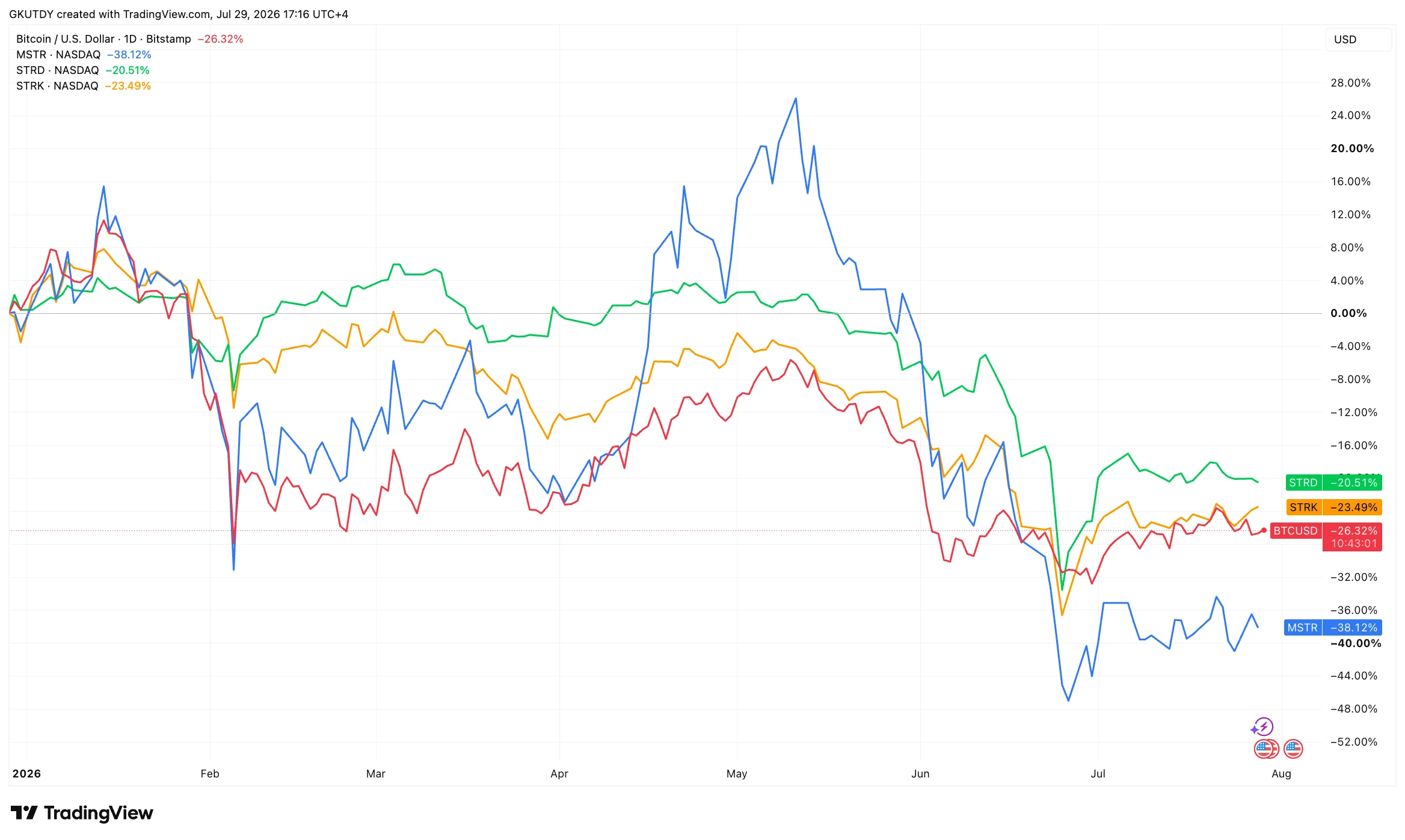
Strategy's latest disclosure reveals that, as its financing structure shifts from convertible bonds to "digital credit" primarily based on preferred stock, the company has updated its Bitcoin metric for investors. The core of the new approach is to deduct the priority claims corresponding to debt and preferred stock from total reserves before calculating the actual Bitcoin value for common shareholders.
The new standard uses net reserves.
The company's key metrics are "net reserves" and "net Bitcoin per share." According to its disclosure, Strategy currently holds 843,775 Bitcoins, equivalent to approximately $57 billion, in addition to approximately $3.2 billion in cash.
Based on this, the company deducted approximately $22.2 billion in senior claims, including approximately $15.5 billion in preferred stock and approximately $6.8 billion in out-of-the-money convertible bonds. The remaining approximately $35 billion was defined as "net reserves," used to measure the residual value available to common shareholders.
The company stated that, based on the new fully diluted share capital, the "net Bitcoin per share" has risen from $13 at the end of 2020 to $95 currently; in terms of Satoshis, it has risen from 44,000 Satoshis to 143,000 Satoshis.
mNAV calculation method adjusted accordingly
Strategy has also rewritten the calculation method for mNAV. Under the new definition, mNAV equals the MSTR stock price divided by the net Bitcoin per share, instead of the previously common total supply calculation.
According to reports, MSTR's stock price was around $93 on Friday, corresponding to an mNAV of approximately 1.02 times under the new formula. Using the old calculation method, the market would more easily perceive the stock as trading at a discount relative to its Bitcoin holdings; with the net calculation method, the same stock price is closer to "parity."
- The effective cost of credit is approximately 10.8%.
- The break-even point is approximately 3.2%.
- The "flow ratio" is approximately -11%.
The "flow ratio" is used to estimate when reserves will be insufficient to cover debt and preferred stock dividends if the price of Bitcoin continues to fall. According to the company's calculations, the existing structure can be maintained as long as Bitcoin's annual decline does not exceed approximately 11% over the next few years.
The focus of financing has shifted to preferred shares.
This adjustment to the metrics follows Strategy's revision of its capital management framework since the end of June. At that time, the company approved an "active capital management" framework, which for the first time allowed the sale of up to $1.25 billion worth of Bitcoin to replenish cash reserves, pay preferred stock dividends, and repurchase shares. This was seen as a formal loosening of Michael Saylor's previous "never sell" stance.
However, the report noted that in the following weeks, Strategy actually raised funds by selling MSTR stock, rather than directly selling Bitcoin. This meant the company retained its 843,775 Bitcoin holdings, but common shareholders also suffered further dilution.
Share price remains under pressure ahead of earnings report
The release of these new metrics comes as MSTR's stock price remains under pressure. Reports indicate that the stock has fallen significantly from its 2024 high, and the company's flagship preferred stock, STRC, is still trading below its $100 par value.
Strategy will release its second-quarter results on July 30. Following this adjustment, the company is attempting to shift market focus from "total cryptocurrency holdings" to "the actual net Bitcoin value held by common shareholders," in response to investor concerns regarding the valuation methodology following the change in its financing structure.
Additional information:Michael Saylor stated on social media that the Bitcoin capital market needs a new financial language; the company's head of investor relations stated in a video that the updated metrics were in response to investors' demands for greater clarity in disclosure.