

Raydium is extending its decentralized liquidity network on Solana to regulated asset trading scenarios. The protocol launched a permissioned AMM on July 23, allowing asset issuers to directly utilize Raydium's liquidity infrastructure to establish compliant secondary trading markets after setting KYC verification and participation thresholds.
This change targets the trading needs of tokenized stocks, funds, and other real-world assets after they are put on-chain. Traditional AMMs are open to all wallets and suitable for native crypto assets, but not for security assets that require investor verification and transfer restrictions. Raydium's addition of an access control layer attempts to combine public blockchain liquidity with compliance requirements.
Verify wallet eligibility before making a transaction
Under the new mechanism, not all wallets can directly interact with the liquidity pool. The system will first check whether the wallet meets the eligibility requirements set by the issuer, and only verified wallets can trade.
- The issuer manages KYC and determines which participants are eligible.
- Smart contract execution restrictions allow only compliant wallets to access the liquidity pool.
- Immutable smart contracts are responsible for execution, and the process is verifiable and traceable.
This means that accredited investors can only transact with verified counterparties, while the issuer can retain control over the scope of participants.
Superstate was the first to integrate tokenized stocks.
Superstate has become the first partner to integrate this infrastructure. The company operates the Opening Bell platform, which aims to issue publicly registered tokenized shares directly on the blockchain.
Unlike synthetic products that only track stock prices but do not represent actual ownership, Superstate promotes natively tokenized securities, where the tokens themselves correspond to ownership of the underlying securities.
The company stated that it has developed infrastructure to track ownership changes within DeFi environments, covering scenarios such as AMMs and lending protocols. Through this integration with Raydium, approved investors can trade tokenized shares in permissioned AMMs, while ownership records and compliance requirements are managed by Superstate.
Multiple DEXs are shifting towards compliant trading infrastructure.
Raydium isn't the only DEX recently shifting towards compliant trading infrastructure. On May 27th, Orca partnered with gold tokenization company Streamex to launch permissioned liquidity pools on Solana. Their solution relies on Solana's token scaling capabilities to enforce transfer restrictions and links investor eligibility to on-chain activity.
Uniswap Labs also announced Permissioned Pools on July 23. This feature, based on Uniswap v4's hook standard, allows pools to verify wallet eligibility directly through smart contracts, rather than relying on front-end restrictions or off-chain audits.
Solana's RWA data continues to grow.
As the tokenization narrative gains traction, the market size is expected to rise. Ark Invest's "Big Ideas 2026" report projects that the global tokenized asset market could grow from $19 billion to $11 trillion by 2030, representing approximately 1.38% of all financial assets.
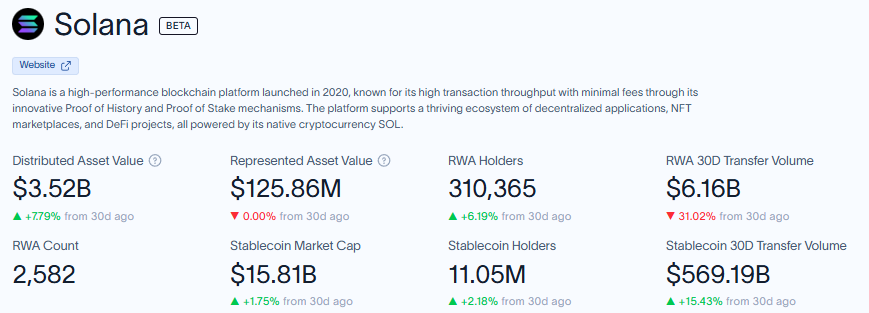
The article cites data showing that Solana has become the blockchain network with the most RWA holders, with approximately 311,000 holders, a RWA value of approximately $3.5 billion, and more than 2,500 tokenized assets.