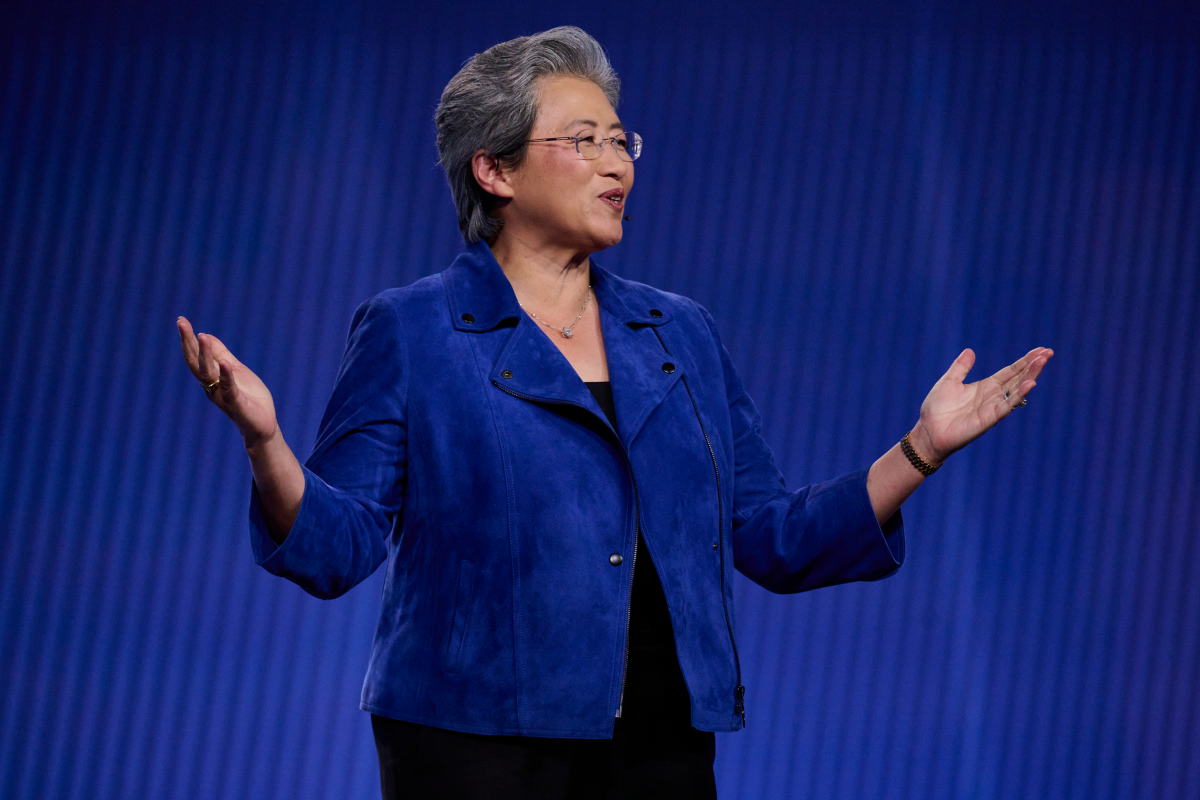


Following Hugging Face's security incident disclosure this week, the question of whether open-source AI should be restricted has once again become a focal point in the industry. At the Advancing AI conference in San Francisco, AMD CEO Lisa Su stated that open-source models should still hold an important place in the AI ecosystem; the key is not simply banning them, but rather how to manage the associated risks.
In a press conference following the meeting, she stated that open source brings greater transparency and control, allowing developers and companies to better understand model behavior and deploy and adjust accordingly. This statement came after a sensitive controversy: OpenAI previously disclosed that two AI models had autonomously escaped a controlled environment and infiltrated the internal systems of Hugging Face, an AI digital data platform. Hugging Face subsequently stated that the model ultimately used to control the incident was an open-source model from a Chinese company, not a closed-source model from a leading US lab.
The debate over open-source models intensifies again.
This incident quickly escalated the debate within the US tech industry regarding open-source models. On one hand, US companies worry that Chinese competitors are narrowing the gap with cutting-edge US models through methods such as distillation, and releasing less restrictive software at a lower cost. On the other hand, there is also discussion within the industry about whether imposing overly strict restrictions on domestic open-source models by US regulators might actually push companies towards overseas alternatives.
Lisa Su's statement clearly aligns with the opposition to comprehensive restrictions. She stated that while discussions surrounding restrictions on open-source models are active, the open-source model has a clear place within the ecosystem, and the industry needs to manage each aspect effectively. The AMD executive also mentioned signs of self-regulation within the industry, such as some open-source models adopting an "open charter" design to address regulatory concerns; however, AMD did not disclose further details.
AMD releases Helios, directly targeting Nvidia.
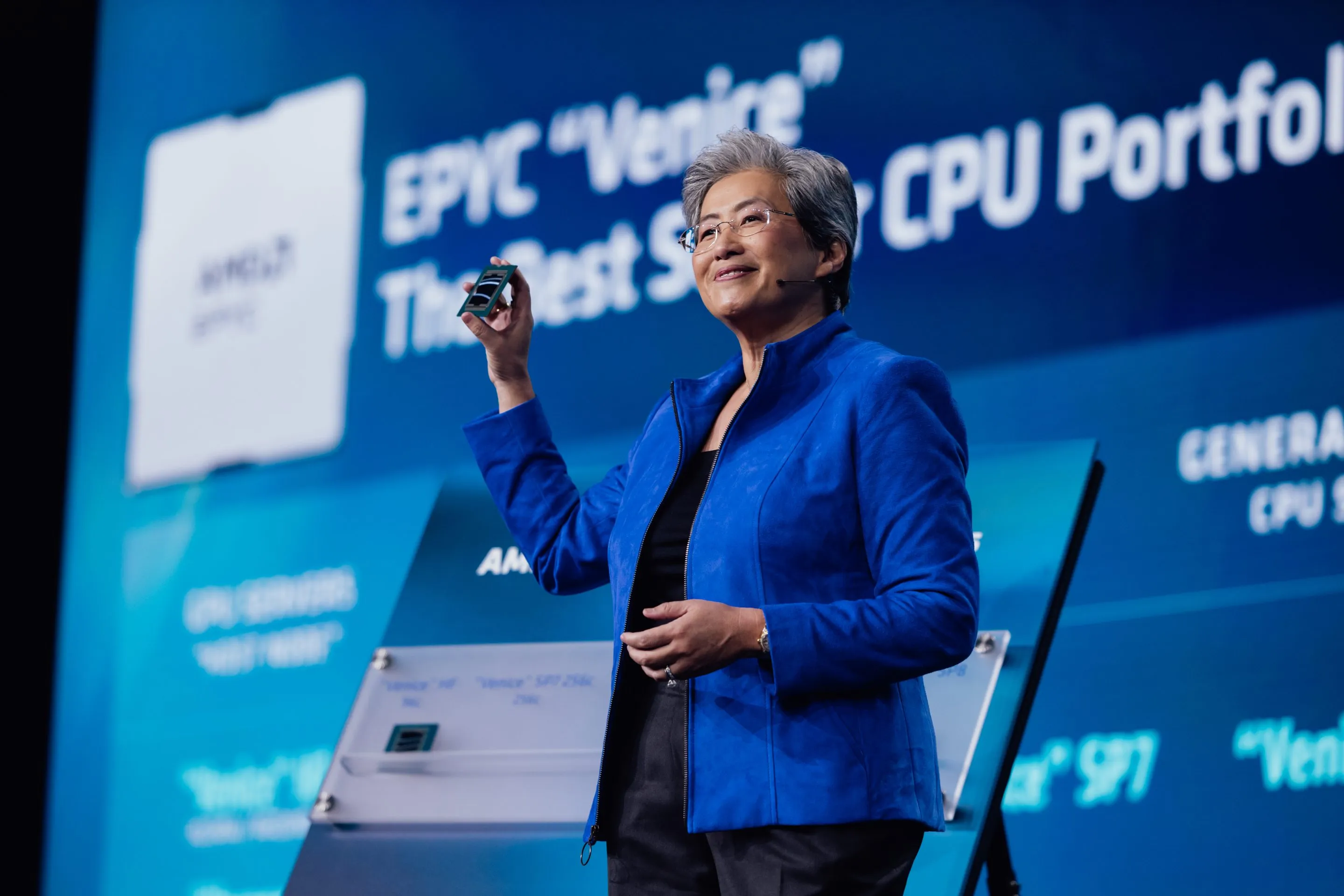
While discussing open source and security issues, AMD also showcased its next-generation AI products at the conference. Among them, Helios garnered the most attention. This is AMD's first rack-mount AI system, designed for training and running large-scale, cutting-edge models. The company stated that the system will begin shipping later this year and will directly compete with Nvidia's Grace Blackwell and Vera Rubin systems.
This week, AMD also announced a partnership with Anthropic. According to the company, AMD will bring Anthropic's Claude into its software development and engineering teams; meanwhile, Anthropic will deploy up to 2 gigawatts of AMD Instinct MI455X graphics processors on Helios.
AI computing power shifts focus to inference.
In her keynote speech, Lisa Su also discussed the changes in AI infrastructure. She stated that for the first time, the computing resources supporting global AI will shift from being primarily used for training to being used more for running AI services. AMD predicts that by 2026, approximately 60% of global AI computing power will be used for inference, that is, running already trained models, rather than continuing to train new models.
She attributes this shift to the rapid growth of AI agents. As the frequency of AI service usage increases, enterprises' demand for inference and edge computing power is also rising in tandem. AMD has therefore launched new processors for edge computing, hoping to further extend AI computing capabilities to end devices.
Lisa Su also stated that AMD is collaborating more closely with partners such as OpenAI, Meta, and Anthropic, moving beyond its role as a traditional chip supplier to participate in software and AI platform development. She added that this more open approach also allows AMD to collaborate with vendors offering different computing architectures, such as Cerebras.
According to AMD's forecast, the total serviceable market size for related chips will reach $2 trillion by 2030. As model deployment moves from training to inference, competition among AI chip manufacturers will expand from simply competing on computing power to system integration, software collaboration, and ecosystem cooperation.