Polkadot plans to adjust its staking mechanism, requiring validators to stake at least 10,000 DOT.
AMBCrypto
05-26 14:44
Ai Focus
Polkadot plans to adjust its staking mechanism through Referendum 1890, raising the minimum staking threshold for validators to 10,000 DOT, and potentially shifting the risk of nominators being penalized to validators.
Helpful
No.Help

Polkadot is pushing forward with a staking mechanism adjustment. According to the upcoming OpenGov 1890 referendum, the network plans to require each validator to use at least 10,000 DOT as their own staked funds. If implemented, the proposal will impose a more direct economic constraint on validators, while reducing the principal risk for nominators.

The threshold for validators to self-stake has been raised.

Polkadot currently uses the Nominated Proof-of-Stake (NPoS) mechanism. In this model, validators are responsible for running nodes, processing transactions, and maintaining network security, while ordinary DOT holders can act as nominators, delegating their tokens to validators for staking.

Under the current structure, many validators rely heavily on the financial support of their nominators. If a validator makes a mistake, goes offline, or engages in other punishable acts, the nominator may also be penalized. The new scheme aims to have validators bear this risk themselves first.

Nominators may be exempt from confiscation

According to the proposed referendum, if a validator violates the rules or malfunctions, the system will first deduct from their staked 10,000 or more DOT tokens, rather than directly causing a large number of nominators to bear the principal loss. In this way, nominators can still receive staking rewards, but the risk of confiscation of their principal will be significantly reduced.

Polkadot stated that under the new design, nominators will continue to receive staking rewards without directly losing their principal due to validator errors. This means the network aims to place greater emphasis on security responsibility and economic penalties on the validators.

The unbinding period is planned to be shortened to within two days.

In addition to risk transfer, Polkadot also plans to shorten the unbinding period for DOT. Previously, users typically had to wait 28 days after unstaking before they could retrieve their tokens, during which time the funds could not be transferred, sold, or reused.

The new plan aims to reduce this cycle to 24 to 48 hours. If implemented, it will significantly improve the liquidity of DOT staking and reduce restrictions on user fund allocation.

  • Referendum 1890 proposed requiring validators to stake at least 10,000 DOT tokens.
  • The risk of principal forfeiture for the nominator is proposed to be transferred to the validator.
  • The DOT unbinding time is proposed to be shortened from 28 days to 24 to 48 hours.

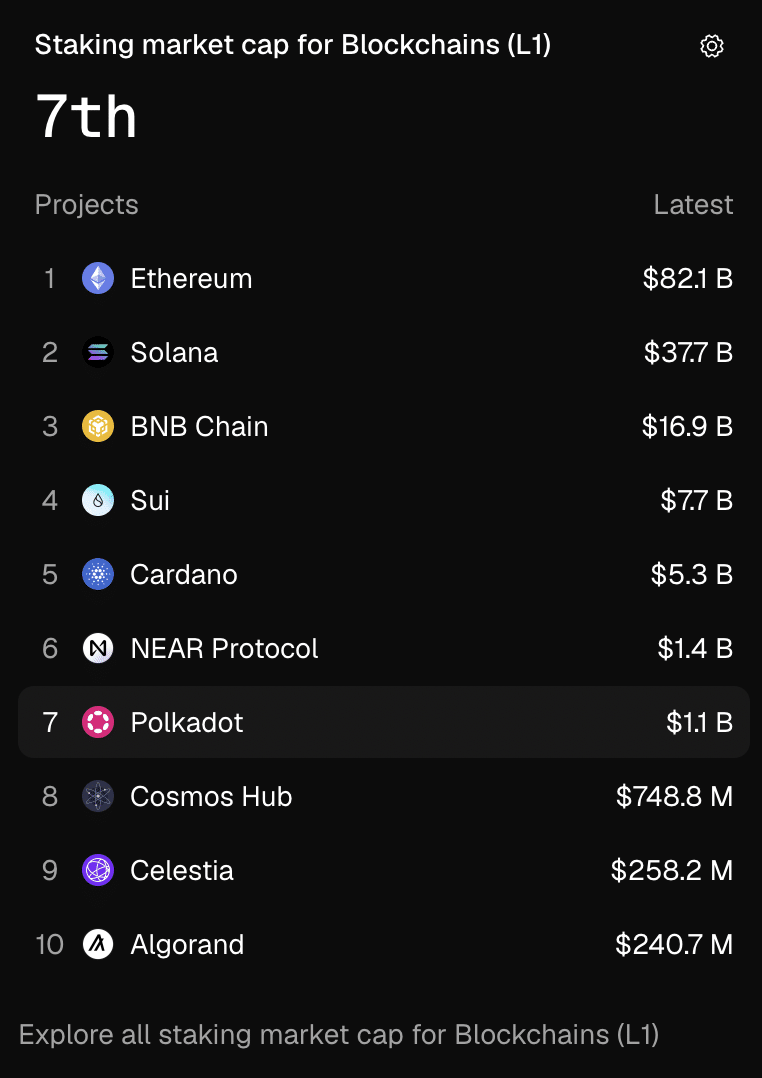
The article mentions that Polkadot ranks seventh among Layer 1 public chains in terms of staking market capitalization, at approximately $1.1 billion; Ethereum's figure is approximately $82.1 billion during the same period, still far exceeding other networks. The report also states that the staking market capitalization per chain is projected to decline in 2026 compared to 2025.
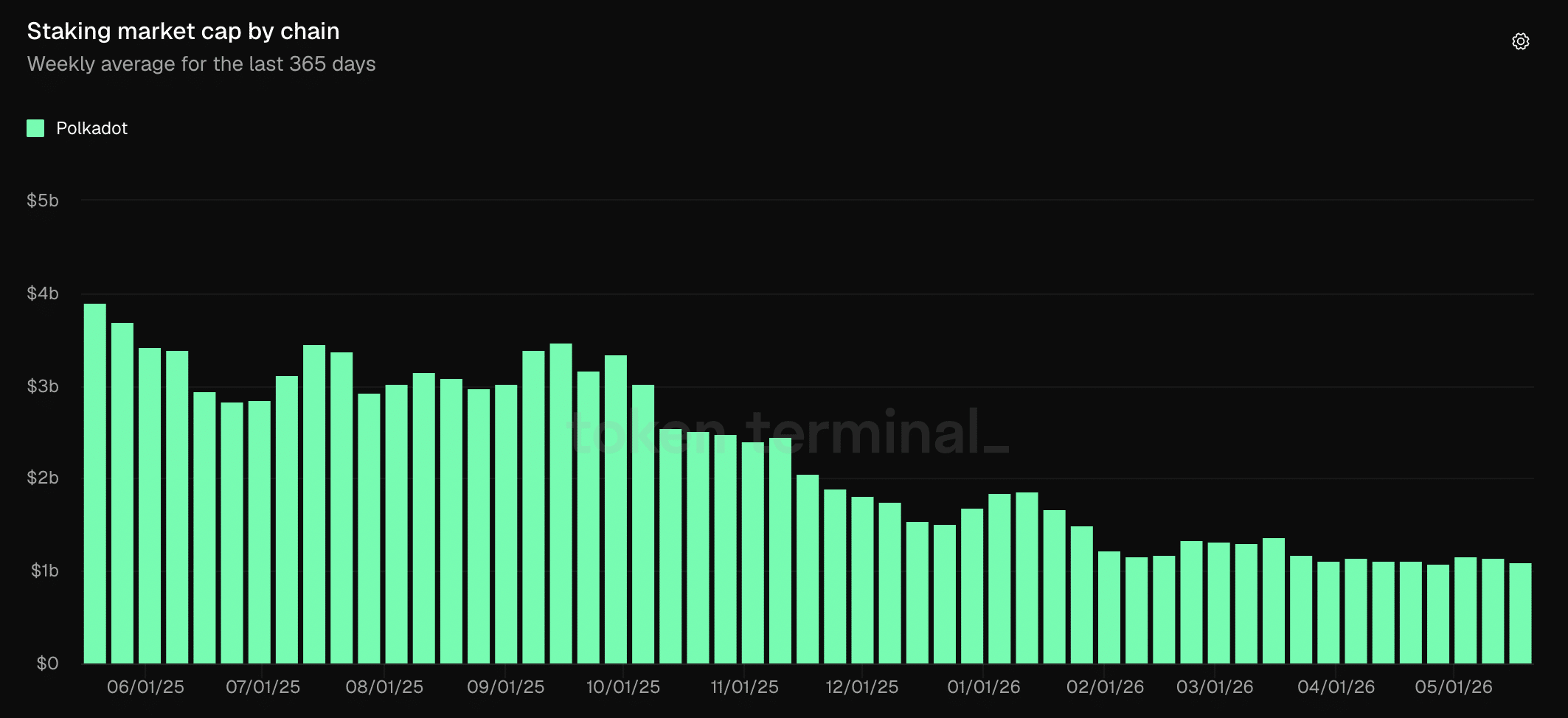
As of the time of this report, the price of DOT was approximately $1.25. The focus of this adjustment is not on short-term price movements, but rather on redistributing risk between validators and nominators, and improving the liquidity of staked funds.

Tip
$0
Like
0
Save
0
Views 261
CoinMeta reminds readers to view blockchain rationally, stay aware of risks, and beware of virtual token issuance and speculation. All content on this site represents market information or related viewpoints only and does not constitute any form of investment advice. If you find sensitive content, please click“Report”,and we will handle it promptly。
Submit
Comment 0
Hot
Latest
No comments yet. Be the first!
Related
The Sandbox Suspends Cross-Chain Bridge Between Base and BNB Chain: Unsecured SAND Why Can't We Just Look at the Coin Minting Volume?
On August 22, The Sandbox stated that a vulnerability was discovered in its SAND cross-chain bridge on Base and BNB Smart Chain. Attackers were able to mint tokens without the corresponding Ethereum SAND locking support. The team subsequently suspended the related cross-chain functionality and claimed that the vulnerability had been contained. The core issue of this incident is not merely the simple "minting" of additional tokens, but rather the disruption of the most fundamental accounting relationships between cross-chain assets: the mapped tokens on the target chain should correspond one-to-one with the assets locked or destroyed on the source chain; once unsecured minting occurs, the market can no longer assume equivalence between SAND on different chains.
币界网
·2026-08-23 12:29:19
120
Stacks Launches Bitcoin Staking with PoX-5: Self-managed time locks do not equate to a lack of new trust
Stacks has been activated at Bitcoin block height 960230, triggering a PoX-5 hard fork, and preparations are underway to implement the first batch of Bitcoin Staking arrangements. SIP-045 is designed to allow participants to pair their self-managed BTC time locks with STX locks in order to earn BTC rewards. At the same time, the staking process will be adjusted, and miners will receive 1000 STX of rewards per Bitcoin block during the launch phase. This attempt aims to address a long-standing challenge: how to generate on-chain profits for BTC while minimizing the need to entrust assets to centralized custodians.
币界网
·2026-08-23 12:28:56
124
web3: BitMart shifts to a reorganization plan, but users still inquire about withdrawal arrangements
BitMart plans to replace a complete shutdown with reorganization, but the time for restoring withdrawals and the arrangements for users' assets are still not clear.
CoinPedia
·2026-08-23 04:51:43
56
Research indicates that cutting-edge AI laboratories still lack contingency plans for out-of-control situations
Research indicates that several leading AI laboratories have not yet made public their contingency plans for dealing with model failures, and regulatory authorities have also begun to promote requirements for related disclosures.
TechCrunch
·2026-08-23 00:21:23
57
web3: Metaplanet CEO claims Bitcoin has been influenced by traditional financial systems
Metaplanet CEO expresses opinions on Bitcoin's recent trend, stating that its price has been influenced by the traditional financial system.
U.Today
·2026-08-22 22:40:23
51
View More