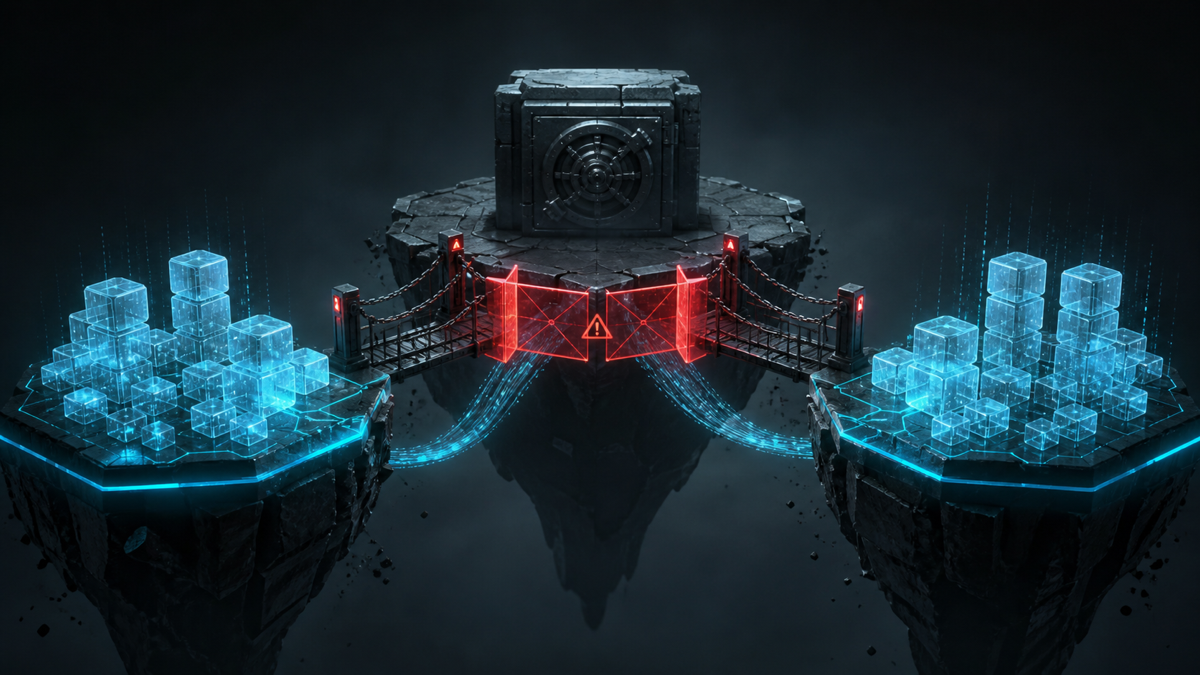
Bitcoin Miners Are Now Power Landlords — And Wall Street Just Figured It Out
BlockNews
05-20 01:20
  • Bernstein upgraded major Bitcoin miners after identifying over $90 billion in AI infrastructure opportunities
  • Miners now control more than 14 gigawatts of energized power capacity highly valuable to AI hyperscalers
  • The market is starting to value miners less for hash rate and more for power infrastructure and AI hosting potential

Wall Street is beginning to realize that Bitcoin miners may have accidentally built one of the most valuable businesses in artificial intelligence infrastructure.

Bernstein issued fresh Outperform ratings on IREN, Riot Platforms, CleanSpark, and Core Scientific after concluding that the sector’s real value increasingly comes from energy infrastructure rather than Bitcoin mining itself.

The shift is significant. Instead of pricing miners purely on hash rate production and Bitcoin exposure, analysts are now valuing them based on power capacity, grid access, and long-term AI hosting contracts.

Power Is the New Scarcity

For years, Bitcoin miners aggressively secured cheap energy contracts, rural land, substations, and grid connections to lower mining costs. At the time, it looked like pure crypto optimization.

Now those same assets are becoming critical for AI companies desperately searching for power and data center infrastructure fast enough to support exploding compute demand.

Bitcoin miners collectively control more than 14 gigawatts of pre-secured grid capacity, giving them a massive advantage as hyperscalers face infrastructure bottlenecks and multi-year delays tied to new energy connections.

In some regions, traditional interconnection timelines now stretch up to seven years. A miner with an already energized site can move dramatically faster.

AI Is Changing How Miners Are Valued

Bernstein’s new valuation model reflects that transformation directly. The firm now applies a sum-of-parts framework that values AI-contracted power sites at roughly $3 million per megawatt rather than focusing primarily on mining economics.

Core Scientific emerged as one of the biggest beneficiaries in Bernstein’s analysis after signing a massive long-term AI hosting agreement with CoreWeave. That deal alone covers roughly 590 megawatts of capacity over 12 years and is projected to generate nearly $10 billion in revenue.

According to Bernstein, AI infrastructure now represents roughly 86% of Core Scientific’s enterprise value estimate, while Bitcoin mining itself contributes only a small fraction.

Bitcoin Mining Is Becoming a Secondary Business

Some analysts now believe several large miners could derive the majority of their future revenue from AI and high-performance computing infrastructure rather than crypto mining.

That changes the investment thesis entirely. Miners are increasingly evolving into hybrid energy-and-data-center companies that happen to still mine Bitcoin on the side.

The economics are also fundamentally different. Long-term AI hosting contracts offer recurring, predictable cash flow compared to the highly cyclical nature of mining revenue tied directly to Bitcoin prices and network difficulty.

Infrastructure Is Winning the Market Narrative

The broader takeaway is that Bitcoin miners may have spent years unintentionally assembling one of the most strategically valuable asset classes in modern technology: energized infrastructure connected to the power grid.

Hash rate can eventually become commoditized. Access to scalable power, permitted land, cooling systems, and live substations cannot be replicated nearly as easily.

And right now, as AI companies race to secure infrastructure faster than supply can be built, Wall Street is finally starting to price that reality in.

Tip
$0
Like
0
Save
0
Views 195
CoinMeta reminds readers to view blockchain rationally, stay aware of risks, and beware of virtual token issuance and speculation. All content on this site represents market information or related viewpoints only and does not constitute any form of investment advice. If you find sensitive content, please click“Report”,and we will handle it promptly。
Submit
Comment 0
Hot
Latest
No comments yet. Be the first!
Related
web3: A new mysterious wallet appears on the Bitcoin blockchain, with clues leading to the genesis block
U.Today reports that a mysterious wallet related to the genesis block has appeared on the Bitcoin blockchain, and Galaxy Research has detected this unusual transaction.
U.Today
·2026-08-23 18:24:03
24
The Sandbox Suspends Cross-Chain Bridge Between Base and BNB Chain: Unsecured SAND Why Can't We Just Look at the Coin Minting Volume?
On August 22, The Sandbox stated that a vulnerability was discovered in its SAND cross-chain bridge on Base and BNB Smart Chain. Attackers were able to mint tokens without the corresponding Ethereum SAND locking support. The team subsequently suspended the related cross-chain functionality and claimed that the vulnerability had been contained. The core issue of this incident is not merely the simple "minting" of additional tokens, but rather the disruption of the most fundamental accounting relationships between cross-chain assets: the mapped tokens on the target chain should correspond one-to-one with the assets locked or destroyed on the source chain; once unsecured minting occurs, the market can no longer assume equivalence between SAND on different chains.
币界网
·2026-08-23 12:29:19
125
Stacks Launches Bitcoin Staking with PoX-5: Self-managed time locks do not equate to a lack of new trust
Stacks has been activated at Bitcoin block height 960230, triggering a PoX-5 hard fork, and preparations are underway to implement the first batch of Bitcoin Staking arrangements. SIP-045 is designed to allow participants to pair their self-managed BTC time locks with STX locks in order to earn BTC rewards. At the same time, the staking process will be adjusted, and miners will receive 1000 STX of rewards per Bitcoin block during the launch phase. This attempt aims to address a long-standing challenge: how to generate on-chain profits for BTC while minimizing the need to entrust assets to centralized custodians.
币界网
·2026-08-23 12:28:56
129
UK retail sales fell by 0.5% in July: Why hasn't this single-month decline erased three months of growth?
The Office for National Statistics (ONS) of the UK announced on August 21 that retail sales in July fell by 0.5% month-on-month, marking the first monthly decline in three months; however, sales were still 1.6% higher than in July 2025. Over the three months to July, there was a 1.1% increase compared to the previous three months, and year-on-year, there was a 3.0% growth. These figures reflect both a short-term weakening and an improvement over a longer period. It is not appropriate to conclude that consumer spending has deteriorated based solely on the -0.5% figure, nor can one claim that household demand has strongly recovered just because of the year-on-year positive growth.
币百科
·2026-08-23 12:28:36
25
U.S. state-level unemployment rates remained stable in July: Despite a national rate of 4.1%, there is still significant regional variation.
The U.S. Bureau of Labor Statistics released state-level employment data on August 21: In July, the unemployment rate decreased significantly in 10 states, while it remained relatively stable in the remaining 40 states and the District of Columbia, with no state experiencing a statistically significant monthly increase. The national unemployment rate was 4.1%, showing little change both month-over-month and year-over-year. On the surface, these appear to be stable figures; however, non-farm employment did not show significant monthly changes in 48 states and the District of Columbia, with only Maryland seeing an increase and New Jersey experiencing a decrease, indicating that the geographical scope of employment expansion is still limited.
币百科
·2026-08-23 12:28:19
31
View More