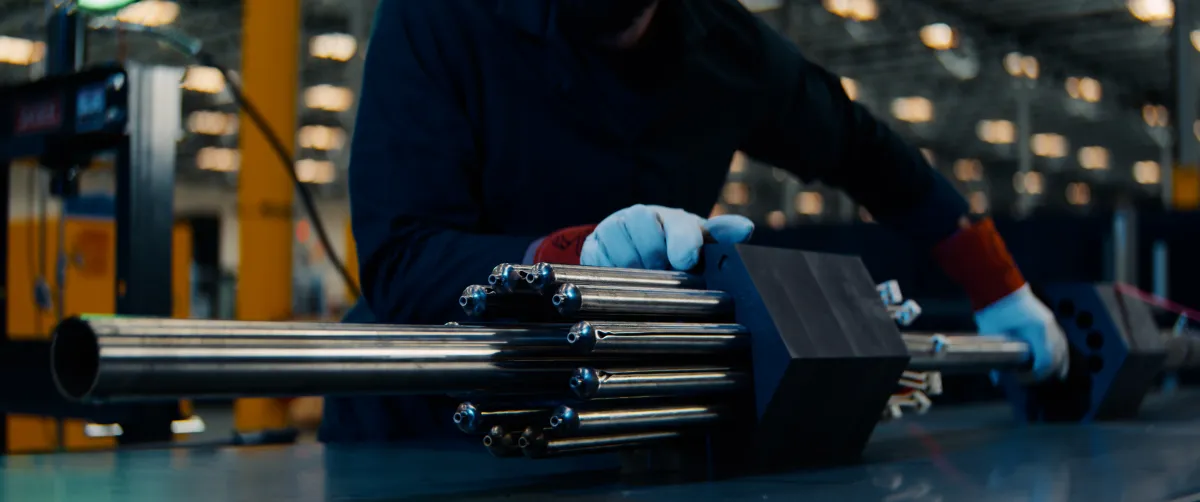


Thea Energy, a US-based nuclear fusion startup, has received a $20 million grant from the US Department of Energy's Advanced Research Projects Agency (ARPA-E) to manufacture its modular high-temperature superconducting magnets. These magnets are a core component of magnetic confinement fusion reactors and represent one of the most expensive parts of the industry.
Funds invested in magnet manufacturing
Fusion startups generally face challenges such as high manufacturing costs and complex equipment. The federal funding Thea Energy received will primarily be used to advance its manufacturing capabilities for high-temperature superconducting magnets. The company states that these magnets will be used in critical confinement systems in its reactor design.
Magnetic confinement is one of the main directions in commercial fusion research and development. Its principle is to use a strong magnetic field to confine and compress plasma, bringing the fuel to the conditions required for fusion and releasing a large amount of energy.

The reactor employs a star reactor design.
Thea Energy's reactors are based on a "stellar reactor" design. Compared to common toroidal structures, these devices typically feature more complex torsional geometries to improve plasma confinement. However, this also means that the accompanying magnets often need to be manufactured separately according to complex curved surfaces, resulting in higher costs.
Thea Energy is attempting to reduce manufacturing complexity by decreasing the number of magnet models. The company explains that the 12 large magnets, which perform the main confinement function, use only four templates; while the more than 300 small magnets used for fine-tuning the plasma all use the same design.
Reduce costs through standardized design
These small magnets are distributed around the reactor, arranged like pixels on a display screen. The company says they are software-controlled, a design that allows for more lenient manufacturing tolerances, thereby further reducing construction costs.
In terms of funding size, Thea Energy is one of the most well-funded startups in the fusion field. The company just completed a $100 million funding round in May of this year, and previously completed a $20 million Series A funding round in 2024.
According to the company's plan, Thea Energy, like many other companies in the same industry, aims to build commercial-scale fusion power plants by the mid-2040s.