

Following two consecutive days without new military strikes between the US and Iran, tensions in the energy market eased, and oil prices fell significantly. As a result, concerns about renewed inflation cooled, Bitcoin returned above $65,000, and crypto assets as a whole rebounded.
Oil price decline triggers rebound
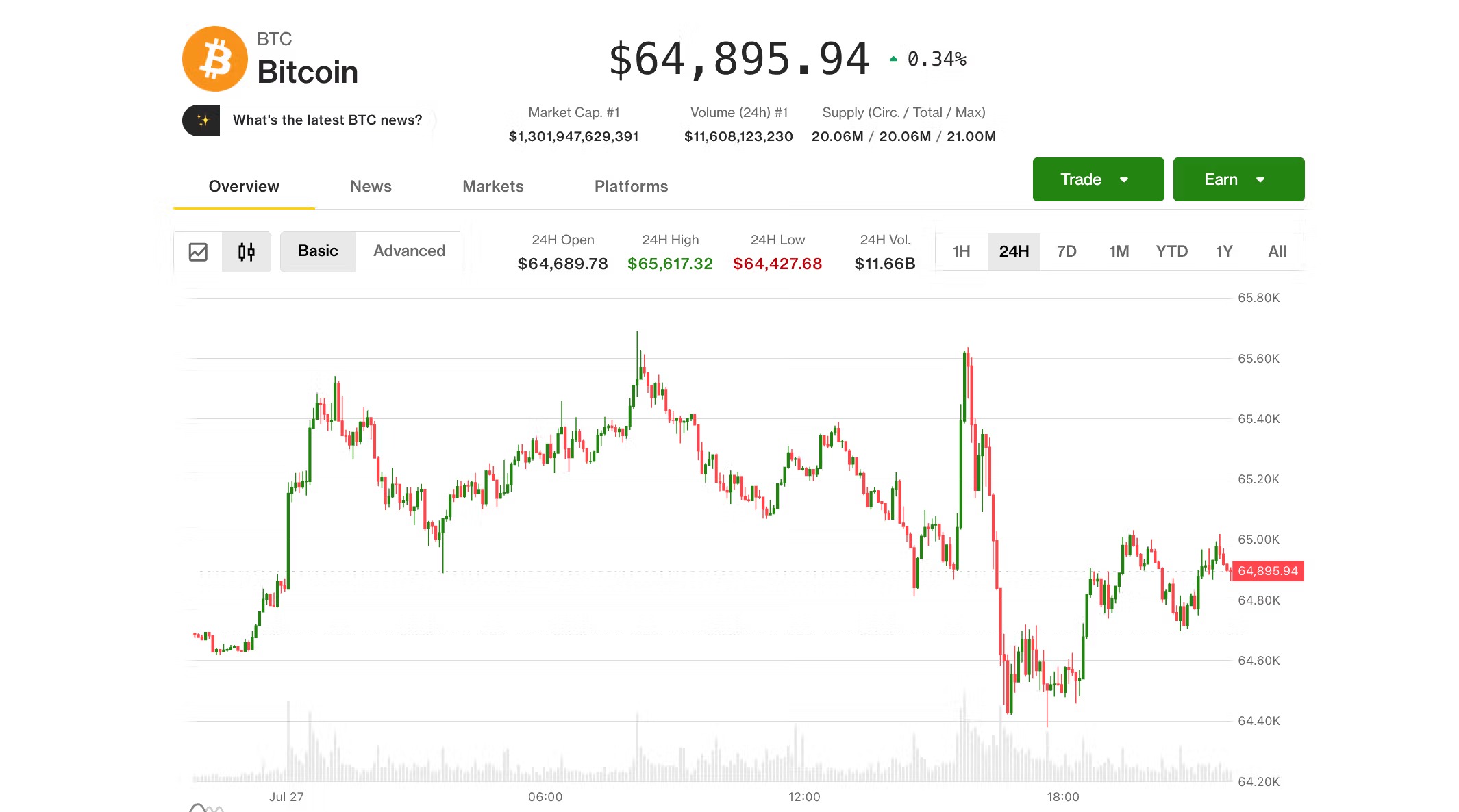
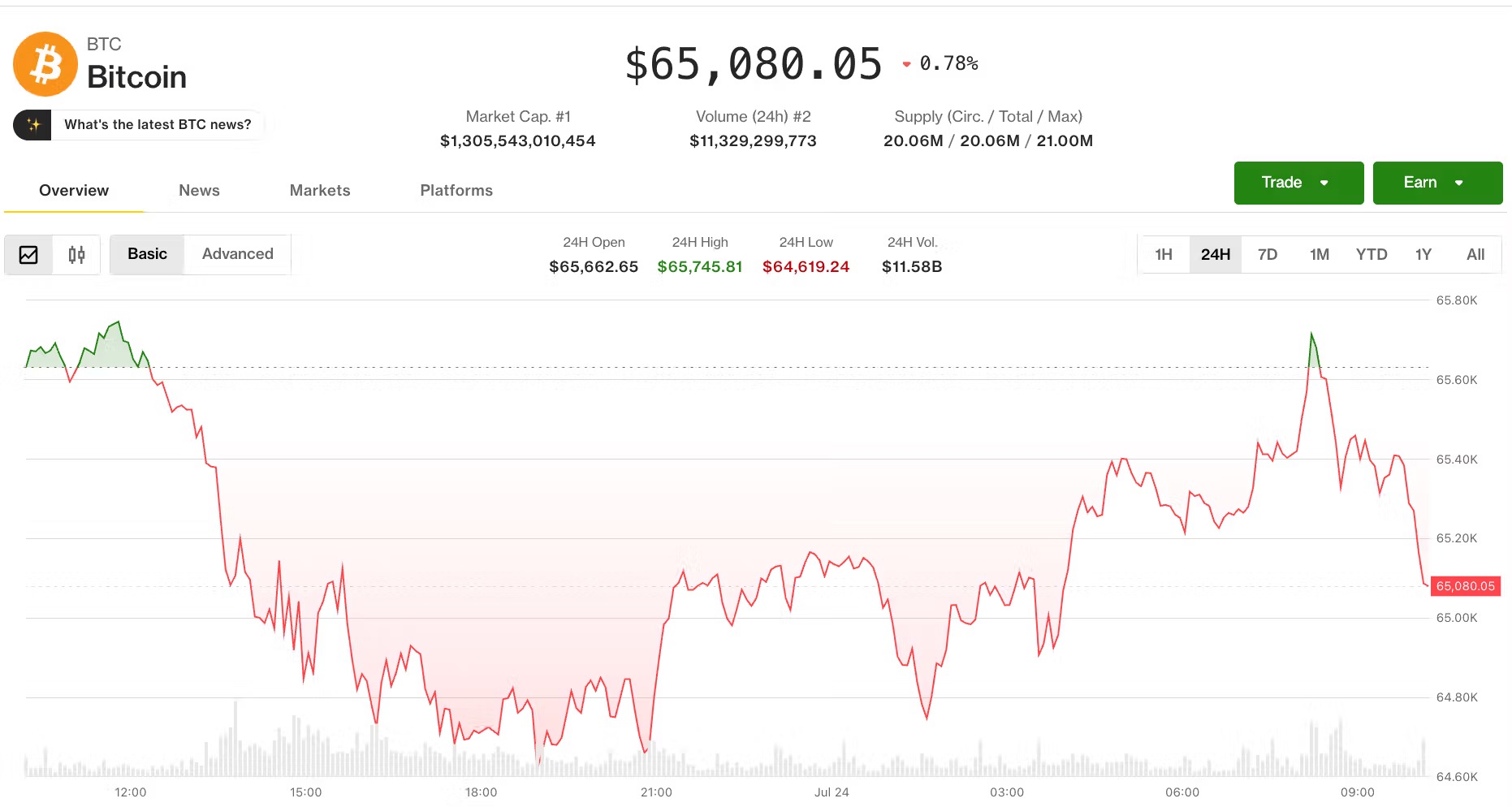
Reports indicate that Bitcoin rose 1.26% in the past 24 hours, reaching approximately $65,169, while the total market capitalization of the crypto market increased by 1.41% during the same period.
Brent crude oil prices fell from nearly $100 to around $83, a drop of more than 7%. The decline in oil prices eased market concerns about geopolitical conflicts driving up global inflation and also provided some breathing room for risk assets, including Bitcoin.
More than $312 million cleared in 24 hours
This rebound was also accompanied by significant short covering. In the past 24 hours, approximately $45.88 million of Bitcoin short positions were liquidated, forcing traders who had bet on a decline to close their positions, further amplifying the upward price movement.
- Bitcoin short positions liquidated for approximately $45.88 million.
- The total clearing volume across the entire market was approximately US$312.09 million.
- The number of clearing traders was 87,456.
In the broader crypto market, the largest single liquidation came from a $9.35 million Brent crude oil position on Hyperliquid, demonstrating the direct impact of the rapid decline in oil prices on cross-market trading.
The market awaits the interest rate decision on July 29.
After a brief de-escalation of geopolitical tensions, the market's next focus has shifted to the Federal Reserve. CME FedWatch data shows that traders currently expect a 66% probability of keeping interest rates unchanged at the July 29 meeting, and a nearly 33% probability of a 25 basis point rate hike.
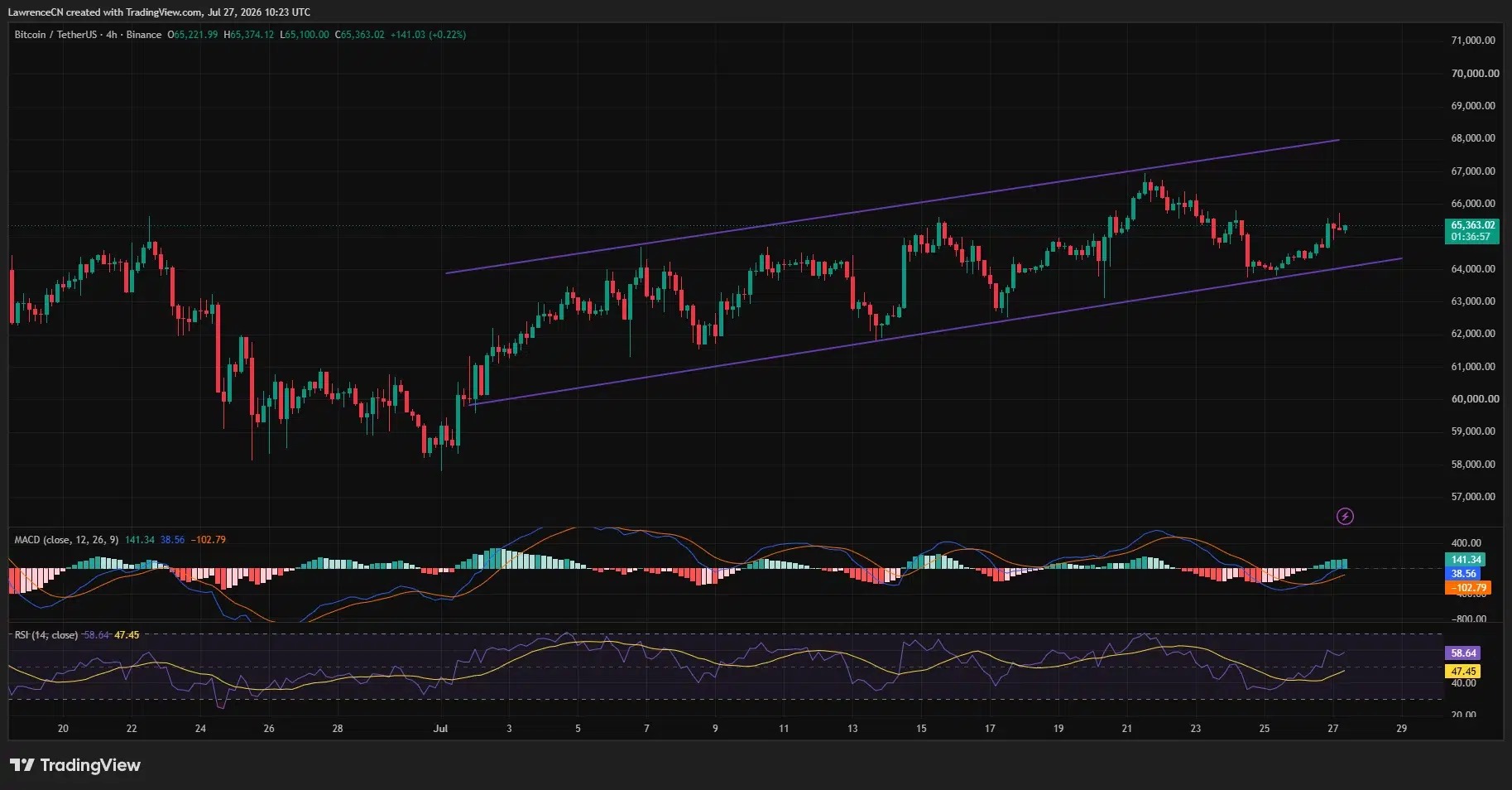
The report also mentioned that Bitcoin is currently trading around $65,300, with the market focusing on the resistance level around $67,000. Going forward, interest rate decisions and developments in the Middle East will remain the main sources of short-term market volatility.