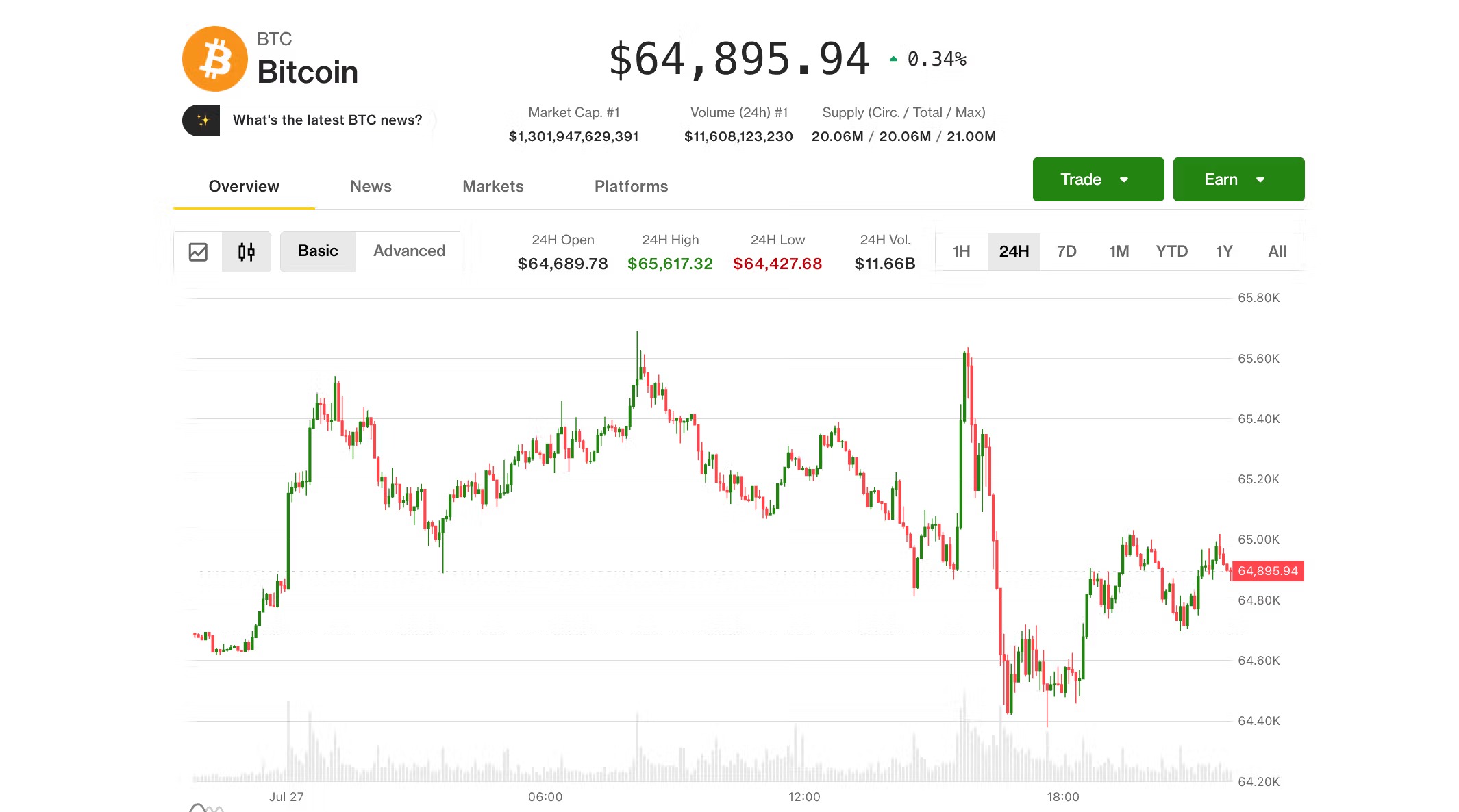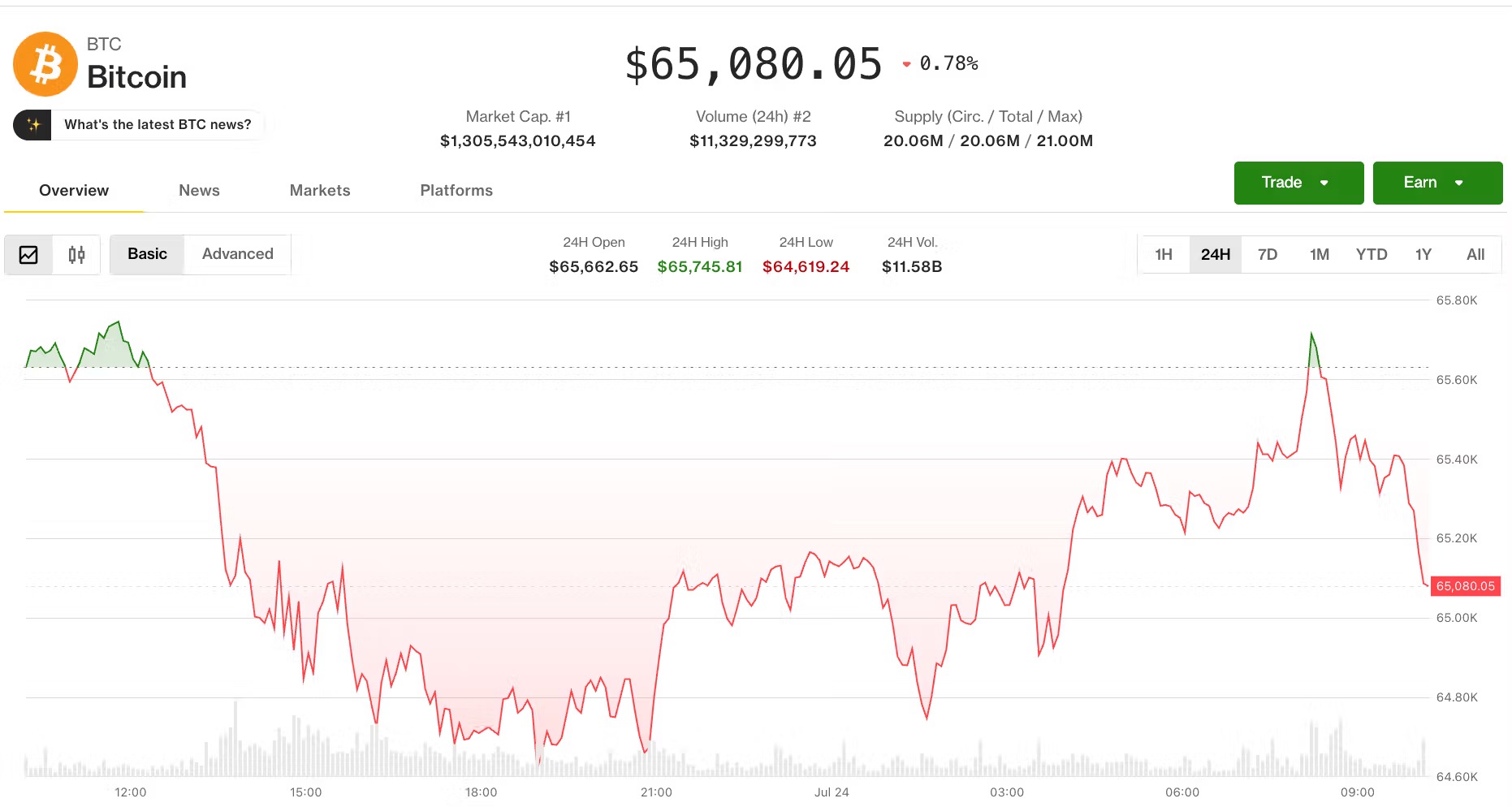


A sell-off in tech stocks and rising US Treasury yields are simultaneously suppressing the performance of risk assets. On July 25, Bitcoin fell back to approximately $64,017, a 24-hour drop of about 2.5%. After the Nasdaq 100 index fell to its lowest level since early May, market risk aversion intensified, with some funds shifting to bonds and profit-taking occurring in digital assets.
The Nasdaq's decline dragged down risk appetite.
The report, citing TradingView data, stated that the Nasdaq 100 index closed at 28,128 points in the previous trading session, a new 11-week low. Market concerns arose that the continued expansion of AI infrastructure investments by large tech companies could compress short-term cash flow and increase debt burdens. This sentiment first manifested in tech stocks and then spread to the crypto market.
Bitcoin briefly approached $66,900 on July 21 before weakening. CoinMarketCap data shows that daily trading volume was approximately $22.84 billion, indicating increased selling pressure.
ETF inflows fall to a three-week low
Institutional funding has also shown signs of slowing. SoSoValue data shows that in the week ending July 24, net inflows into US spot Bitcoin ETFs were only $33 million, the lowest level in nearly three weeks.
Meanwhile, the yield on the 10-year U.S. Treasury note rose to 4.71%, its highest level since January 2025. With the risk-free rate rising, the opportunity cost for institutions to allocate to highly volatile assets increases, leading some funds to shift towards fixed-income assets such as bonds. This also weakens Bitcoin's ability to attract incremental buying support during stock market corrections.
- Bitcoin is currently trading at approximately $64,017.
- The spot BTC ETF saw a net inflow of $33 million this week.
- The yield on the 10-year U.S. Treasury note rose to 4.71%.
The $60,000 mark is attracting attention again.
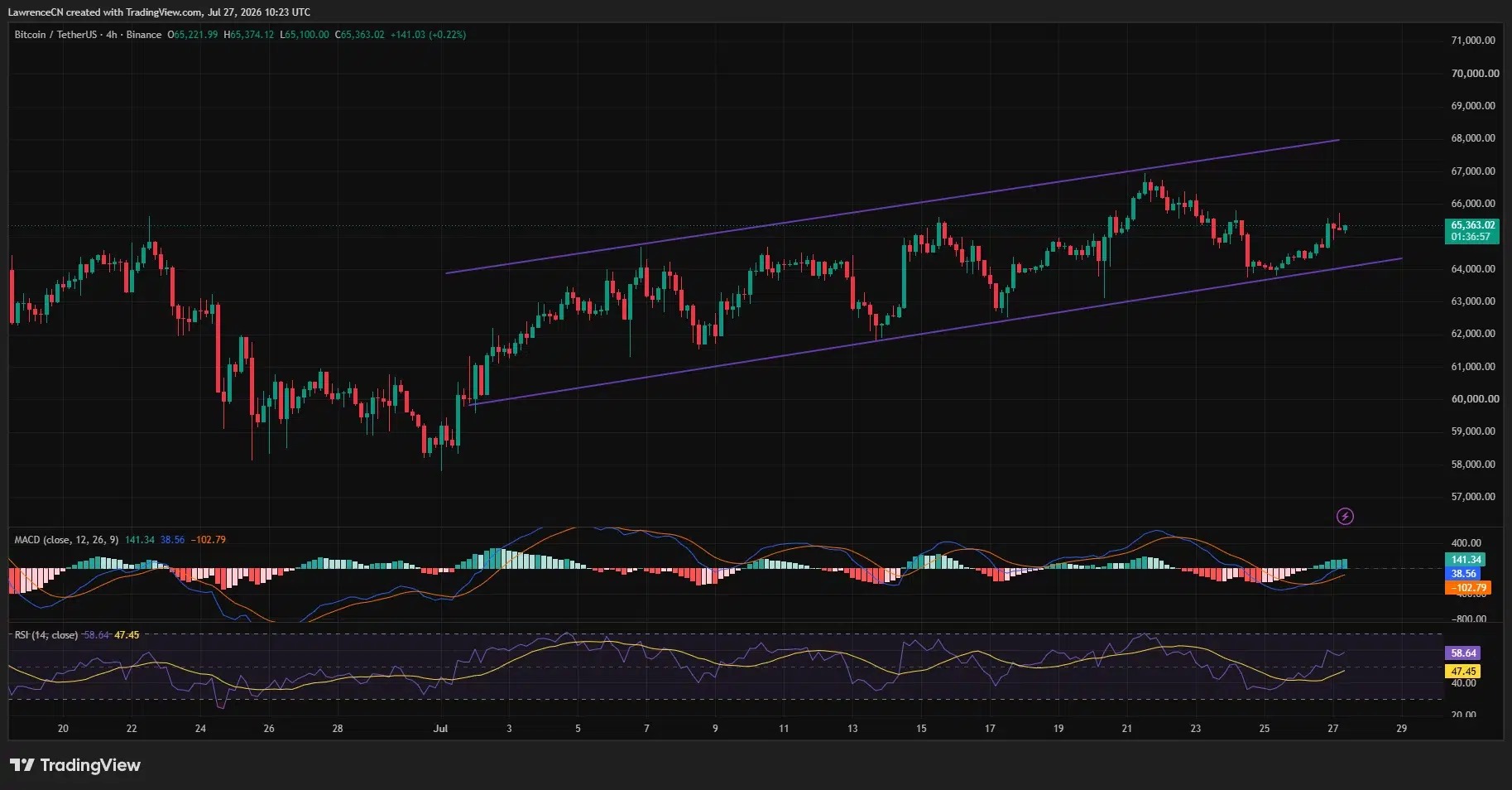
From a short-term perspective, the report suggests that Bitcoin is testing the 4-hour uptrend support. If this support breaks down, the market will refocus on the $60,000 psychological level.
The article mentions that the short-term support line formed since early July is still being tested. Meanwhile, the 4-hour momentum indicators are weak, indicating that sellers still have the upper hand in the short term. If the price continues to fall below around $63,000, the derivatives market may see more long positions being liquidated, further amplifying volatility.
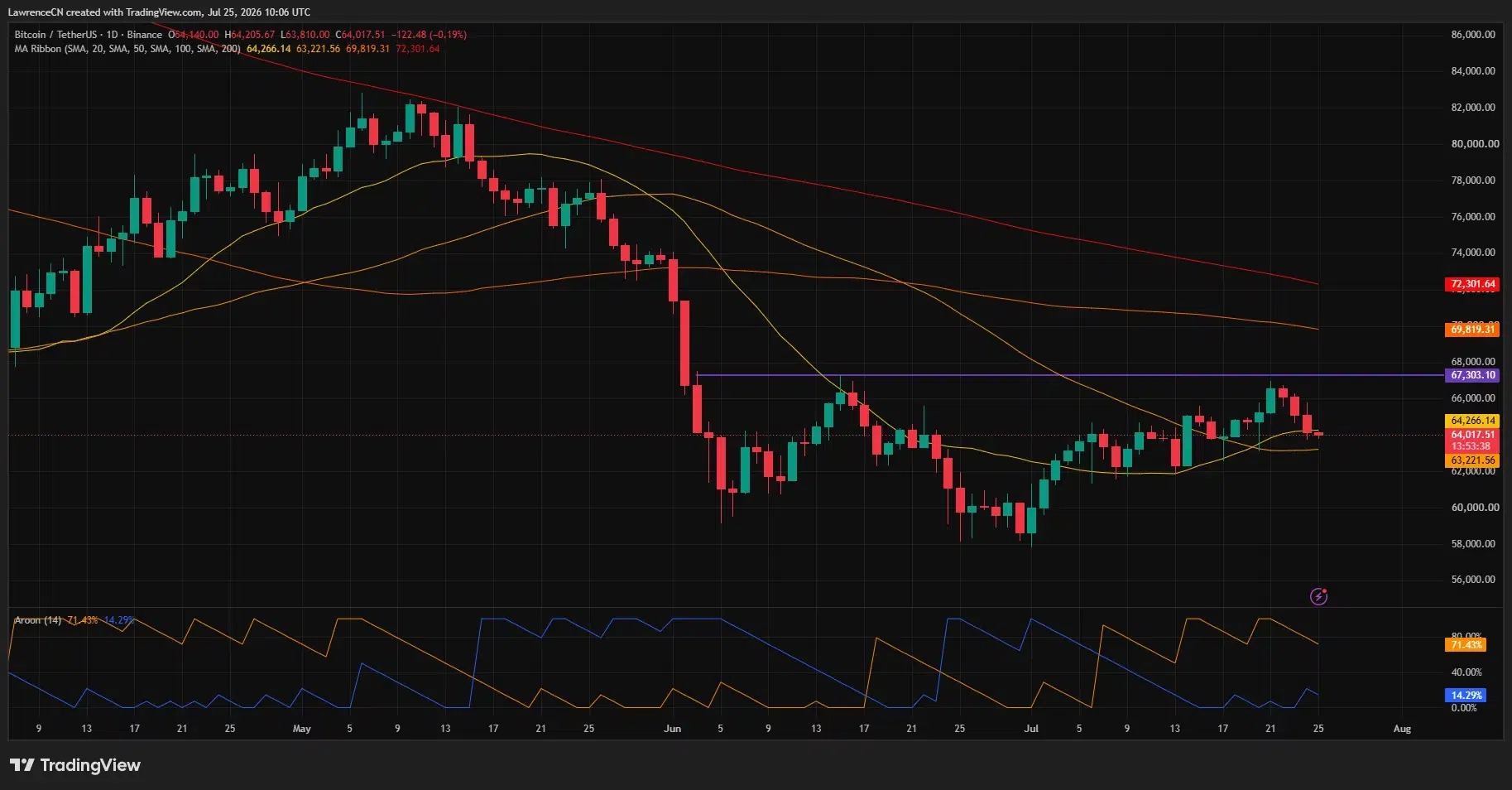
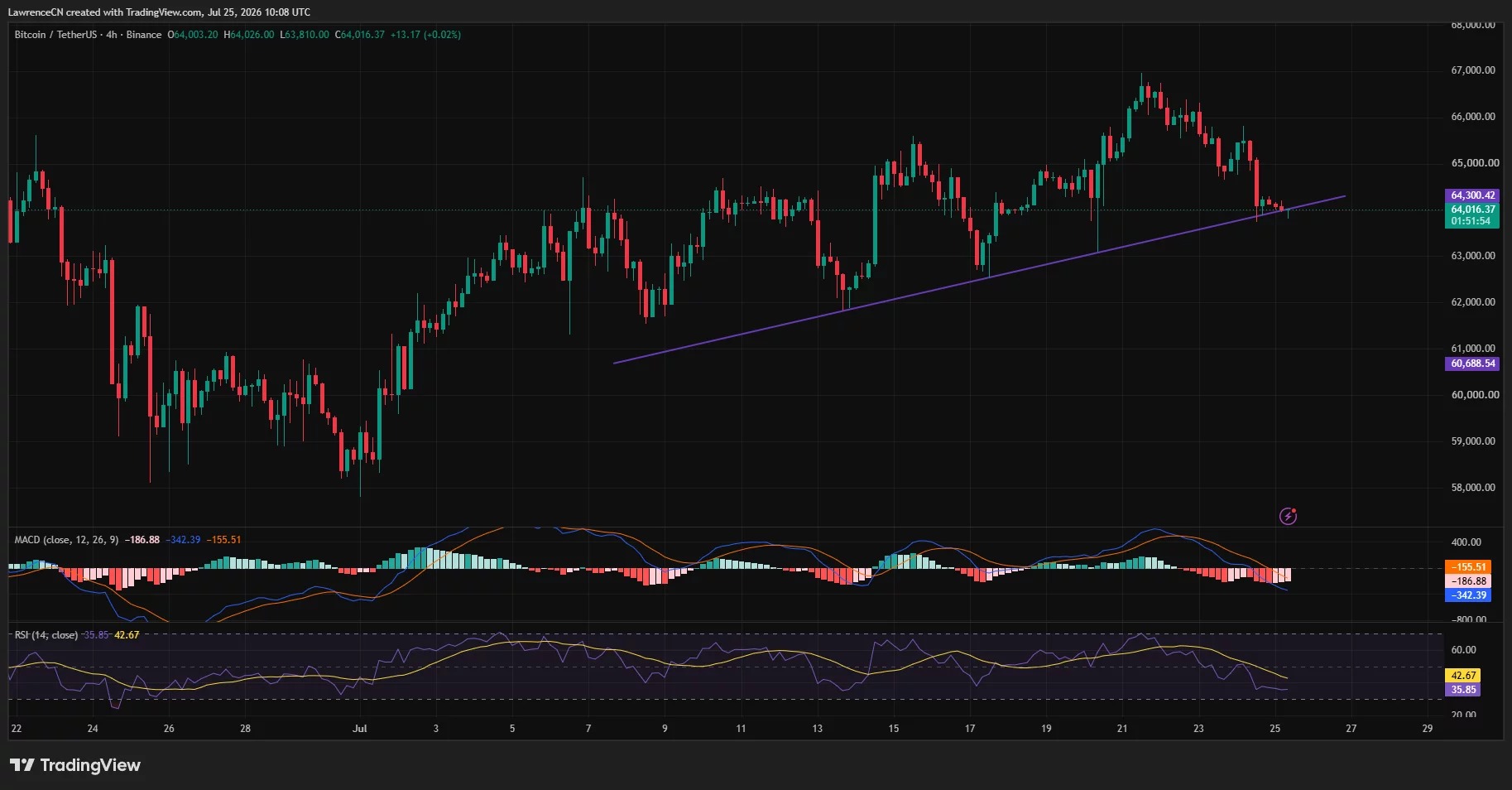
Overall, this pullback was not driven solely by crypto market factors, but rather by a combination of factors: declining tech stocks, rising bond yields, and cooling risk appetite. In the short term, whether ETF funds will recover and whether US Treasury yields will remain high are two key variables the market is watching closely.