

The US digital asset legislation has gained another group of public supporters. The National Fraternal Union of Police, the largest police union in the US, and three crypto organizations recently expressed their support for the Clarity Act for Digital Asset Markets. White House digital asset advisors also expressed optimism about the bill's progress, but predicted that market expectations for its implementation in 2026 remain low.
Police union makes public statement
According to an open letter dated July 24, Patrick Yoes, president of the National Fraternal Order of Police, stated that one reason the organization shifted its support for the bill was the revision of certain provisions in the Blockchain Regulatory Certainty Act. The latest version grants law enforcement agencies the authority to handle crimes in the digital asset space.
This means that supporters are trying to advance market regulation, consumer protection, and law enforcement capabilities within the same framework in order to gain broader political support.
The White House says it hopes to win votes.
Patrick Witt, executive director of the U.S. President’s Advisory Council on Digital Assets, said he was optimistic about the bill’s passage and was confident of securing the required number of votes.
Supporters have recently emphasized that the Senate can further improve digital asset rules on the existing basis, providing clearer legal arrangements for consumer protection, market order, and American innovation.
New bankruptcy protection clauses
Senator Cynthia Lummis recently stated that the CLARITY Act requires broker-level bankruptcy protection. Under this design, if a service provider goes bankrupt, investor funds will receive clearer segregation protection, and ownership of crypto assets will belong to the end user, not the platform itself.
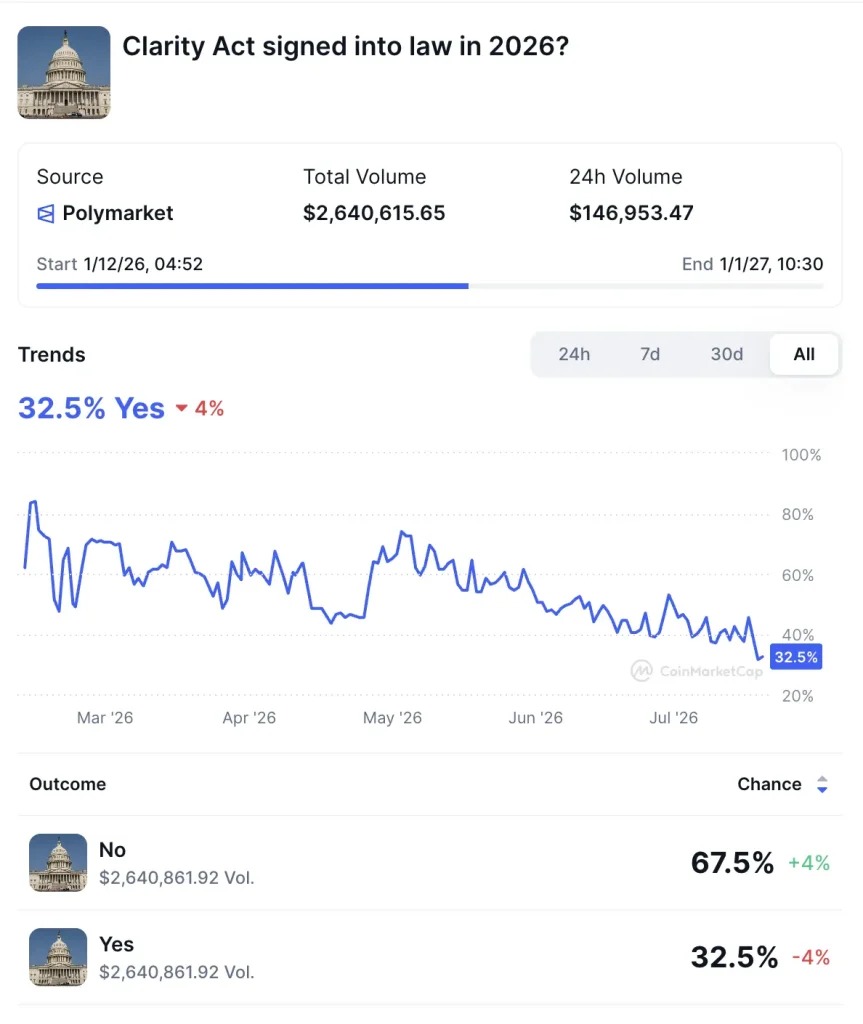
- Polymarket predicts a pass rate of approximately 35%.
- The probability corresponding to Kalshi is approximately 40.6%.
- The next voting date is July 27th.
Market expectations remain low.
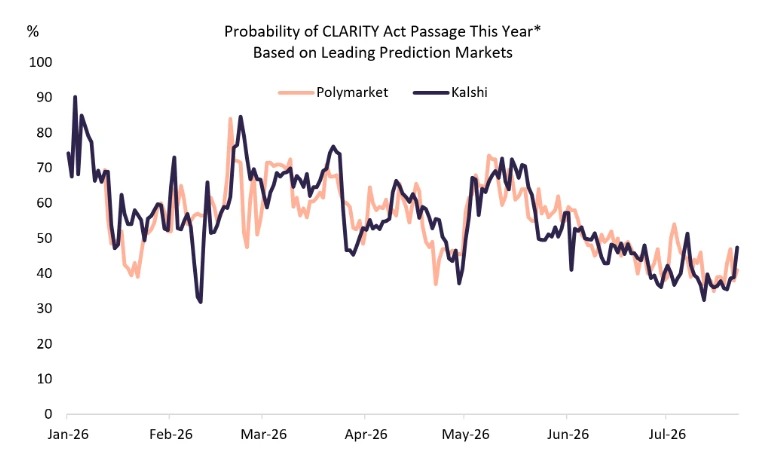
Despite rising support, the market remains cautious about the bill's prospects. Delays, opposition from the banking sector, and Democratic reservations regarding certain provisions remain major obstacles.
Next, the market will focus on the meeting between the US president and the Senate, and the subsequent possible Senate vote, which will determine whether the bill can move to the next stage.