Foreign media reports that Zach Pandl, head of research at Grayscale, believes that Bitcoin may have already hit its low point, but only if the Federal Reserve does not raise interest rates further. The article states that the two most closely watched variables in the coming weeks are the Federal Reserve's interest rate decision on July 29th and the subsequent progress of the Clarity Act in the US Senate.
Gray-scale negation of the four-year cycle dominance theory
In its latest report, Pandl suggests that there are currently two interpretive frameworks in the market. One is the traditional "four-year cycle" model, which considers the halving as the core driver of Bitcoin price fluctuations and speculates that the bottom of this cycle may occur in September or October.
According to this model, Bitcoin typically bottoms out about a year after its cyclical peak, with an average retracement of approximately 80% from the peak. If this historical pattern continues, Bitcoin may continue to decline in the coming months, with the price potentially approaching $50,000.
Macroeconomic variables are considered more critical
However, Grayscale disagrees with this assessment. The article argues that Bitcoin today resembles gold or interest rate-sensitive technology assets more than a speculative asset driven solely by retail investor sentiment.
Pandl points out that past Bitcoin bear markets have often been accompanied by slowing economic growth and rising real interest rates. This current downturn also occurred after a shift in Federal Reserve policy expectations and rising real interest rates. Therefore, if the dominant factor is the macroeconomic environment, then the price low may occur sooner as macroeconomic conditions improve.
Bitcoin rose to approximately $126,000 in October 2025, and is currently about 49% lower than that peak. The article mentions that after Kevin Warsh was nominated as Federal Reserve Chairman, market concerns about a more hawkish policy intensified, a shift that undermined the trading logic that had previously supported Bitcoin's rise. Bitcoin briefly fell below $58,000 in early July before rebounding.
ETF fund inflows and policy window attract attention
Grayscale believes that if the Federal Reserve abandons further interest rate hikes and the US economy remains stable, then Bitcoin may have already bottomed out.
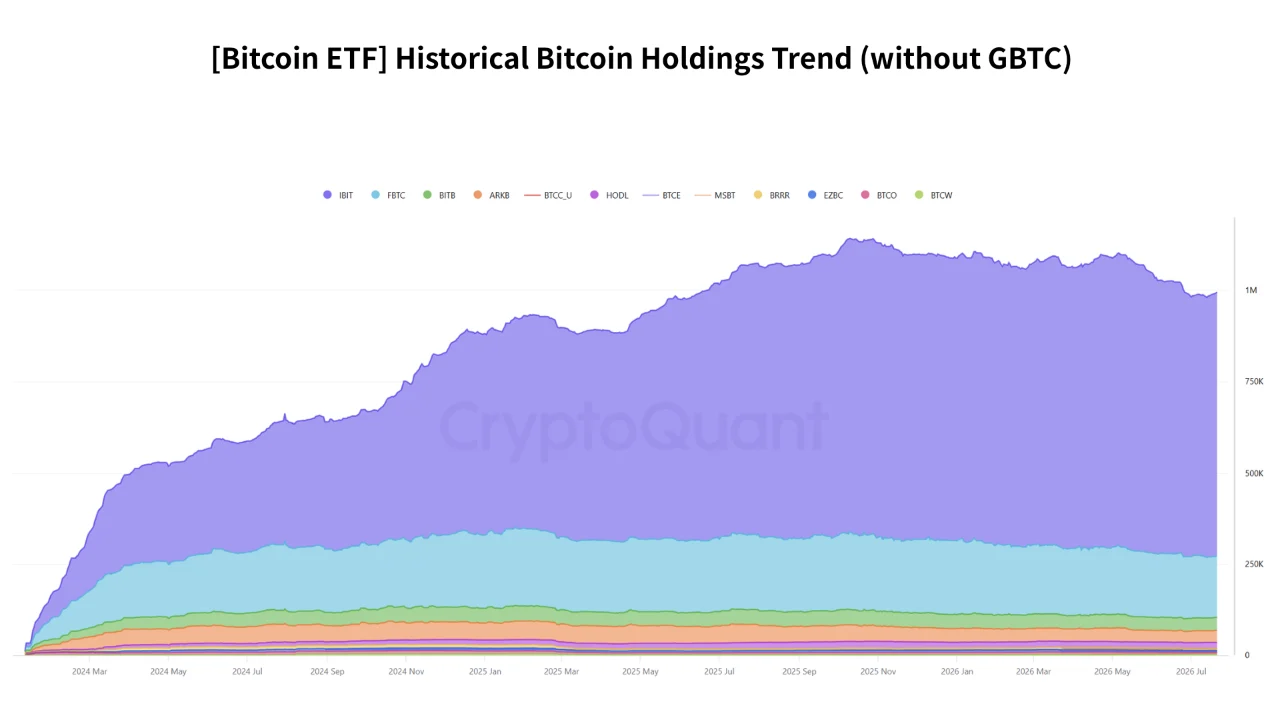
From a market performance perspective, Bitcoin has rebounded by more than 10% from its early July low of $57,717. The spot Bitcoin ETF has also recorded net inflows for seven consecutive trading days, accumulating nearly $1 billion. These figures are seen as a signal of improved market sentiment recently.
However, the article also mentions that Bitcoin's monthly chart still shows weakness, and the downtrend may not have completely ended. Besides the Federal Reserve, the Clarity Act, the US cryptocurrency market structure bill, is considered another potential catalyst. If the bill progresses through the Senate and is ultimately passed, the market generally expects it to improve regulatory expectations for crypto assets and potentially drive a rebound in Bitcoin and the broader cryptocurrency market.