

The EU has reached an agreement on a new round of sanctions against Russia, covering banks, crypto operators, oil trade and shipping networks, with a focus on channels through which Russia maintains the flow of funds and energy during the war in Ukraine.
The sanctions list continues to expand.
This round of sanctions was approved by representatives of EU member states after weeks of negotiations. According to EU officials, the list includes 218 individuals and entities, representing the largest round of sanctions against Russia by the EU in nearly four years.
EU High Representative for Foreign Affairs and Security Policy Karas said the new measures involve more than 100 banks and crypto operators, more than 40 "shadow fleet" vessels, and several oil refining facilities in Russia and Belarus.
32 banks have been subject to stricter restrictions.
European Council President Costa stated that this round of measures covers energy, financial services, crypto, and trade. Specific tools include asset freezes, travel bans, and transaction restrictions, targeting companies, individuals, and networks accused of assisting Russia in maintaining trade, financing, and energy flows.
According to data disclosed by EU diplomats, the total number of Russian banks sanctioned has exceeded 100, accounting for more than half of Russia's 213 banks with international connections. In addition to expanding the list, the EU has also imposed separate transaction bans on 32 banks, further severing their connection with the SWIFT international payment messaging system.
The EU also included crypto operators in its restrictions. Officials stated that Russian companies had used digital asset networks to maintain payments, leading to the addition of some crypto companies and oil trading platforms to the trading ban list. More than 50 other military-related entities were also included in the sanctions.
Russian oil cap frozen for one year
Adjustments to the energy sector are also drawing attention. The EU decided to maintain the cap on Russian oil prices at $44.10 per barrel for 12 months, with the aim of limiting Russian oil revenues while avoiding broader energy price shocks.
Previously, as the war with Iran pushed up oil prices, the market had expected the EU to raise this cap during its periodic review. European Commission President Ursula von der Leyen stated that the freeze on adjustments was to prevent Russia from benefiting from sudden market volatility.
Russian LNG transshipment granted exemption
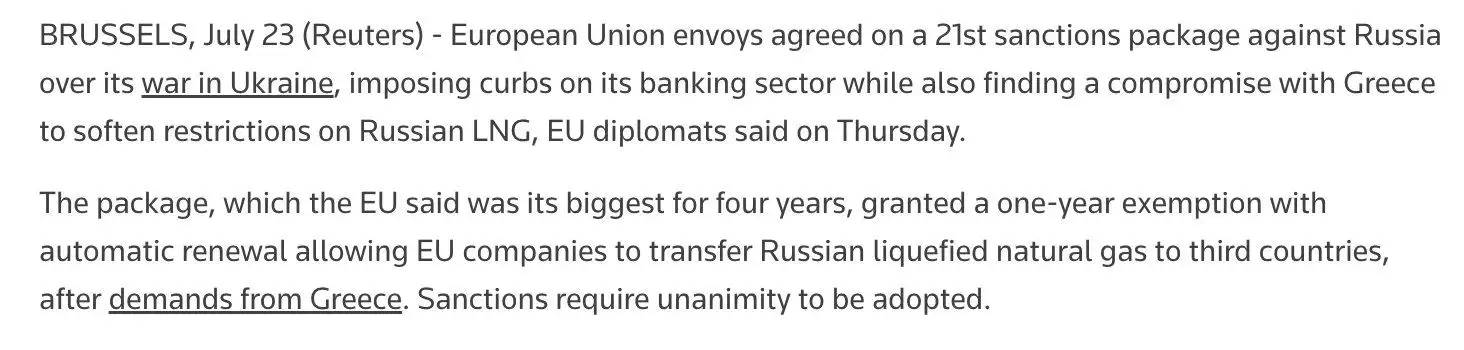
On the issue of liquefied natural gas (LNG), the EU has reached a compromise. Starting January 1st, the EU will ban the import of Russian LNG, but will allow EU companies to continue providing transshipment services for Russian LNG destined for third countries for a one-year period, which can be automatically renewed.
Greece had previously pushed for this exemption, arguing that a complete ban on transshipment services might shift business outside Europe without necessarily eroding Russian revenue. The exemption only applies to transshipments to third countries, not to direct purchases of Russian LNG within the EU.