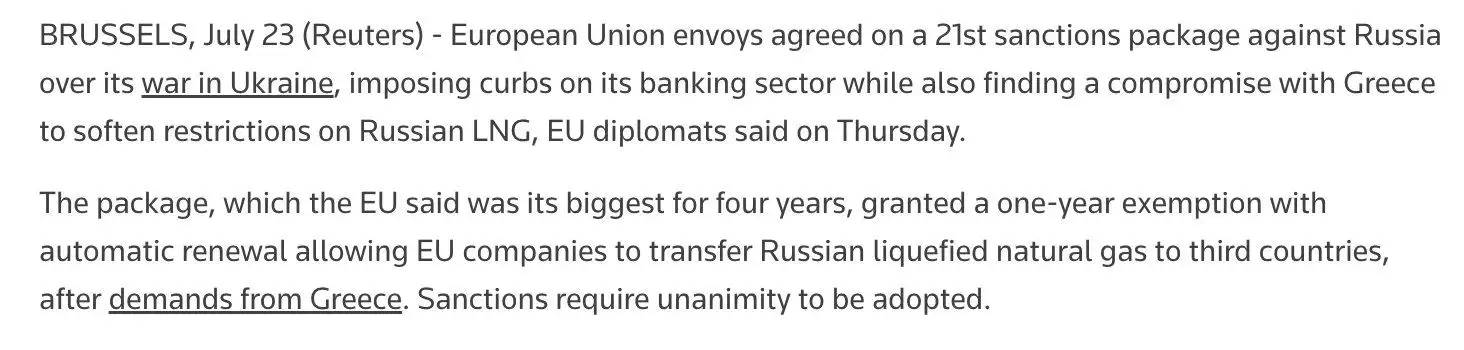


The European Union has approved its 21st round of sanctions against Russia, expanding its reach to include crypto platforms, banks, energy companies, and the defense supply chain. EU officials stated that this round of measures adds 94 Russian financial institutions to a comprehensive sanctions list and restricts transactions with over 100 banks and crypto operators, citing allegations that these entities helped Russia circumvent existing sanctions.
94 financial institutions were included in the comprehensive sanctions.
The institutions named include the Moscow Stock Exchange. The EU stated that the new measures are intended to cut off the financial channels Russia relies on to sustain its war effort. In addition to the financial system, the EU has also frozen the assets of more than 50 defense companies, including those involved in the production of long-range combat drones.
EU High Representative for Foreign Affairs and Security Policy Karas stated that this is one of the largest rounds of EU sanctions against Russia since the outbreak of the Ukraine war. European Commission President Ursula von der Leyen also stated that the measures will continue to weaken Russia's ability to finance the war.
Eleven major encryption platforms have had their EU operations cut off.
Under the new rules, EU individuals and businesses will be completely prohibited from transferring funds or conducting business with 11 major crypto platforms accused of helping Russia circumvent sanctions. This means these platforms will lose EU users and some of their liquidity sources.
More notably, this marks the first time the EU has established a legal tool to restrict encryption services at the national level. If a non-EU country allows its encryption platforms to assist Russian companies in circumventing sanctions and refuses to take measures to stop it, the EU can impose restrictions on services related to that country's entire encryption industry.
Oil price ceiling remains at $44.10
In addition to crypto and financial restrictions, the EU has decided to maintain the price ceiling for Russian oil at $44.10 per barrel for the next 12 months. Officials stated that this move will prevent the price ceiling from automatically adjusting to around $58, thus avoiding boosting Russian oil revenues amid recent market volatility.
This round of sanctions also marks the first time that more than 40 vessels linked to Russia's "shadow fleet" have been included in the crackdown. These vessels are alleged to be used to circumvent international restrictions on oil transport.
The EU has stated that further sanctions will be imposed if Russia further escalates the conflict in Ukraine. For the crypto industry, this means that pressure surrounding cross-border flows, compliance reviews, and sanctions enforcement is likely to continue to rise.