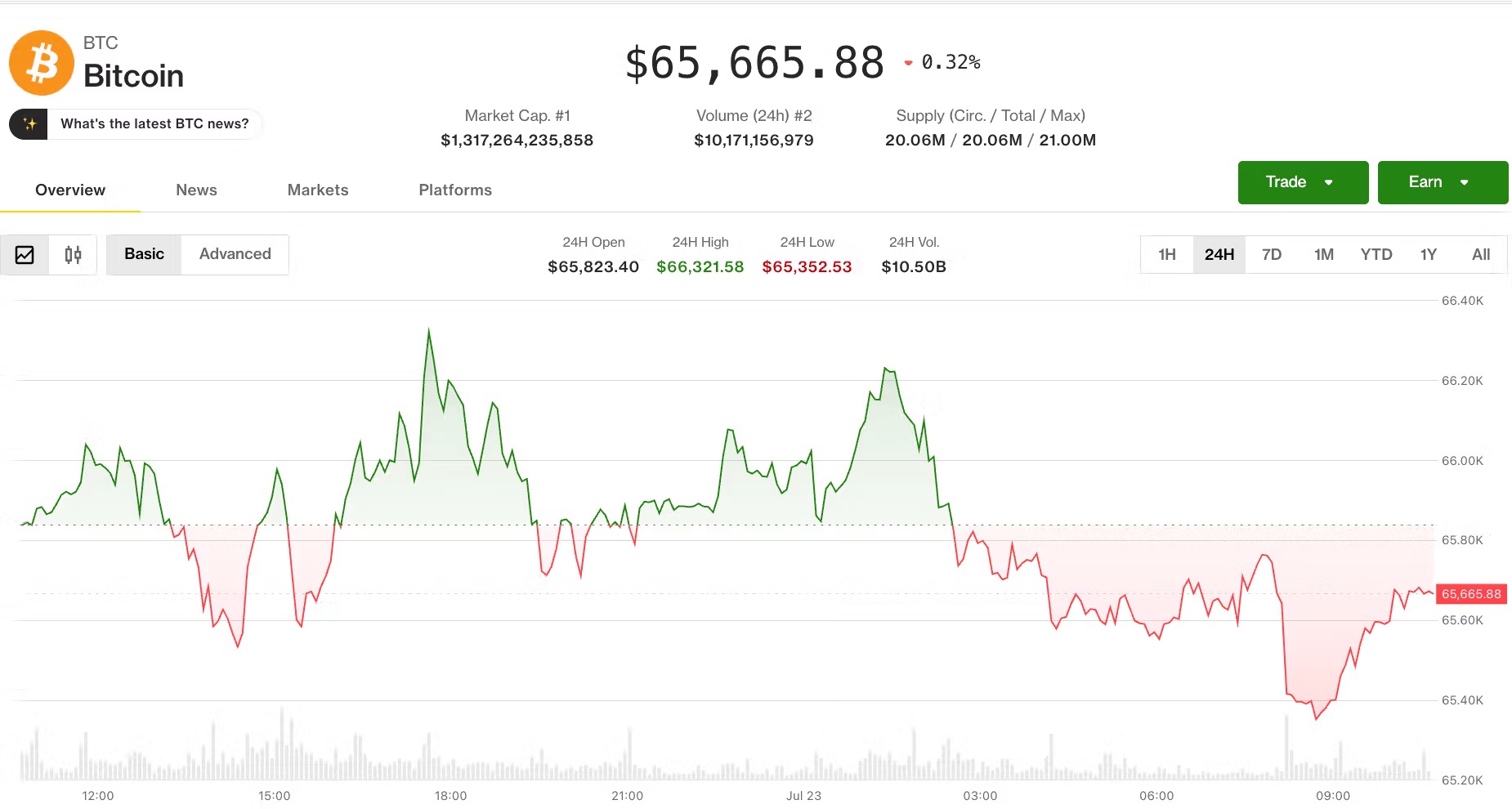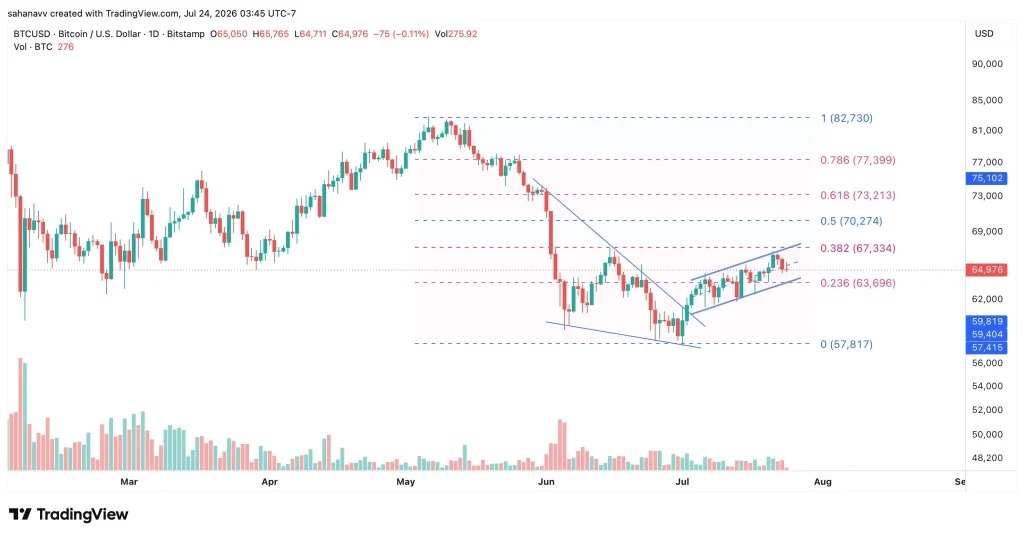
















Bitcoin rose to around $66,000 this week but subsequently retreated. Foreign media reports suggest that cooling US inflation data in June provided some support, but this positive factor is insufficient to propel Bitcoin through its current resistance level.
After a short-term rebound, it encountered resistance at a high level.
According to CoinGecko data, Bitcoin has fallen slightly by about 1% in the past 24 hours, but it remains on an upward trend over a longer timeframe. In the past two weeks, Bitcoin has accumulated a gain of over 6%.
The article argues that selling pressure remains significant above the current price range. While the market is again betting on a Fed rate cut due to slowing inflation, this expectation has not yet generated stronger buying momentum.
Markets are focused on inflation and oil price changes.
The article mentions that investors are also assessing whether inflation will rebound in July. The recent escalation of the conflict between the US and Iran has driven up oil prices, which could put pressure on future inflation.
If energy prices remain high, market sentiment regarding monetary policy this year may become more cautious again. For highly volatile assets like Bitcoin, shifts in risk appetite remain a crucial short-term variable.
Encryption legislation and the situation in the Middle East become points of observation.
Foreign media also noted that the progress of the CLARITY Act in the US Congress could affect sentiment in the crypto market. This bill aims to provide a clearer regulatory framework for the crypto industry and strengthen investor protection.
The article argues that a swift passage of the bill could improve investor confidence and attract more funding to Bitcoin and other crypto assets. Simultaneously, a de-escalation of tensions in the Middle East could depress oil prices and increase market willingness to allocate to higher-risk assets.
Overall, the article attributes Bitcoin's potential for another upward surge to three external factors: the path of US inflation, progress in crypto regulation, and changes in the Middle East geopolitical situation.