

After operating as a payment network for 14 years, XRP Ledger is set to become a complete credit market, but the price of XRP remains hovering around $1. Lawyers who support XRP, such as John Deaton, indicate that this disparity has now become the biggest source of frustration for holders, as the value of XRP still fluctuates along with Bitcoin, regardless of what happens within its own network.
From Bitcoin holders to the loudest supporters of XRP
After Deaton intervened on behalf of the owners of XRP in the lawsuit filed by the U.S. Securities and Exchange Commission (SEC) against Ripple, he became a well-known figure among the group of XRP holders. In a post on platform X, he stated that at that time he knew very little about XRP or Ripple, and in fact held considerably more Bitcoin and Ethereum. For him, this struggle was about the overreach of government power, not just about a particular token; he said that subsequent developments proved that he was right.
This case prompted him to study this technology. He stated that what he saw was a network that was years ahead of its time.
The last missing piece of the puzzle
When XRP Ledger went live in 2012, it already had a decentralized exchange built-in and was capable of issuing tokens for real-world assets, long before “tokenization” became a hot topic on Wall Street. The only thing it lacked was a lending function.
Today, this gap is about to be filled. A amendment to the lending protocol named XLS-66 has already received approval from over 80% of the validators. If this level of support remains unchanged for two consecutive weeks, the lending function will be officially enabled on the ledger. A validator operator on platform X stated that the amendment has currently received 29 votes in favor, but this number has not yet been confirmed.
This idea was first proposed in April 2024. Since then, it has gone through approximately two and a half years of draft writing, review, auditing, and testing before reaching this stage.
XRP Ledger How does lending work?
This upgrade is divided into two parts. XLS-65 creates a treasury ( vaults ) for pooling a single asset, while XLS-66 operates the lending function on top of it. Deaton points out that it has four distinctive features:
- Built-in to the ledger: It does not rely on external smart contracts. The loan terms are set by the ledger itself, which handles approval and repayment processes, thereby reducing potential weak points that could be exploited by hackers.
- Fixed term: Loans have a fixed term and fixed interest rate, and this predictable model of credit is exactly the one that banks, funds, and corporate finance departments are already using.
- Get the idle XRP running: Lenders deposit their assets into a shared treasury to earn income, while borrowers obtain funds.
- For institutions: Lenders review borrowers' credit offline in a manner similar to traditional lending, while the transfer of funds is completed online.
Price issue
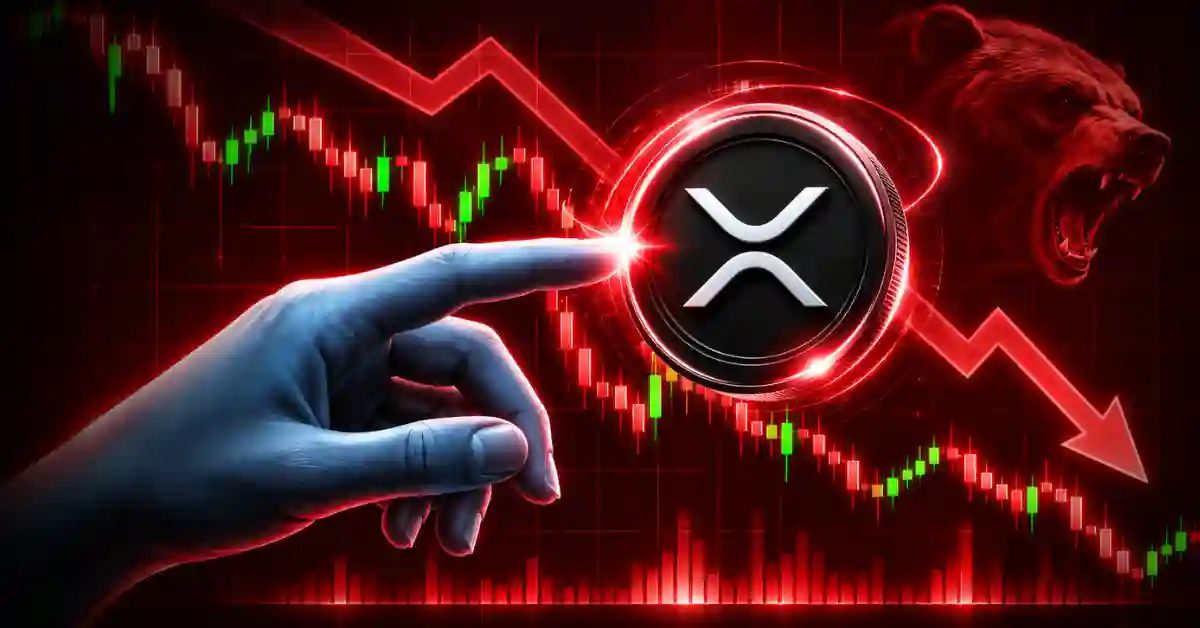
These developments have not led to an increase in the price of XRP. Deaton wrote, "This also makes it a credit market," but the token is still trading around $1. He stated that what discourages many long-term supporters the most is that, 14 years later, the trend of XRP is still in sync with Bitcoin.
A broader market environment is also one of the reasons. Reports indicate that Bitcoin is in the longest bear market on record, and large technology companies IPO have absorbed funds that could otherwise have flowed into the crypto market. This token may continue to follow Bitcoin's trend for some time until lending functions truly create a practical demand for people to hold XRP.
XRP What will happen next?
The next two weeks will be an important test for the activation process. If the supporter rate of verifiers remains above 80%, the lending function may be launched on XRP Ledger in mid-December. After that, the market's focus will shift to whether lenders and borrowers will actually enter the market.
Attention-worthy XRP key price levels:
- Resistance levels: $0.99 to $1.02, followed by $1.06 and $1.09.
- Support levels: $0.93 to $0.94, followed by $0.90 and $0.85.
The author indicates at the end of the article that all views and opinions expressed in it represent solely the author's perspective on the current market conditions. Investors should conduct their own research before making investment decisions.