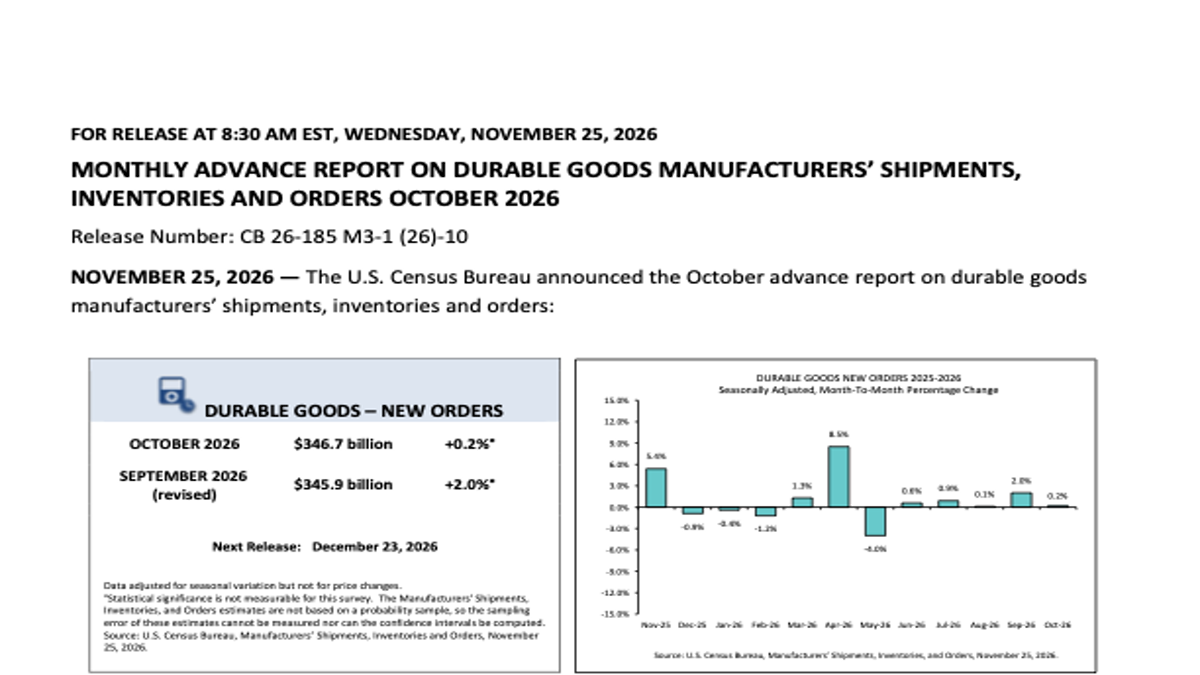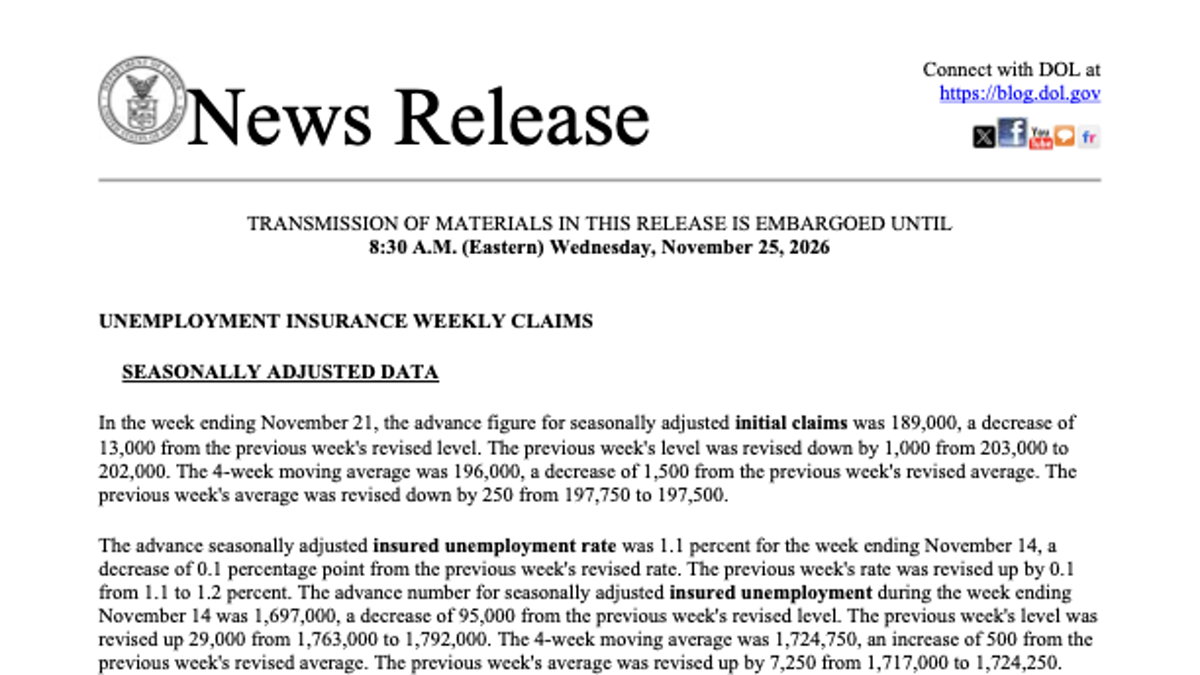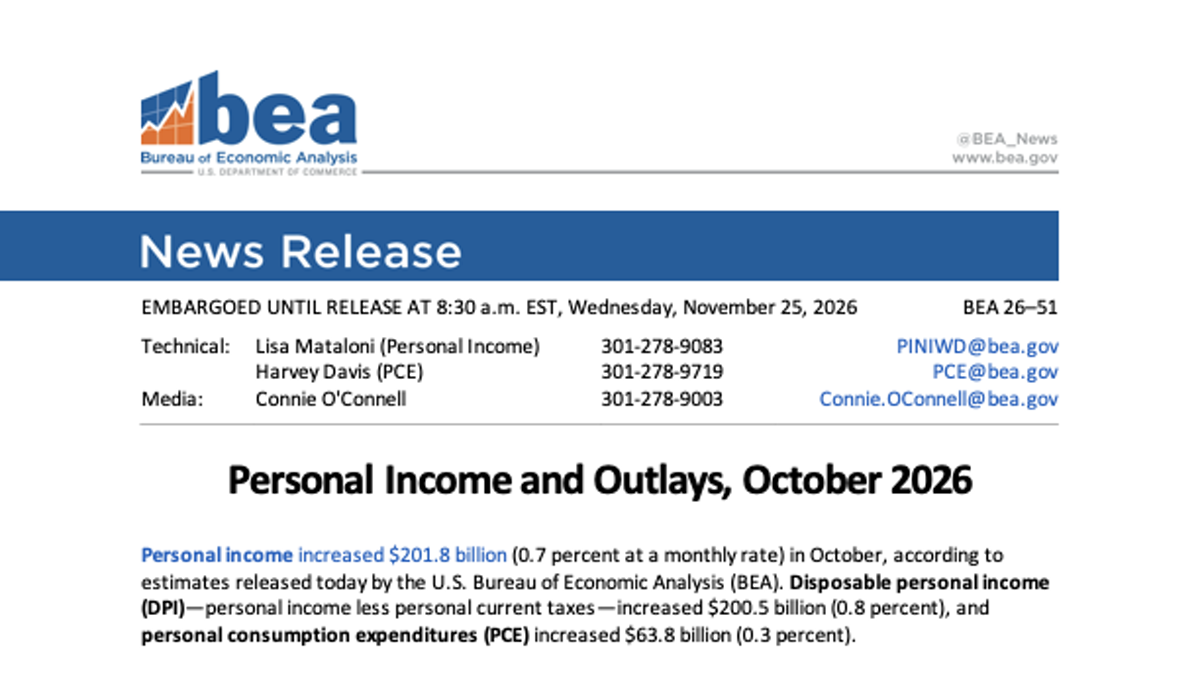


On November 25, the U.S. Census Bureau released preliminary figures showing that new orders for durable goods in October increased by only 0.2% month-on-month, lower than the revised 2.0% in September. In the same month, machinery orders increased by 1.8%, and excluding aircraft, orders for non-defense capital goods actually accelerated.
Removing transportation equipment, new orders for durable goods in October increased by 0.5% month-on-month, the same as in September. New orders for transportation equipment decreased by 0.3% in October, while in September they had increased by 5.0%. Among them, orders for civil aircraft and parts decreased by 0.3% in October from a 30.3% increase in September, whereas new orders for automobiles and parts still increased by 0.9%. The slowdown in total orders should first be observed in this category of transportation sub-items.
The total value of new orders for durable goods reached $346.717 billion this month, an increase of $775 million compared to September. The order value for machinery rose from $46.031 billion to $46.844 billion, an increase of $813 million, which is slightly higher than the overall increase. While the total amount can show a moderate upward trend, some sub-items offset the increase in machinery orders. New orders for primary metals decreased by 0.2%, and new orders for transportation equipment fell by $320 million.
After excluding aircraft orders, orders for non-defense capital goods accelerated.
To track corporate equipment investments, you can find the rows for "Non-defense capital goods, excluding aircraft" in both orders and shipments in Table 1 of the report. This category of goods includes industrial machinery, power generation equipment, computers, etc. In October, new orders for this category increased by 1.2% month-on-month, compared to a 0.8% increase in September, with the order value rising to 89.383 billion US dollars. In contrast, the growth rate of orders for non-defense capital goods that include aircraft decreased from 6.9% in September to 0.8% in October.
The data comes from the Census Bureau's survey of manufacturer shipments, inventory, and orders, which tracks new orders on a monthly basis and deducts cancelled orders. In October, non-defense capital goods shipments excluding aircraft increased by 0.6% month-on-month, lower than the 1.3% increase in September. The acceleration in new orders for business equipment and the continued growth in shipments, albeit at a slower pace, indicate the amount of new demand received and the quantity of goods delivered during that period, and these should be interpreted separately.
Looking solely at machinery, new orders in October increased by 1.8% month-on-month, while shipments only increased by 0.5%; orders not delivered by the end of the month rose by 1.1%, reaching $156.726 billion. According to preliminary official estimates, new machinery orders have increased for 21 out of the past 22 months. By putting these figures together, one can see the time lag between the newly generated demand and this month's shipments. For investors holding shares in machinery companies, the outstanding orders in the industry can help in identifying the subsequent delivery schedules. As for when specific companies will deliver and how much revenue will be recognized, it is still necessary to verify this with the financial reports disclosed by the companies.
Transportation new orders slightly decline, but the amount to be delivered by the end of the month continues to expand.
In October, new orders for transportation equipment decreased by 0.3%, while orders that were not delivered by the end of the month increased by 0.8%, reaching approximately $1.03 trillion. Overall, orders for durable goods that were not delivered by the end of the month also increased by 0.8%, reaching about $1.64 trillion, with an upward trend in 27 out of the past 28 months. Based on the reported increments, transportation equipment contributed about $8.6 billion of the total increase of $13 billion. New orders are recorded for the current month, and the orders yet to be delivered also include those left over from previous periods. It is necessary to consider both figures simultaneously to distinguish between changes in orders received this month and how much inventory remains to be delivered.
In the same month, durable goods inventory increased by 0.4% to $613.317 billion, marking 13 consecutive months of growth. Inventory of transportation equipment increased by about $1.2 billion, accounting for roughly half of the total increase in durable goods inventory. The total inventory cited in the survey covers raw materials, work-in-progress, and finished goods. Both transportation inventory and backlogged orders increased; however, the report is unable to distinguish how much of this increase is for existing orders and how much is due to slow-selling finished goods.
There is also a discrepancy in the figures for technology stocks. In October, shipments of computers and electronic products increased by 0.8%, while new orders decreased by 0.1%. The report notes that data from the semiconductor manufacturing industry is included in the summaries of shipments and inventory, whereas new orders and undelivered orders are excluded from this category. Using these order breakdowns to directly assess chip demand is not accurate as the coverage areas do not match. Additionally, the survey figures have only undergone seasonal adjustments and do not account for price changes, so the percentage changes in order amounts cannot be directly interpreted as changes in actual orders placed.
The Census Bureau is scheduled to release the full report for October at 10 a.m. Eastern Time on December 3rd, which will include revised and more detailed estimates as well as data on non-durable goods. The new orders for durable goods in September have been revised in this release to show a month-over-month increase of 2.0%. For those who wish to use equipment demand to judge the profit prospects of industrial stocks, the next time they can check whether new orders for non-defense capital goods, excluding aircraft, are still accelerating, and then see if shipments in the same caliber have kept up. What can be confirmed from these preliminary figures is that both lines did not accelerate simultaneously in October.