

In September 2017, Google researcher Austin Fowler stood at the front of a quantum engineers' conference in College Park, Maryland, and admitted something that is rarely heard in large technology companies: he got stuck. Quantum computers constantly make errors, and each error must be caught within a millionth of a second; otherwise, the entire computation will collapse. Fowler said that even the best chips at the time were still 10 times slower. Many people in the room left thinking that this problem might never be solved.
But on the other side of the Atlantic, on a quiet street in Cambridge, a startup with only 5 employees is seeking its own solution. The founder, Steve Brierley, who is also a researcher at the University of Cambridge, said that he started the company a year ago by the kitchen table. When he heard Fowler's statement, he thought to himself, “Even Google can't solve this problem.” In 2024, Riverlane conducted what it claimed to be the world's first low-latency quantum error correction experiment, decoding errors in less than 1 microsecond, fast enough for the machine to continue operating.
Today, Riverlane has nearly 200 employees and collaborates with over 60% of the world's quantum computer manufacturers.
Against the backdrop of American tech companies dominating the digital economy, and both China and the United States leading the race for artificial intelligence supremacy, quantum computing presents a rare opportunity for Europe to stand at the forefront of a transformative technology. The European Commission's Quantum Europe Strategy aims to make the European continent a global leader in quantum computing by 2030. McKinsey estimates that by 2035, this technology could create an economic value of 2.7 trillion US dollars globally.
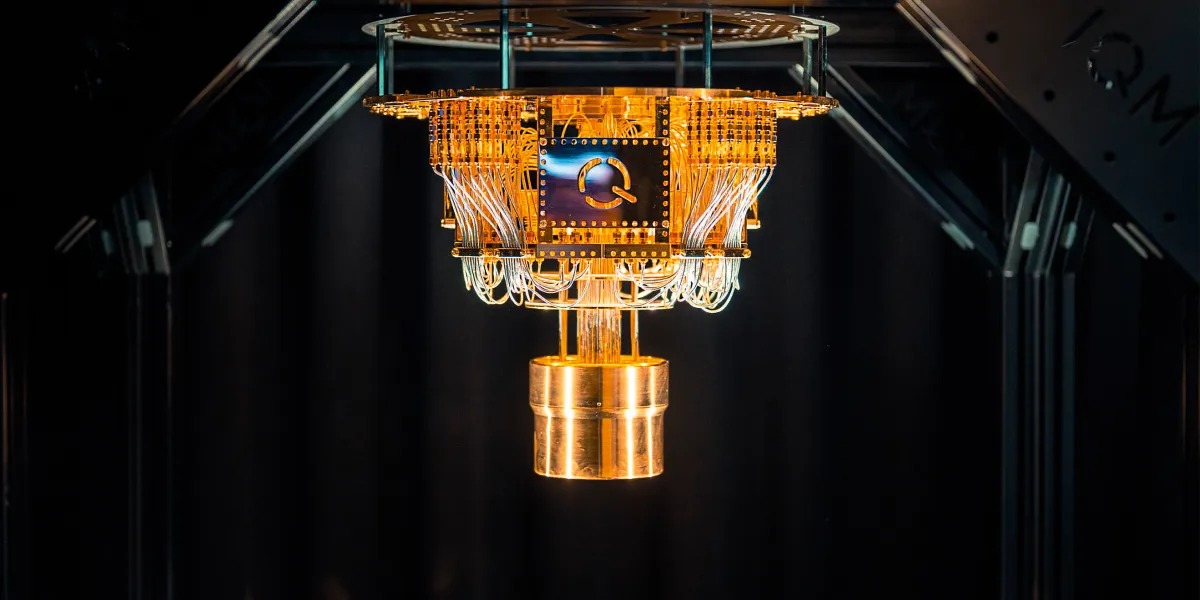
The most advanced quantum computers hang like gilded chandeliers, with their cores cooled to a temperature just slightly above absolute zero, over 100 times colder than that of deep space. Quantum technology is based on the principles of quantum mechanics, taking advantage of the ability of particles to behave both as particles and waves. By utilizing quantum bits (qubits), quantum computers can handle problems that are difficult for traditional machines to solve, such as simulating molecules to accelerate drug discovery or modeling complex financial risks.
If it is possible to develop a sufficiently powerful and reliable quantum computer to perform these tasks, it would be of strategic significance to the nation, as theoretically, such a computer could crack the encryption that protects banks and digital communications.
Jéré mie, an architect at one of France's most promising quantum startups, Alice & Bob, said, "The company that manages to build a large-scale quantum machine first could dominate the entire industry overnight." He believes that the winner might come from Europe. "That possibility is quite high."
A professor of finance with a doctorate in astrophysics and the creator of the French EDHEC Quantum Institute, Lionel Martellini, said, "We haven't lost this competition yet." But that doesn't mean "we won't lose."
Martellini points out that quantum theory 'was born in Europe', and to this day, the European continent continues to produce a large amount of fundamental research in this field. At the beginning of the 20th century, quantum theory originated from the work of Max Planck, Niels Bohr, Albert Einstein, Erwin Schrödinger, and Werner Heisenberg. Since then, European physicists have gone on to win a series of Nobel Prizes related to quantum physics.
This tradition has nurtured a thriving startup ecosystem. According to data from the Joint Research Centre of the European Commission, the EU is home to 32% of the world's quantum technology companies.
In France alone, there are five leading hardware competitors – Pasqal, Alice, Bob, Quandela, Quobly, and C12 – all of which are developing different approaches to constructing the basic units of quantum computers, known as qubits. In the UK, there are Oxford Quantum Circuits and Riverlane. Finland’s IQM has indicated that it has sold 26 quantum computers for on-site installation by customers, which is the highest number disclosed by any manufacturer to date.
IBM Senior Vice President and Chairman for Europe, Middle East, Africa, and Asia-Pacific Ana Paula Assis stated: "Europe holds tremendous opportunities in the field of quantum technology." She mentioned that the region's diversified industrial base encompasses both the problems that quantum computers need to solve and the data required to address these issues.
This makes Europe the largest customer base for this industry. According to McKinsey's Quantum Technology Monitor 2026, 43% of the customers of quantum computing companies are based on the European continent. A large portion of the demand comes from public supercomputing centers, which allow researchers and enterprises to rent machines from European manufacturers such as IQM, Pasqal, etc.
From the past five years until 2025, European countries have committed to investing $15.9 billion in quantum technology. Federal funding in the United States only reached approximately $6 billion by May of this year, when Washington pledged an additional $2 billion to 9 quantum technology companies.
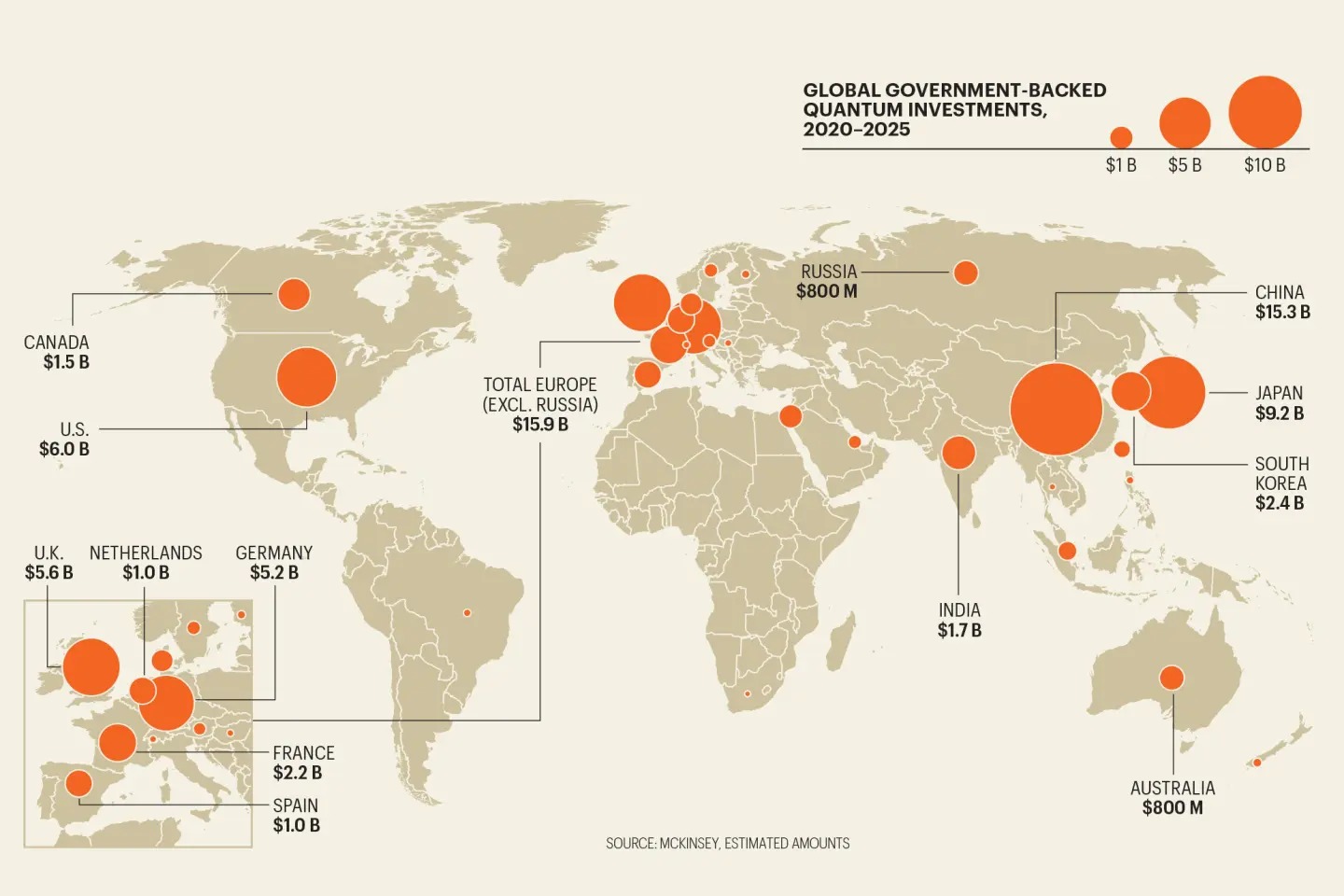
However, private investment in quantum startups is still dominated by the United States. McKinsey data shows that in 2025, the global quantum field reached an investment record of $12.6 billion, more than six times the total amount in 2024, with 64% of that investment flowing to American companies. The European Commission estimates that European quantum enterprises have attracted only about 5% of the global private capital.
Martellini said, "American startups can obtain funding from pension funds and university endowment funds, but Europe does not have a corresponding system. We do not have a unified market, nor do we have a very strong pension system."
Guillaud from Alice and Bob said, "In France, we have ideas, but we don't have the money. With just ideas alone, we can't build a useful quantum computer." The 100 million euros (110 million US dollars) in Series B financing from Alice and Bob is already one of the larger quantum financings in Europe, but it pales in comparison to the 1 billion dollars raised by the California-based American company PsiQuantum in a single round of financing in September 2025.
Therefore, many of Europe's most promising companies are crossing the Atlantic in search of capital. The British company Oxford Ionics was acquired by the US-listed firm IonQ for $1.075 billion in 2025; this year, Finnish company IQM and French company Pasqal both listed on NASDAQ. IQM also trades in Helsinki, while Pasqal plans its second listing in Paris.
Pasqal CEO Wasiq Bokhari insists that this was never a choice between New York and Paris. "Nasdaq was just our first public offering before we eventually went public on Euronext," he said. "Once the company enters the commercialization phase, it's very important to obtain large-scale capital."
In the view of Bokhari, the bigger problem is Europe's decentralized financing model, which is fragmented among the plans of various countries.
"The United States and China are a single entity that can make decisions quickly," said Bokhari. "Europe has all the elements necessary. We just need to ensure that they are aligned quickly and move in a unified direction." The EU's Quantum Act aims to coordinate the research and spending of the entire alliance, which could be helpful.
Meanwhile, the competition at the forefront is accelerating. The most powerful quantum computers are still in the United States and China, led by IBM, Google, Quantinuum, and the Chinese Academy of Sciences. IBM is building its first large-scale, error-correcting quantum machine in Poughkeepsie in New York State, with a computing power that will be 20,000 times that of current machines.
Vice President Alessandro Curioni stated that this puts the company "two to five years ahead" in top-tier hardware. He believes that this means Europe may be "on the wrong track." In his view, "the real prize is not the machines, but the new software industry that combines artificial intelligence and quantum computing." He thinks that Europe's diversified industrial economy gives it the best chance to lead this industry, "but the premise is to start now; no matter which machine is the best, it should be put into use as soon as possible."
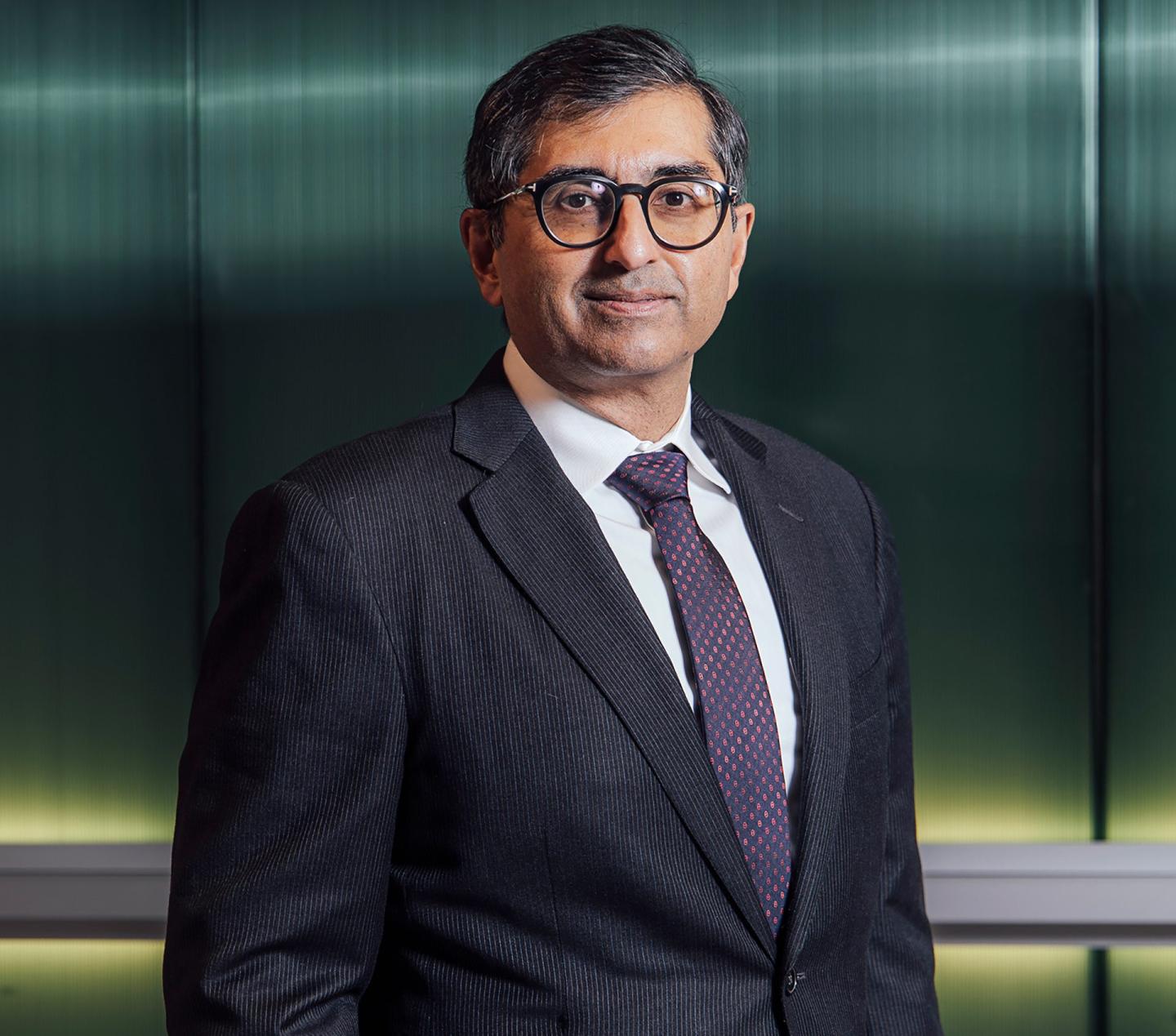
He refers to Europe's instinct to “want to make everything by itself” as “arrogance” and states that it is “politically foolish” to refuse to use machines just because they come from the United States. If Europe waits for its own hardware, he warns, “you will welcome another Microsoft, but it won’t be based in Europe; instead, it will sell you software.”
However, Bokhari believes that this competition is far from over. "The large expenditures of big companies do not necessarily translate into a place at the table or market dominance in the future," he added, noting that European companies are still winning business customers.
The investment banking division of Crédit Agricole France has signed an agreement with Pasqal, with the goal of putting its first quantum applications into actual production as early as 2028. Bokhari stated that this makes them one of the first large banks to publicly commit to a production timeline. “It’s not only possible, but it’s actually happening.”
Martellini says that this also makes ownership a matter of sovereignty. "I don't understand why the whole world should be willing to rely on American hardware. Europe has learned from its hardships that it needs to be more independent."
Perhaps Europe's greatest advantage lies in providing key components for the manufacture of quantum computers. Brierley compares it to the model of the Dutch company ASML, whose extreme ultraviolet lithography machines are key equipment for manufacturing the world's most advanced AI chips.
"At the beginning of every new industry, companies try to do everything themselves because there is no supply chain," he said. "As technology becomes more and more complex, it divides into specialized tiers, and those who control a vital tier gain significant leverage."
For example, the error-correction technology represented by Riverlane can be applied to different types of quantum bits. In other areas, Bluefors in Finland produces "gilded chandeliers" used for cooling global quantum computers, while Zurich Instruments in Switzerland and Qblox in the Netherlands provide advanced electronic equipment necessary for operating quantum hardware.
This may be a much stronger position than Europe's in the field of artificial intelligence. According to data from the European Commission, EU companies provide nearly half of the hardware and software components for global quantum technology. In contrast, according to Global Electronics Association, EU companies account for less than one-tenth of the market share in data center chips, servers, and cloud infrastructure. Brierley states that mastering a key link in the quantum supply chain will provide Europe with an "entrance ticket" to this globally important technology.
This article was published in the December 2026/January 2027 issue of Fortune, under the title "Quantum Leap Can Europe Win The Next Tech Race?"