Newsletter
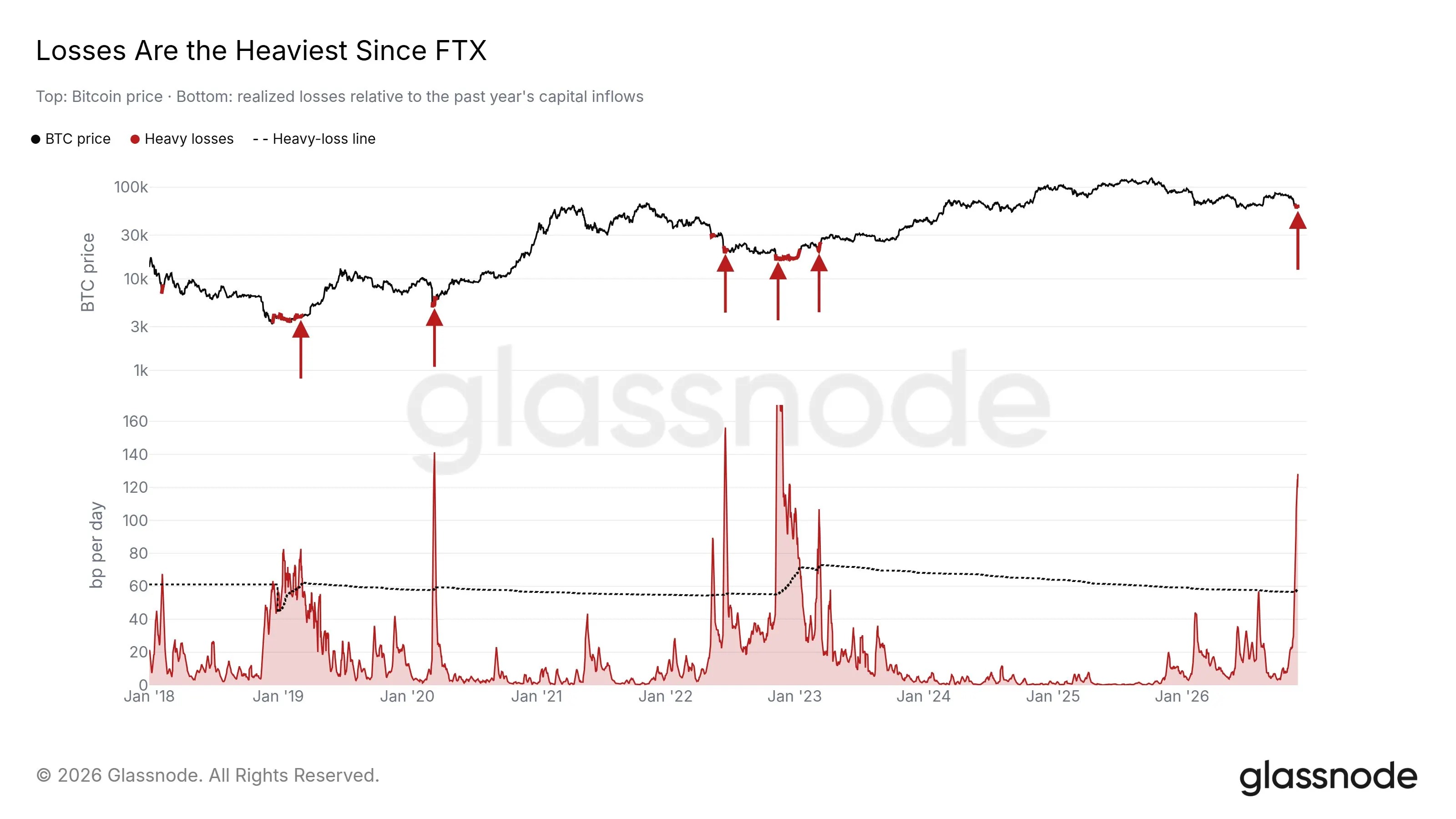
- Referring to annual capital inflows, Bitcoin's realized losses have risen to the highest level since its collapse in November 2022 FTX.
- In the past 20 trading days, there has been a net outflow of $4.3 billion for US spot Bitcoin ETF.
- Glassnode indicates that if Bitcoin closes below $58,500, it could create room for a decline to its realized price of $53,200.
A report released on Tuesday by blockchain analytics firm Glassnode stated that Bitcoin investors are suffering their heaviest losses since the collapse of FTX in November 2022.
The world's largest cryptocurrency once fell below $60,000, reaching $59,992, a drop of over 50% from its high in October 2025.
Glassnode wrote on X: 'The scale of losses in Bitcoin is the most severe since FTX. If we refer to the funds that have flowed into Bitcoin over the past year, this figure has almost doubled in just one week.'
Glassnode tracks realized losses by observing the tokens transferred on the chain: if the price of these tokens at the time of this transfer is lower than the price at the time of the previous transfer, it is recorded as a loss. By comparing these losses with the scale of capital that flowed into Bitcoin over the previous year, analysts can make horizontal comparisons of sell-offs across different market cycles, even as the value of cryptocurrencies continues to grow.
The last time this indicator reached its current level, it coincided with the collapse of the Sam Bankman - Fried crypto empire, and Bitcoin was trading below $16,000 at that time. This time, the selling pressure has occurred alongside a broader pullback in risk assets, and even positive news from the tech industry is not enough to support Bitcoin.
On Monday, after NVIDIA announced that Jensen Huang would return to take on the role of CEO, Bitcoin rose by 5% within about half an hour. However, in less than 6 hours, Bitcoin lost all of its gains, while the NASDAQ 100 index managed to retain about three-quarters of its increase. In trading, this situation is known as a "bull trap," which typically occurs during a strong downward trend.
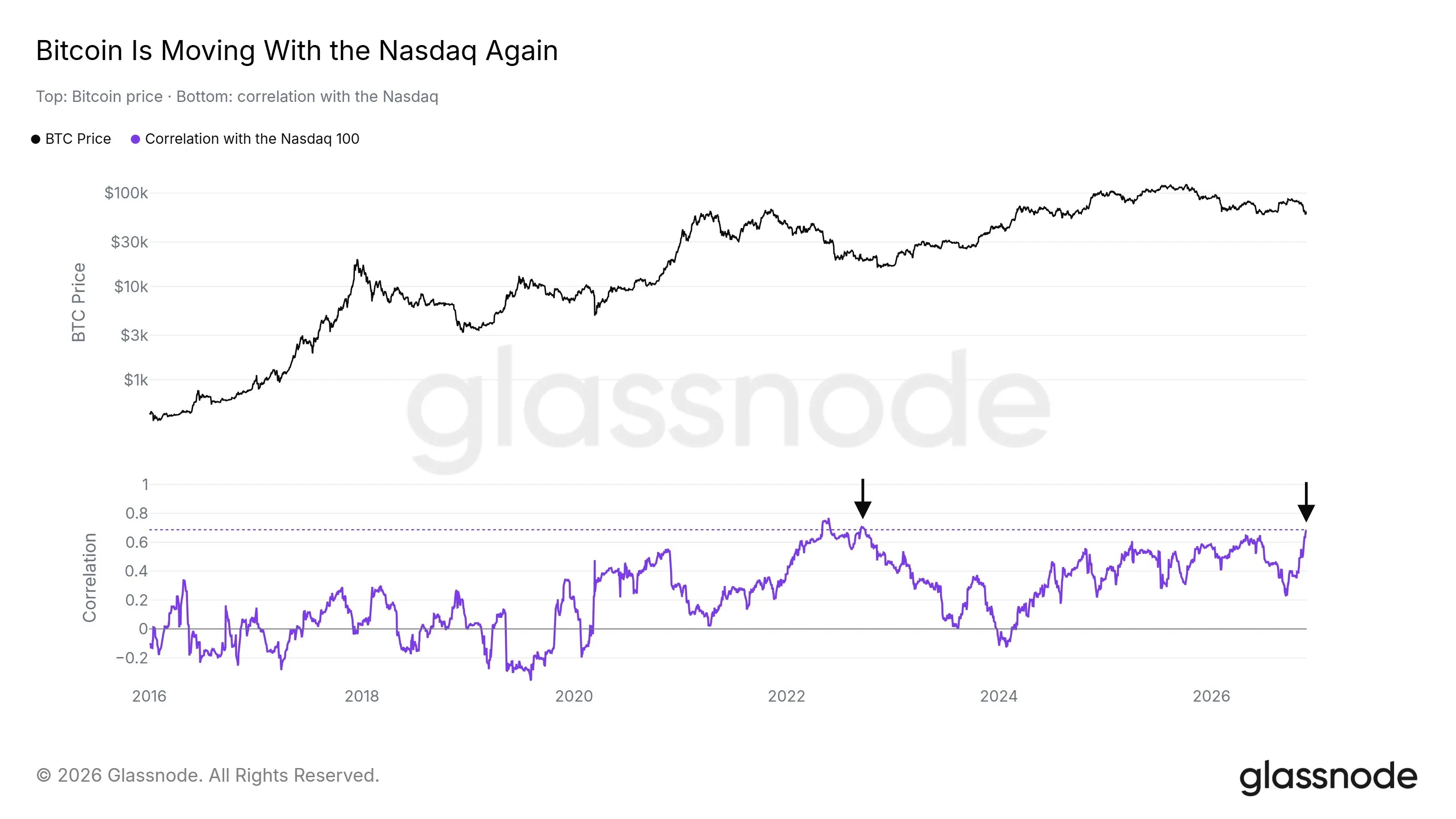
According to Glassnode, the correlation between Bitcoin and the NASDAQ 100 index has now risen to its highest level since September 2022. Over the past 60 trading days, when tech stocks have risen, Bitcoin has often risen less; when tech stocks have fallen, Bitcoin has fallen more.
American investors are also continuing to withdraw their funds. Over the past 20 trading days, spot Bitcoin ETF has seen a cumulative net outflow of $4.3 billion; meanwhile, traders of Coinbase have been clear net sellers over the past month. In contrast, the buying and selling forces on Binance are roughly balanced.
How much more could Bitcoin fall?
Glassnode indicates that such surges often occur near past lows, but some also happen a bit earlier. The institution mentioned sell-offs at the beginning of 2019, in March 2020, and in November 2022, when losses surged sharply near the bottom of the market; however, it also cited cases in earlier stages of 2018 and 2022 where prices still had further room to fall later on.
Long-term holders – that is, investors who have held the coins for approximately 5 months or longer – bore the majority of the realized losses between mid-April and mid-November. Meanwhile, nearly 90% of the long positions in Bitcoin that were at risk of being liquidated, with prices between $53,200 last week, have also been cleared, which reduces the likelihood of another wave of forced selling within that period.
Glassnode is monitoring the realized price of Bitcoin, which is the average price at the last time the tokens in circulation moved. Currently, it is $53,200. In the previous three major bear markets, Bitcoin only finally reached its bottom after falling below this indicator.
If the discount rates observed at the lows in 2022 and 2018 are applied to the current realized prices, the price of Bitcoin would be approximately $41,000 and $37,000 respectively.
Currently, the more direct focus is on whether Bitcoin can close above its June low of $58,500. Glassnode indicates that if Bitcoin returns above $60,000, and at the same time ETF funds turn back to a net inflow, it will help determine whether the summer low can be held.